
Diisobutylaluminum hydride
Diisobutylaluminum hydride (DIBAL-H), CAS 1191-15-7, has the linear formula [(CH3)2CHCH2]2AlH and a molecular weight of 142.22 g/mol. This organoaluminum compound is a potent reducing agent primarily utilised in organic synthesis for selective reductions of esters, nitriles, and alkynes to aldehydes. It is also employed as a co-catalyst in polymerisation processes. DIBAL-H is supplied by TSS as a reagent grade solution in toluene.
- IUPAC
- DIBAL-H,DIBAL
- Synonyms
- DIBAL-HDIBALDiisobutylaluminium hydrideDiisobutylaluminiumdihydrogenideAluminum, diisobutyl-.alpha.-hydrido-
![Diisobutylaluminum hydride ([(CH3)2CHCH2]2AlH) — chemical structure, CAS 1191-15-7; Chemistry, fine chemical supplied by Tech Serve Solutions](/_next/image?url=https%3A%2F%2Fpub-f4d920c906024441a773a96f7098e551.r2.dev%2Fimages%2Fproducts%2F1191-15-7.png&w=3840&q=75)
Selective Reduction
Diisobutylaluminum hydride is a powerful and selective reducing agent used extensively in organic synthesis. It efficiently reduces esters and nitriles to aldehydes and alkynes to cis-alkenes at low temperatures, offering precise control in multi-step syntheses.
Polymerisation Co-catalyst
In the petrochemical industry, DIBAL-H serves as a co-catalyst in various polymerisation reactions. It plays a role in Ziegler-Natta catalysis for the production of polyolefins, influencing polymer properties.
Organometallic Synthesis
As an organoaluminum compound, DIBAL-H is a valuable reagent for introducing alkyl groups in organometallic chemistry. Its reactivity profile makes it suitable for specific alkylation and hydroalumination reactions.
| Molecular weight | 142.22 |
|---|---|
| Linear formula | [(CH3)2CHCH2]2AlH |
| Grade | reagent grade |
| Boiling point | 116-118 °C/1 mmHg(lit.) |
| Density | 0.858 g/mL at 25 °C |
| Concentration | 1.0 M in toluene |


Hazard statements
- H225Highly flammable liquid and vapour
- H250Catches fire spontaneously if exposed to air
- H261In contact with water releases flammable gas
- H314Causes severe skin burns and eye damage
Precautionary statements
- P210Keep away from heat, sparks and open flames. No smoking
- P222Do not allow contact with air
- P231Handle under inert gas
- P261Avoid breathing dust, fume, gas or vapours
- P280Wear protective gloves, clothing and eye/face protection
- P422
| Protective equipment | Faceshields, full-face respirator (US), Gloves, Goggles, multi-purpose combination respirator cartridge (US), type ABEK (EN14387) respirator filter |
|---|---|
| Flash point | -18 °C / -.4 °F |
| Transport (UN / ADR) | UN 3394 4.2/PG 1 |
| Water hazard class (WGK, DE) | nwg |
| Hazard codes (EU) | F,C |
| Risk statements (R) | 14/15-17-35 |
| Safety statements (S) | 26-36/37/39-43-45 |
Hazard information is provided for guidance. Always consult the product Safety Data Sheet (SDS), available on request, before handling.
Documentation
Every batch ships with a Certificate of Analysis covering assay, identity and purity; the grade is confirmed against your enquiry. Safety Data Sheets and technical data sheets are available on request.
Supply & logistics
Samples for technical evaluation; bulk MOQ by grade and packaging. In-stock material ships in 7–10 working days, worldwide, with full export documentation.
What is Diisobutylaluminum hydride used for?
+
Diisobutylaluminum hydride (DIBAL-H) is primarily used as a selective reducing agent in organic synthesis, particularly for converting esters, nitriles, and alkynes to aldehydes. It also functions as a co-catalyst in polymerisation processes.
What is the CAS number and formula for Diisobutylaluminum hydride?
+
The CAS number for Diisobutylaluminum hydride is 1191-15-7, and its linear formula is [(CH3)2CHCH2]2AlH.
What grade and purity does Tech Serve Solutions supply?
+
Tech Serve Solutions supplies Diisobutylaluminum hydride as reagent grade, typically as a 1.0 M solution in toluene. We do not represent this product as USP, BP, or EP grade.
How is Diisobutylaluminum hydride handled and what are its hazards?
+
Diisobutylaluminum hydride is highly flammable and pyrophoric, reacting violently with water and air, and can cause severe burns. It must be handled under an inert atmosphere (e.g., nitrogen or argon) using appropriate personal protective equipment, including face shields, gloves, and respirators. Refer to the Safety Data Sheet for comprehensive handling instructions.
Is Diisobutylaluminum hydride a controlled substance?
+
Diisobutylaluminum hydride is not explicitly listed as a controlled substance under major international regulations. However, its hazardous nature requires strict adherence to safety protocols and transportation regulations.
How are chemicals like Diisobutylaluminum hydride packed, shipped, and exported by TSS?
+
TSS packs, ships, and exports Diisobutylaluminum hydride in compliance with all applicable international regulations for hazardous materials. Specific packaging is designed to maintain product integrity and safety during transit. Please contact us for detailed shipping information.
How can I request a sample or quote for Diisobutylaluminum hydride?
+
To request a sample or a quote for Diisobutylaluminum hydride, please use the 'Contact Us' form on our website or call our sales department directly, providing the product name and CAS number (1191-15-7).
▶ Related products
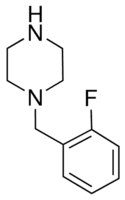
1-(2-Fluorobenzyl)piperazine
C11H15FN2
Chemical Synthesis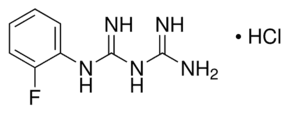
1-(2-Fluorophenyl)biguanide hydrochloride
Chemical Synthesis
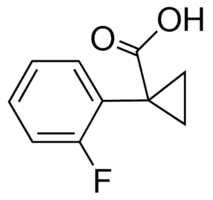
1-(2-Fluorophenyl)cyclopropanecarboxylic acid
C10H9FO2
Chemical Synthesis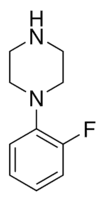
1-(2-Fluorophenyl)piperazine
C10H13FN2
Chemical Synthesis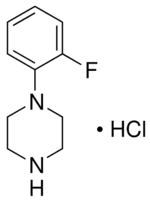
1-(2-Fluorophenyl)piperazine monohydrochloride
C10H13FN2 · HCl
Chemical Synthesis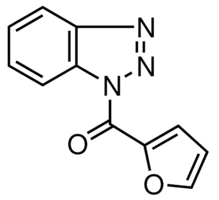
1-(2-Furoyl)-1H-benzotriazole
C11H7N3O2
Chemical Synthesis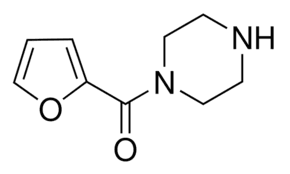
1-(2-Furoyl)piperazine
C9H12N2O2
Chemical Synthesis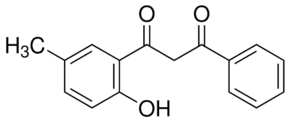
1-(2-Hydroxy-5-methylphenyl)-3-phenyl-1,3-propanedione
Chemical Synthesis
▶ Explore more

Bis(cyclopentadienyl)cobalt(III) hexafluorophosphate
C10H10CoF6P
Catalysis & Inorganic
1-(4-Chlorophenyl)biguanide hydrochloride
ClC6H4NHC(NH)NHC(NH)NH2 · HCl
Chemical Synthesis
Bis(cyclopentadienyl)dimethylzirconium(IV)
Catalysis & Inorganic

1-(4-Chlorophenyl)ethanol
ClC6H4CH(CH3)OH
Chemical Synthesis