
Diisobutylaluminum chloride
Diisobutylaluminum chloride (CAS: 1779-25-5) is an organoaluminum compound with the molecular formula [(CH3)2CHCH2]2AlCl and a molecular weight of 176.66 g/mol. It functions as a highly reactive transmetalating reagent. Primarily utilised in chemical synthesis, it is a key component within the broader categories of organoaluminum and organometallic reagents, demanding careful handling due to its pyrophoric and water-reactive nature.
![Diisobutylaluminum chloride ([(CH3)2CHCH2]2AlCl) — chemical structure, CAS 1779-25-5; Chemistry, fine chemical supplied by Tech Serve Solutions](/_next/image?url=https%3A%2F%2Fpub-f4d920c906024441a773a96f7098e551.r2.dev%2Fimages%2Fproducts%2F1779-25-5.png&w=3840&q=75)
Transmetalating Reagent
Diisobutylaluminum chloride serves as an effective transmetalating agent in various synthetic organic chemistry transformations. Its aluminium centre can facilitate the transfer of organic groups to other metals, enabling complex molecule construction.
Organometallic Synthesis
As an organoaluminum compound, it is employed in the synthesis of other organometallic species. Its reactivity profile makes it suitable for reactions requiring Lewis acidic or alkylating capabilities.
Chemical Synthesis
This compound is a valuable building block in general chemical synthesis. It can be used in processes where controlled introduction of isobutyl groups or Lewis acid catalysis is required.
| Molecular weight | 176.66 |
|---|---|
| Linear formula | [(CH3)2CHCH2]2AlCl |
| Assay | 97% |
| Boiling point | 152 °C/10 mmHg(lit.) |
| Density | 0.905 g/mL at 25 °C(lit.) |
| Refractive index | n20/D 1.4506(lit.) |
| Application | Transmetalating reagent |
| Melting point | −40 °C(lit.) |


Hazard statements
- H225Highly flammable liquid and vapour
- H250Catches fire spontaneously if exposed to air
- H261In contact with water releases flammable gas
- H314Causes severe skin burns and eye damage
- H330Fatal if inhaled
Precautionary statements
- P210Keep away from heat, sparks and open flames. No smoking
- P222Do not allow contact with air
- P231Handle under inert gas
- P260Do not breathe dust, fume, gas, mist, vapours or spray
- P280Wear protective gloves, clothing and eye/face protection
- P422
| Protective equipment | Faceshields, full-face respirator (US), Gloves, Goggles, multi-purpose combination respirator cartridge (US), type ABEK (EN14387) respirator filter |
|---|---|
| Flash point | -18 °C / -.4 °F |
| Transport (UN / ADR) | UN 3394 4.2/PG 1 |
| Water hazard class (WGK, DE) | 1 |
| Hazard codes (EU) | F,T+ |
| Risk statements (R) | 11-14/15-17-26-34 |
| Safety statements (S) | 16-26-36/37/39-45 |
| Supplemental hazards | Reacts violently with water. |
Hazard information is provided for guidance. Always consult the product Safety Data Sheet (SDS), available on request, before handling.
Documentation
Every batch ships with a Certificate of Analysis covering assay, identity and purity; the grade is confirmed against your enquiry. Safety Data Sheets and technical data sheets are available on request.
Supply & logistics
Samples for technical evaluation; bulk MOQ by grade and packaging. In-stock material ships in 7–10 working days, worldwide, with full export documentation.
What is Diisobutylaluminum chloride used for?
+
Diisobutylaluminum chloride is primarily used as a transmetalating reagent in chemical synthesis, particularly within the fields of organoaluminum and organometallic chemistry.
What is the CAS number and formula for Diisobutylaluminum chloride?
+
The CAS number for Diisobutylaluminum chloride is 1779-25-5, and its linear formula is [(CH3)2CHCH2]2AlCl.
What grade and purity does Tech Serve Solutions supply?
+
Tech Serve Solutions supplies Diisobutylaluminum chloride with an assay of 97%. This product is not represented as USP, BP, EP, or other pharmacopoeial grades.
How should Diisobutylaluminum chloride be handled safely?
+
Diisobutylaluminum chloride is highly flammable and reacts violently with water (Danger: H225-H250-H261-H314-H330). It must be handled under an inert atmosphere, away from moisture and ignition sources, using appropriate personal protective equipment including a faceshield, respirator, gloves, and goggles.
How is Diisobutylaluminum chloride packed, shipped, and exported?
+
Diisobutylaluminum chloride is packed and shipped according to strict safety regulations for pyrophoric and water-reactive substances, typically under an inert atmosphere in specialised containers. TSS is a global supplier and exporter of this chemical.
How can I request a sample or quote for Diisobutylaluminum chloride?
+
To request a sample or a quote for Diisobutylaluminum chloride, please contact the Tech Serve Solutions sales team via our website or direct contact details.
▶ Related products
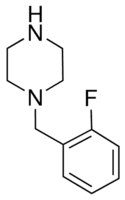
1-(2-Fluorobenzyl)piperazine
C11H15FN2
Chemical Synthesis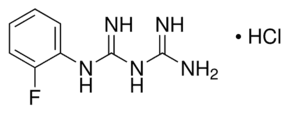
1-(2-Fluorophenyl)biguanide hydrochloride
Chemical Synthesis
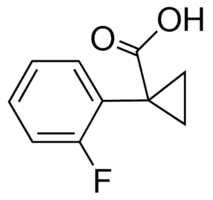
1-(2-Fluorophenyl)cyclopropanecarboxylic acid
C10H9FO2
Chemical Synthesis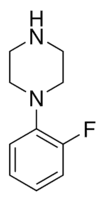
1-(2-Fluorophenyl)piperazine
C10H13FN2
Chemical Synthesis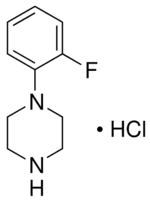
1-(2-Fluorophenyl)piperazine monohydrochloride
C10H13FN2 · HCl
Chemical Synthesis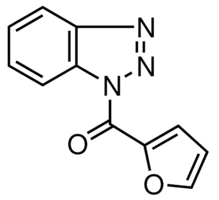
1-(2-Furoyl)-1H-benzotriazole
C11H7N3O2
Chemical Synthesis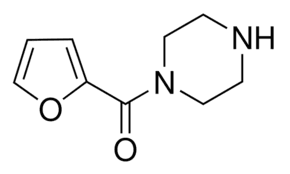
1-(2-Furoyl)piperazine
C9H12N2O2
Chemical Synthesis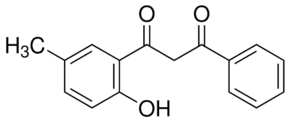
1-(2-Hydroxy-5-methylphenyl)-3-phenyl-1,3-propanedione
Chemical Synthesis
▶ Explore more

Bis(cyclopentadienyl)cobalt(III) hexafluorophosphate
C10H10CoF6P
Catalysis & Inorganic
1-(4-Chlorophenyl)biguanide hydrochloride
ClC6H4NHC(NH)NHC(NH)NH2 · HCl
Chemical Synthesis
Bis(cyclopentadienyl)dimethylzirconium(IV)
Catalysis & Inorganic

1-(4-Chlorophenyl)ethanol
ClC6H4CH(CH3)OH
Chemical Synthesis