
Diisobutyl adipate
Diisobutyl adipate (CAS: 141-04-8), with the molecular formula [-CH2CH2CO2CH2CH(CH3)2]2 and a molecular weight of 258.35 g/mol, is a diester of adipic acid. It is commonly employed as a plasticizer and polymer additive, enhancing the flexibility and processability of various polymeric materials. Its chemical structure lends itself to applications requiring good compatibility with polymer matrices.
![Diisobutyl adipate ([-CH2CH2CO2CH2CH(CH3)2]2) — chemical structure, CAS 141-04-8; Materials Science, fine chemical supplied by Tech Serve Solutions](/_next/image?url=https%3A%2F%2Fpub-f4d920c906024441a773a96f7098e551.r2.dev%2Fimages%2Fproducts%2F141-04-8.png&w=3840&q=75)
Plasticizer
Diisobutyl adipate functions as a plasticiser, increasing the plasticity or fluidity of polymers. It is particularly useful in applications where improved flexibility and workability are desired, contributing to the performance of materials like PVC.
Polymer Additive
As a polymer additive, it can modify the physical properties of plastics, such as lowering the glass transition temperature and enhancing impact resistance. Its ester functionalities contribute to its compatibility with a range of polymer systems.
Materials Science
In materials science, Diisobutyl adipate finds use in the formulation of various polymeric products. Its ester nature allows it to interact with polymer chains, influencing the material's overall characteristics and performance.
| Molecular weight | 258.35 |
|---|---|
| Linear formula | [-CH2CH2CO2CH2CH(CH3)2]2 |
| Assay | 99% |
| Boiling point | 293 °C(lit.) |
| Density | 0.954 g/mL at 25 °C(lit.) |
| Refractive index | n20/D 1.432(lit.) |
| Protective equipment | Eyeshields, Gloves |
|---|---|
| Flash point | >113 °C / >235.4 °F |
| Water hazard class (WGK, DE) | 1 |
Hazard information is provided for guidance. Always consult the product Safety Data Sheet (SDS), available on request, before handling.
Documentation
Every batch ships with a Certificate of Analysis covering assay, identity and purity; the grade is confirmed against your enquiry. Safety Data Sheets and technical data sheets are available on request.
Supply & logistics
Samples for technical evaluation; bulk MOQ by grade and packaging. In-stock material ships in 7–10 working days, worldwide, with full export documentation.
What is Diisobutyl adipate used for?
+
Diisobutyl adipate is primarily used as a plasticiser and polymer additive to enhance the flexibility and processability of various polymeric materials in applications within materials science.
What is the CAS number and chemical formula for Diisobutyl adipate?
+
The CAS number for Diisobutyl adipate is 141-04-8, and its linear formula is [-CH2CH2CO2CH2CH(CH3)2]2.
What grade and purity does Tech Serve Solutions supply?
+
Tech Serve Solutions supplies Diisobutyl adipate with an assay of 99%. This product is supplied for research and industrial use; TSS does not represent it as USP, BP, or EP grade.
How should Diisobutyl adipate be handled safely?
+
When handling Diisobutyl adipate, it is recommended to use safety measures such as eyeshields and gloves. Refer to the Safety Data Sheet for comprehensive handling and hazard information.
Is Diisobutyl adipate a controlled substance?
+
The provided data does not indicate that Diisobutyl adipate (CAS: 141-04-8) is a controlled substance.
How is Diisobutyl adipate shipped and exported?
+
Tech Serve Solutions, a global supplier and exporter, ships and exports fine chemicals like Diisobutyl adipate in compliance with international regulations. Specific shipping and export details can be provided upon request.
How can I request a quote or sample for Diisobutyl adipate?
+
To request a quote or sample for Diisobutyl adipate, please contact the Tech Serve Solutions sales team via our website or designated contact channels.
▶ Related products
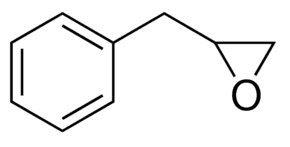
(2,3-Epoxypropyl)benzene
Polymer Science
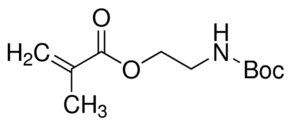
(2-Boc-amino)ethyl methacrylate
C11H19NO4
Polymer Science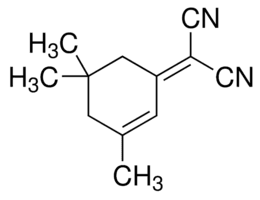
(3,5,5-Trimethylcyclohex-2-enylidene)malononitrile
Polymer Science
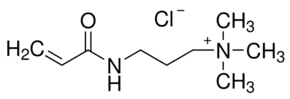
(3-Acrylamidopropyl)trimethylammonium chloride solution
Polymer Science
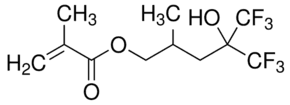
1,1,1-Trifluoro-2-(trifluoromethyl)-2-hydroxy-4-methyl-5-pentyl methacrylate
Polymer Science
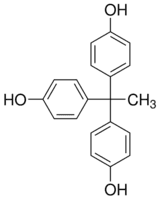
1,1,1-Tris(4-hydroxyphenyl)ethane
Polymer Science
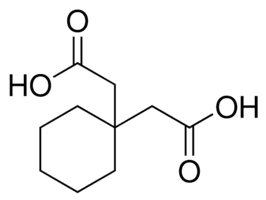
1,1-Cyclohexanediacetic acid
Polymer Science

1,12-Diisocyanatododecane
Polymer Science
▶ Explore more

Bis(cyclopentadienyl)cobalt(III) hexafluorophosphate
C10H10CoF6P
Catalysis & Inorganic
1-(4-Chlorophenyl)biguanide hydrochloride
ClC6H4NHC(NH)NHC(NH)NH2 · HCl
Chemical Synthesis
Bis(cyclopentadienyl)dimethylzirconium(IV)
Catalysis & Inorganic

1-(4-Chlorophenyl)ethanol
ClC6H4CH(CH3)OH
Chemical Synthesis