
Diethylene glycol
Diethylene glycol (CAS: 111-46-6) is a colourless, nearly odourless, viscous liquid with the linear formula (HOCH2CH2)2O and a molecular weight of 106.12 g/mol. It is a versatile organic compound, primarily functioning as a building block in chemical synthesis. Its properties make it suitable for applications requiring hygroscopic and solvent characteristics, and it is widely employed in various industrial processes.
- IUPAC
- 2,2′-Oxydiethanol,2-Hydroxyethyl ether,Bis(2-hydroxyethyl) ether,Diglycol
- Synonyms
- 2,2′-Oxydiethanol2-Hydroxyethyl etherBis(2-hydroxyethyl) etherDiglycol

Chemical Intermediate
Diethylene glycol serves as a crucial intermediate in the synthesis of various organic compounds. Its reactive hydroxyl groups allow it to participate in esterification and etherification reactions, forming more complex molecules for diverse chemical applications.
Solvent Applications
Due to its high boiling point and good solvency for many organic materials, diethylene glycol is used as a solvent in various industrial formulations. It is particularly effective in dissolving resins, dyes, and oils.
Humectant Properties
The hygroscopic nature of diethylene glycol makes it an effective humectant. It can absorb moisture from the air, helping to maintain product consistency and prevent drying in applications such as inks and some industrial coatings.
Plasticizer
In certain polymer applications, diethylene glycol can function as a plasticizer, improving the flexibility and workability of materials. It is incorporated into resins and coatings to enhance their performance characteristics.
| Molecular weight | 106.12 |
|---|---|
| Linear formula | (HOCH2CH2)2O |
| Assay | ≥98.0% |
| Boiling point | 245 °C(lit.) |
| Density | 1.118 g/mL at 25 °C(lit.) |
| Refractive index | n20/D 1.447(lit.) |
| Vapour pressure | 0.01 mmHg (20 °C) |
| Melting point | −10 °C(lit.) |
| Vapour density | 2.14 (vs air) |
| Autoignition temp | 442 °F |
| Impurities tested | ≤0.0005% peroxides (as H2O2)≤0.01% free acid (as CH3COOH)≤0.05% water≤0.8% ethylene glycol (HOCH2CH2OH) |


Hazard statements
- H302Harmful if swallowed
- H373May cause damage to organs through prolonged exposure
| Protective equipment | Eyeshields, Faceshields, full-face respirator (US), Gloves, multi-purpose combination respirator cartridge (US), type ABEK (EN14387) respirator filter |
|---|---|
| Flash point | 143 °C / 289.4 °F |
| Water hazard class (WGK, DE) | 1 |
| Hazard codes (EU) | Xn |
| Risk statements (R) | 22 |
| Safety statements (S) | 46 |
| Cation traces | Ca: ≤5 mg/kgCd: ≤1 mg/kgCo: ≤1 mg/kgCr: ≤1 mg/kgCu: ≤1 mg/kgFe: ≤2 mg/kgK: ≤20 mg/kgMg: ≤1 mg/kgMn: ≤1 mg/kgNa: ≤20 mg/kgNi: ≤1 mg/kgPb: ≤1 mg/kgZn: ≤10 mg/kg |
Hazard information is provided for guidance. Always consult the product Safety Data Sheet (SDS), available on request, before handling.
Documentation
Every batch ships with a Certificate of Analysis covering assay, identity and purity; the grade is confirmed against your enquiry. Safety Data Sheets and technical data sheets are available on request.
Supply & logistics
Samples for technical evaluation; bulk MOQ by grade and packaging. In-stock material ships in 7–10 working days, worldwide, with full export documentation.
What is Diethylene Glycol used for?
+
Diethylene glycol is primarily used as a chemical intermediate in organic synthesis, a solvent for resins and dyes, and a humectant in industrial applications. It also finds use as a plasticizer.
What is the CAS number and formula for Diethylene Glycol?
+
The CAS number for Diethylene Glycol is 111-46-6, and its linear formula is (HOCH2CH2)2O.
What grade and purity does Tech Serve Solutions supply for Diethylene Glycol?
+
Tech Serve Solutions supplies Diethylene Glycol with an assay of ≥98.0%. We do not represent this product as USP, BP, or EP grade unless explicitly stated in the product specifications.
How should Diethylene Glycol be handled safely?
+
Diethylene Glycol is harmful if swallowed (H302) and may cause damage to organs through prolonged or repeated exposure (H373). Handle with appropriate personal protective equipment, including eyeshields, gloves, and a suitable respirator, in a well-ventilated area.
How is Diethylene Glycol packed and shipped?
+
Diethylene Glycol is typically packed in secure containers suitable for industrial chemicals and is exported globally by Tech Serve Solutions adhering to all relevant transportation regulations.
How can I request a sample or quote for Diethylene Glycol?
+
To request a sample or a quotation for Diethylene Glycol, please contact our sales team through the website or by phone, providing your specific requirements.
▶ Related products
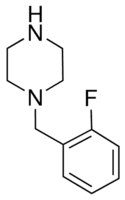
1-(2-Fluorobenzyl)piperazine
C11H15FN2
Chemical Synthesis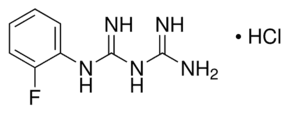
1-(2-Fluorophenyl)biguanide hydrochloride
Chemical Synthesis
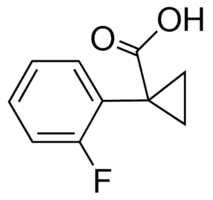
1-(2-Fluorophenyl)cyclopropanecarboxylic acid
C10H9FO2
Chemical Synthesis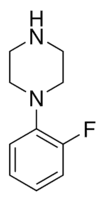
1-(2-Fluorophenyl)piperazine
C10H13FN2
Chemical Synthesis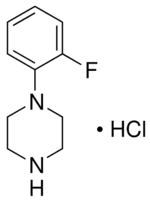
1-(2-Fluorophenyl)piperazine monohydrochloride
C10H13FN2 · HCl
Chemical Synthesis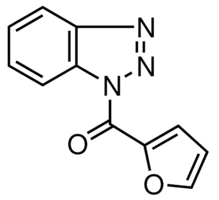
1-(2-Furoyl)-1H-benzotriazole
C11H7N3O2
Chemical Synthesis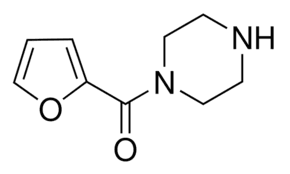
1-(2-Furoyl)piperazine
C9H12N2O2
Chemical Synthesis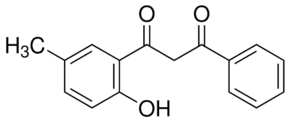
1-(2-Hydroxy-5-methylphenyl)-3-phenyl-1,3-propanedione
Chemical Synthesis
▶ Explore more

Bis(cyclopentadienyl)cobalt(III) hexafluorophosphate
C10H10CoF6P
Catalysis & Inorganic
1-(4-Chlorophenyl)biguanide hydrochloride
ClC6H4NHC(NH)NHC(NH)NH2 · HCl
Chemical Synthesis
Bis(cyclopentadienyl)dimethylzirconium(IV)
Catalysis & Inorganic

1-(4-Chlorophenyl)ethanol
ClC6H4CH(CH3)OH
Chemical Synthesis