Dicyclohexylamine
Dicyclohexylamine (CAS: 101-83-7) is a secondary amine with the linear formula (C6H11)2NH and a molecular weight of 181.32 g/mol. This compound is recognised for its utility as a chemical building block and in synthesis applications. It is primarily used in the development of novel catalysts, as an extractant in analytical chemistry, and in the formulation of ionic liquids for specialised analysis.

Ionic Liquid Matrices for Mass Spectrometry
Dicyclohexylamine has been employed in the creation of ionic liquid matrices. These matrices are specifically utilised for the analysis of bacterial samples within matrix assisted laser desorption/ionisation mass spectrometry (MALDI-MS) techniques.
Palladium Catalysis for Suzuki Coupling
The compound serves as a component in the development of new palladium catalysts. These catalysts are designed to facilitate the Suzuki coupling reaction, a crucial process for forming carbon-carbon bonds between aryl bromides and boronic acids.
Gold(III) Extraction
Dicyclohexylamine functions as an effective extractant in analytical procedures. It is used in dispersive liquid-liquid microextraction coupled with electrothermal atomic absorption spectrometry for the precise determination of gold(III) ions.
| Molecular weight | 181.32 |
|---|---|
| Linear formula | (C6H11)2NH |
| Assay | 99% |
| Boiling point | 117-120 °C/10 mmHg256 °C(lit.) |
| Density | 0.912 g/mL at 20 °C(lit.) |
| Refractive index | n20/D 1.484(lit.) |
| Solubility | organic solvents: solublewater: very slightly soluble |
| Melting point | −2 °C(lit.) |
| Vapour pressure | 12 mmHg (37.7 °C) |
| Vapour density | 6 (vs air) |
| Application | Dicyclohexylamine was used to constitute ionic liquid matrices for bacterial analysis in matrix assisted laser desorption/ionisation mass spectrometry1. It was used to develop a new palladium catalyst for Suzuki coupling reaction of aryl bromides with boronic acids2. It was used as extractant in determination of gold(III) by dispersive liquid-liquid microextraction and electrothermal atomic absorption spectrometry3. |


Hazard statements
- H302Harmful if swallowed
- H314Causes severe skin burns and eye damage
- H410Very toxic to aquatic life with long-lasting effects
Precautionary statements
- P273Avoid release to the environment
- P280Wear protective gloves, clothing and eye/face protection
- P305IF IN EYES
- P310Immediately call a POISON CENTER or doctor
- P501Dispose of contents and container per local regulations
| Protective equipment | Faceshields, full-face respirator (US), Gloves, Goggles, multi-purpose combination respirator cartridge (US), type ABEK (EN14387) respirator filter |
|---|---|
| Flash point | 96 °C / 204.8 °F |
| Transport (UN / ADR) | UN 2565 8 / PGIII |
| Water hazard class (WGK, DE) | 3 |
| Hazard codes (EU) | C,N |
| Risk statements (R) | 22-34-50/53 |
| Safety statements (S) | 26-36/37/39-45-60-61 |
Hazard information is provided for guidance. Always consult the product Safety Data Sheet (SDS), available on request, before handling.
Documentation
Every batch ships with a Certificate of Analysis covering assay, identity and purity; the grade is confirmed against your enquiry. Safety Data Sheets and technical data sheets are available on request.
Supply & logistics
Samples for technical evaluation; bulk MOQ by grade and packaging. In-stock material ships in 7–10 working days, worldwide, with full export documentation.
What is Dicyclohexylamine used for?
+
Dicyclohexylamine is used in the development of ionic liquid matrices for mass spectrometry, as a component in palladium catalysts for Suzuki coupling reactions, and as an extractant for gold(III) determination.
What are the CAS number and chemical formula for Dicyclohexylamine?
+
The CAS number for Dicyclohexylamine is 101-83-7, and its linear formula is (C6H11)2NH.
What grade and purity does Tech Serve Solutions supply?
+
Tech Serve Solutions supplies Dicyclohexylamine with an assay of 99%. We do not represent this product as USP, BP, EP, or other pharmacopoeia grades unless explicitly stated in the product specifications.
How should Dicyclohexylamine be handled safely?
+
Dicyclohexylamine is classified as corrosive and harmful if swallowed, causing severe skin burns and eye damage (H314). It is also very toxic to aquatic life with long-lasting effects (H410). Handling requires appropriate personal protective equipment, including full-face respirators, gloves, and eye protection, in a well-ventilated area. Refer to the Safety Data Sheet for detailed guidance.
How is Dicyclohexylamine packed, shipped, and exported?
+
Dicyclohexylamine is securely packed according to international shipping regulations for hazardous materials. Tech Serve Solutions, as a global supplier and exporter since 1998, handles all necessary documentation and logistics for its worldwide distribution.
How can I request a sample or quote for Dicyclohexylamine?
+
To request a sample or a quote for Dicyclohexylamine, please contact our sales department through the website or by phone, providing your specific requirements and delivery details.
▶ Related products
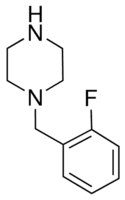
1-(2-Fluorobenzyl)piperazine
C11H15FN2
Chemical Synthesis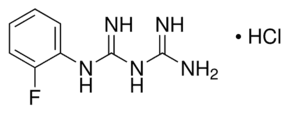
1-(2-Fluorophenyl)biguanide hydrochloride
Chemical Synthesis
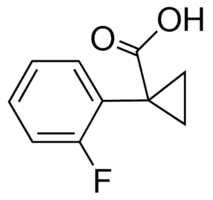
1-(2-Fluorophenyl)cyclopropanecarboxylic acid
C10H9FO2
Chemical Synthesis
1-(2-Fluorophenyl)piperazine
C10H13FN2
Chemical Synthesis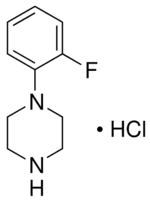
1-(2-Fluorophenyl)piperazine monohydrochloride
C10H13FN2 · HCl
Chemical Synthesis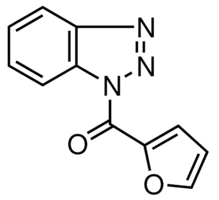
1-(2-Furoyl)-1H-benzotriazole
C11H7N3O2
Chemical Synthesis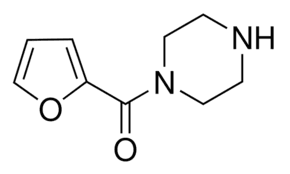
1-(2-Furoyl)piperazine
C9H12N2O2
Chemical Synthesis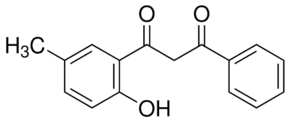
1-(2-Hydroxy-5-methylphenyl)-3-phenyl-1,3-propanedione
Chemical Synthesis