
Dichloroborane methyl sulfide complex
Dichloroborane methyl sulfide complex (CAS 63462-42-0) is a chemical compound with the linear formula (CH₃)₂S·BHCl₂ and a molecular weight of 144.86 g/mol. This borane complex is a reactive intermediate primarily utilised as a reactant in various organic synthesis reactions, including hydroboration, pyrolysis, and cyclization processes. Its specific properties make it valuable in preparing complex boron-containing molecules and facilitating addition reactions.
- IUPAC
- Boron dichloride methyl sulfide complex,Dichloro(dimethyl sulfide)(hydro)boron,Dichloro(dimethyl sulfide)borane,Dichloroborane dimethyl sulfide
- Synonyms
- Boron dichloride methyl sulfide complexDichloro(dimethyl sulfide)(hydro)boronDichloro(dimethyl sulfide)boraneDichloroborane dimethyl sulfide
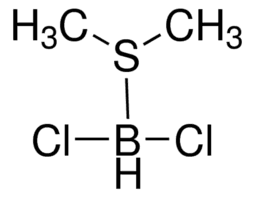
Hydroboration Reactions
Dichloroborane methyl sulfide complex serves as a key reactant in hydroboration reactions, enabling the addition of boron and hydrogen across unsaturated bonds. This process is fundamental in organic synthesis for the regioselective and stereoselective functionalisation of alkenes and alkynes.
Pyrolysis and Addition Reactions
The compound is employed in pyrolysis reactions and various addition reactions. Its reactivity allows for the controlled introduction of boron-containing moieties into organic frameworks, contributing to the synthesis of novel compounds.
Preparation of Boron Compounds
It is instrumental in the preparation of unsymmetrical borafluorenes and boron-nitrogen clusters through dismutation reactions. This highlights its utility in constructing specialized organoboron and inorganic boron structures.
Cyclization Reactions
Dichloroborane methyl sulfide complex participates in cyclization reactions, facilitating the formation of cyclic organic structures. This application is crucial in the development of complex molecular architectures.
| Molecular weight | 144.86 |
|---|---|
| Linear formula | (CH3)2S·BHCl2 |
| Density | 1.255 g/mL at 25 °C(lit.) |
| Application | Reactant for:• Hydroboration reactions1• Pyrolysis reactions2• Addition reactions3• Preparation of unsymmetrical borafluorenes4• Cyclization reactions5• Dismutation followed by haloboration of azadiboriridine to give boron-nitrogen clusters6• Markovnikov hydroboration7 |


Hazard statements
- H226Flammable liquid and vapour
- H314Causes severe skin burns and eye damage
Precautionary statements
- P280Wear protective gloves, clothing and eye/face protection
- P305IF IN EYES
- P310Immediately call a POISON CENTER or doctor
| Protective equipment | Faceshields, full-face respirator (US), Gloves, Goggles, multi-purpose combination respirator cartridge (US), type ABEK (EN14387) respirator filter |
|---|---|
| Flash point | 24 °C / 75.2 °F |
| Transport (UN / ADR) | UN 2920 3(8) / PGII |
| Water hazard class (WGK, DE) | 3 |
| Hazard codes (EU) | C |
| Risk statements (R) | 10-14-34 |
| Safety statements (S) | 16-26-36/37/39-45 |
| Supplemental hazards | Reacts violently with water. |
Hazard information is provided for guidance. Always consult the product Safety Data Sheet (SDS), available on request, before handling.
Documentation
Every batch ships with a Certificate of Analysis covering assay, identity and purity; the grade is confirmed against your enquiry. Safety Data Sheets and technical data sheets are available on request.
Supply & logistics
Samples for technical evaluation; bulk MOQ by grade and packaging. In-stock material ships in 7–10 working days, worldwide, with full export documentation.
What is Dichloroborane methyl sulfide complex used for?
+
Dichloroborane methyl sulfide complex is used as a reactant in various organic synthesis applications, including hydroboration, pyrolysis, addition, cyclization reactions, and the preparation of unsymmetrical borafluorenes and boron-nitrogen clusters.
What is the CAS number and formula for Dichloroborane methyl sulfide complex?
+
The CAS number is 63462-42-0, and the linear formula is (CH₃)₂S·BHCl₂.
What grade and purity does Tech Serve Solutions supply?
+
Tech Serve Solutions supplies Dichloroborane methyl sulfide complex. The specific assay and purity are available upon request. We do not represent this product as USP, BP, EP, or any other pharmacopoeia grade unless explicitly stated.
What are the primary safety hazards associated with Dichloroborane methyl sulfide complex?
+
This compound is classified as Danger, with hazards including flammability (H226) and severe skin burns and eye damage (H314). It reacts violently with water, necessitating careful handling and appropriate personal protective equipment, including face shields, gloves, and respiratory protection.
How is Dichloroborane methyl sulfide complex packed and shipped?
+
Dichloroborane methyl sulfide complex is typically packed and shipped according to its hazard classification (UN 2920, Class 3(8), Packing Group II). International shipments comply with all relevant regulations. Contact TSS for specific packaging and export details.
How can I request a quote or sample for Dichloroborane methyl sulfide complex?
+
To request a quote or a sample of Dichloroborane methyl sulfide complex, please visit the Tech Serve Solutions website or contact our sales department directly with your requirements.
▶ Related products
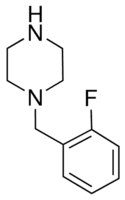
1-(2-Fluorobenzyl)piperazine
C11H15FN2
Chemical Synthesis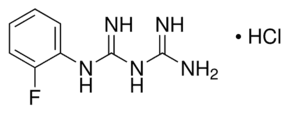
1-(2-Fluorophenyl)biguanide hydrochloride
Chemical Synthesis
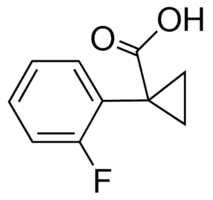
1-(2-Fluorophenyl)cyclopropanecarboxylic acid
C10H9FO2
Chemical Synthesis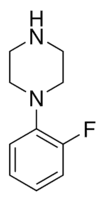
1-(2-Fluorophenyl)piperazine
C10H13FN2
Chemical Synthesis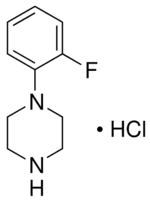
1-(2-Fluorophenyl)piperazine monohydrochloride
C10H13FN2 · HCl
Chemical Synthesis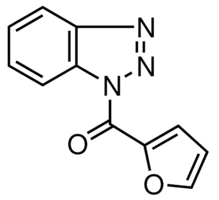
1-(2-Furoyl)-1H-benzotriazole
C11H7N3O2
Chemical Synthesis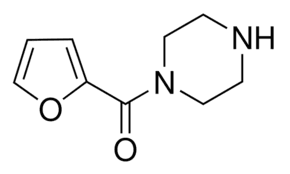
1-(2-Furoyl)piperazine
C9H12N2O2
Chemical Synthesis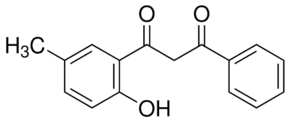
1-(2-Hydroxy-5-methylphenyl)-3-phenyl-1,3-propanedione
Chemical Synthesis
▶ Explore more

Bis(cyclopentadienyl)cobalt(III) hexafluorophosphate
C10H10CoF6P
Catalysis & Inorganic
1-(4-Chlorophenyl)biguanide hydrochloride
ClC6H4NHC(NH)NHC(NH)NH2 · HCl
Chemical Synthesis
Bis(cyclopentadienyl)dimethylzirconium(IV)
Catalysis & Inorganic

1-(4-Chlorophenyl)ethanol
ClC6H4CH(CH3)OH
Chemical Synthesis