
Dibenzotetrathiafulvalene
Dibenzotetrathiafulvalene (CAS: 24648-13-3), with the chemical formula C14H8S4 and a molecular weight of 304.47 g/mol, is a key p-type organic semiconductor. It is primarily employed in materials science for the creation of semiconducting charge transfer salts. This compound is instrumental in the development of advanced organic electronics, including organic field-effect transistors (OFETs), leveraging its unique electronic properties for novel device applications.
- IUPAC
- DBTTF,[2,2’]Bi[benzo[1,3]dithiolylidene]

Semiconducting Charge Transfer Salts
Dibenzotetrathiafulvalene serves as a building block for semiconducting charge transfer salts. It readily forms complexes with electron-accepting materials, such as TCNQ and F4TCNQ, enabling the tuning of electrical properties for various electronic applications.
Organic Field-Effect Transistors (OFETs)
As a p-type organic semiconductor, DB-TTF is investigated for its potential use in the active layers of organic field-effect transistors. Its molecular structure contributes to efficient charge transport, a critical factor for OFET performance.
Organic and Printed Electronics
The compound finds application in the broader field of organic and printed electronics. Its semiconducting nature makes it suitable for developing flexible and printable electronic devices, pushing the boundaries of current technology.
p-Type Small Molecules
DB-TTF is classified as a p-type small molecule semiconductor. These materials are crucial for organic electronic research, offering advantages in terms of processability and device fabrication for applications requiring positive charge carriers.
| Molecular weight | 304.47 |
|---|---|
| Empirical formula | C14H8S4 |
| Assay | 97% |
| Application | DB-TTF is used to make semiconducting charge transfer salts with electron accepting (n-type) materials, for example TCNQ (Aldrich Prod. No. 157635) and F4TCNQ (Aldrich Prod. No. 376779).1 |
| Melting point | 239-243 °C |

Hazard statements
- H410Very toxic to aquatic life with long-lasting effects
Precautionary statements
- P273Avoid release to the environment
- P501Dispose of contents and container per local regulations
| Protective equipment | Eyeshields, Gloves |
|---|---|
| Transport (UN / ADR) | UN 3077 9 / PGIII |
| Water hazard class (WGK, DE) | 3 |
| Hazard codes (EU) | N |
| Risk statements (R) | 50/53 |
| Safety statements (S) | 60-61 |
Hazard information is provided for guidance. Always consult the product Safety Data Sheet (SDS), available on request, before handling.
Documentation
Every batch ships with a Certificate of Analysis covering assay, identity and purity; the grade is confirmed against your enquiry. Safety Data Sheets and technical data sheets are available on request.
Supply & logistics
Samples for technical evaluation; bulk MOQ by grade and packaging. In-stock material ships in 7–10 working days, worldwide, with full export documentation.
What is Dibenzotetrathiafulvalene (CAS: 24648-13-3) used for?
+
Dibenzotetrathiafulvalene is used to make semiconducting charge transfer salts with electron accepting (n-type) materials, for example TCNQ and F4TCNQ. It is also utilised in materials science, particularly for organic field-effect transistors (OFETs) and other organic electronic applications.
What is the CAS number and formula for Dibenzotetrathiafulvalene?
+
The CAS number for Dibenzotetrathiafulvalene is 24648-13-3, and its empirical formula (Hill notation) is C14H8S4.
What grade and purity does Tech Serve Solutions supply for Dibenzotetrathiafulvalene?
+
Tech Serve Solutions supplies Dibenzotetrathiafulvalene with an assay of 97%. TSS does not represent this product as USP, BP, EP, or any pharmacopoeia grade.
What are the primary safety and handling considerations for Dibenzotetrathiafulvalene?
+
Dibenzotetrathiafulvalene is classified as harmful to aquatic life with long lasting effects (H410). Handle with care, using eyeshields and gloves. Ensure proper disposal procedures are followed (P501) and avoid release to the environment (P273). The assigned WGK Germany classification is 3.
How is Dibenzotetrathiafulvalene packed and exported?
+
Dibenzotetrathiafulvalene is shipped as UN 3077, Class 9, Packing Group III. TSS is a specialist global supplier and exporter of fine chemicals, providing reliable international shipping.
How can I request a sample or quote for Dibenzotetrathiafulvalene?
+
Please contact the TSS sales team to request a sample or a quotation for Dibenzotetrathiafulvalene. Our experts will assist you with your specific requirements.
▶ Related products

Poly(3-hexylthiophene-2,5-diyl)
Organic & Printed Electronics
![[6,6]-Phenyl C71 butyric acid methyl ester, mixture of isomers — chemical structure, CAS 609771-63-3; Organic & Printed Electronics, fine chemical supplied by Tech Serve Solutions](/_next/image?url=https%3A%2F%2Fpub-f4d920c906024441a773a96f7098e551.r2.dev%2Fimages%2Fproducts%2F609771-63-3.png&w=3840&q=75)
[6,6]-Phenyl C71 butyric acid methyl ester, mixture of isomers
Organic & Printed Electronics

6,13-Bis(triisopropylsilylethynyl)pentacene
Organic & Printed Electronics
![[6,6]-Phenyl C61 butyric acid methyl ester — chemical structure, CAS 160848-22-6; Organic & Printed Electronics, fine chemical supplied by Tech Serve Solutions](/_next/image?url=https%3A%2F%2Fpub-f4d920c906024441a773a96f7098e551.r2.dev%2Fimages%2Fproducts%2F160848-22-6.png&w=3840&q=75)
[6,6]-Phenyl C61 butyric acid methyl ester
Organic & Printed Electronics
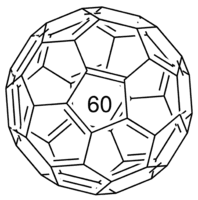
Fullerene-C60
C60
Organic & Printed Electronics
Cholesteryl hemisuccinate
C31H50O4
Organic & Printed Electronics
3,4-Ethylenedioxythiophene
Organic & Printed Electronics

Di-tetrabutylammonium cis-bis(isothiocyanato)bis(2,2′-bipyridyl-4,4′-dicarboxylato)ruthenium(II)
Organic & Printed Electronics
▶ Explore more

Bis(cyclopentadienyl)cobalt(III) hexafluorophosphate
C10H10CoF6P
Catalysis & Inorganic
1-(4-Chlorophenyl)biguanide hydrochloride
ClC6H4NHC(NH)NHC(NH)NH2 · HCl
Chemical Synthesis
Bis(cyclopentadienyl)dimethylzirconium(IV)
Catalysis & Inorganic

1-(4-Chlorophenyl)ethanol
ClC6H4CH(CH3)OH
Chemical Synthesis