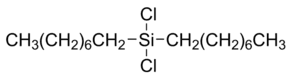
Di-n-octyldichlorosilane
Di-n-octyldichlorosilane (CAS: 18416-07-4), with the molecular formula C16H34Cl2Si and a molecular weight of 325.43 g/mol, is a liquid organosilicon compound. It serves as a crucial precursor in the synthesis of various Organic Photovoltaic (OPV) materials. This compound is instrumental in developing OPV materials that exhibit significant power conversion efficiencies (PCEs), making it valuable in advanced materials science and organic electronics.
- IUPAC
- Dichlorodioctylsilane
Organic Photovoltaic (OPV) Material Precursor
Di-n-octyldichlorosilane is used as a key building block for synthesising advanced materials for Organic Photovoltaics. These materials have demonstrated notable power conversion efficiencies, contributing to the development of efficient organic solar cells.
Advanced Materials Synthesis
The compound is employed in the creation of specialised organic materials. Its structure allows for incorporation into polymer backbones or side chains, influencing material properties for electronic applications.
Micro/Nanoelectronics Applications
Utilised within micro and nanoelectronics research and development, this silane derivative can be functionalised to modify surfaces or create novel electronic components. Its role extends to organic and printed electronics sectors.
| Molecular weight | 325.43 |
|---|---|
| Empirical formula | C16H34Cl2Si |
| Assay | 98% |
| Form | liquid |
| Density | 0.936 g/mL at 25 °C |
| Refractive index | n20/D 1.456 |
| Application | This material is a precursor for a wide range of Organic Photovoltaic (OPV) materials that give relatively high (>3%) power conversion efficiencies (PCEs).1,2,3 |

Hazard statements
- H314Causes severe skin burns and eye damage
Precautionary statements
- P280Wear protective gloves, clothing and eye/face protection
- P305IF IN EYES
- P310Immediately call a POISON CENTER or doctor
| Flash point | 110 °C / 230 °F |
|---|---|
| Water hazard class (WGK, DE) | 3 |
| Hazard codes (EU) | C |
| Risk statements (R) | 34 |
| Safety statements (S) | 26-36/37/39-45 |
Hazard information is provided for guidance. Always consult the product Safety Data Sheet (SDS), available on request, before handling.
Documentation
Every batch ships with a Certificate of Analysis covering assay, identity and purity; the grade is confirmed against your enquiry. Safety Data Sheets and technical data sheets are available on request.
Supply & logistics
Samples for technical evaluation; bulk MOQ by grade and packaging. In-stock material ships in 7–10 working days, worldwide, with full export documentation.
What is Di-n-octyldichlorosilane primarily used for?
+
Di-n-octyldichlorosilane is primarily used as a precursor for synthesising Organic Photovoltaic (OPV) materials, which are employed in the development of organic solar cells.
What is the CAS number and molecular formula for Di-n-octyldichlorosilane?
+
The CAS number for Di-n-octyldichlorosilane is 18416-07-4, and its molecular formula is C16H34Cl2Si.
What grade and purity does Tech Serve Solutions supply?
+
Tech Serve Solutions supplies Di-n-octyldichlorosilane with an assay of 98%. This product is suitable for research and technical applications. TSS does not represent this product as USP, BP, or EP grade.
What are the primary safety concerns when handling Di-n-octyldichlorosilane?
+
Di-n-octyldichlorosilane is classified as Danger with hazard statement H314, indicating it causes severe skin burns and eye damage. Appropriate personal protective equipment (PPE), including gloves, eye protection, and protective clothing, should be worn. Handle in a well-ventilated area, and have emergency procedures in place.
How is Di-n-octyldichlorosilane shipped and exported?
+
As a specialist global supplier and exporter since 1998, Tech Serve Solutions expertly handles the packing, shipping, and export of Di-n-octyldichlorosilane, adhering to all relevant international regulations for chemical transport.
How can I request a sample or quote for Di-n-octyldichlorosilane?
+
To request a sample or a quote for Di-n-octyldichlorosilane, please contact our sales team through the website or by phone. Provide your specific requirements, and we will respond promptly.
▶ Related products
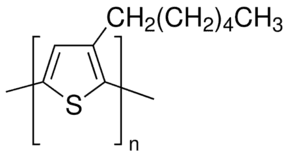
Poly(3-hexylthiophene-2,5-diyl)
Organic & Printed Electronics
![[6,6]-Phenyl C71 butyric acid methyl ester, mixture of isomers — chemical structure, CAS 609771-63-3; Organic & Printed Electronics, fine chemical supplied by Tech Serve Solutions](/_next/image?url=https%3A%2F%2Fpub-f4d920c906024441a773a96f7098e551.r2.dev%2Fimages%2Fproducts%2F609771-63-3.png&w=3840&q=75)
[6,6]-Phenyl C71 butyric acid methyl ester, mixture of isomers
Organic & Printed Electronics
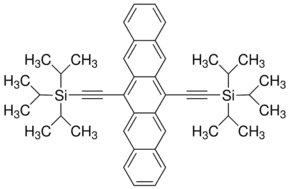
6,13-Bis(triisopropylsilylethynyl)pentacene
Organic & Printed Electronics
![[6,6]-Phenyl C61 butyric acid methyl ester — chemical structure, CAS 160848-22-6; Organic & Printed Electronics, fine chemical supplied by Tech Serve Solutions](/_next/image?url=https%3A%2F%2Fpub-f4d920c906024441a773a96f7098e551.r2.dev%2Fimages%2Fproducts%2F160848-22-6.png&w=3840&q=75)
[6,6]-Phenyl C61 butyric acid methyl ester
Organic & Printed Electronics
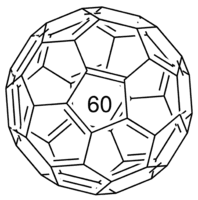
Fullerene-C60
C60
Organic & Printed Electronics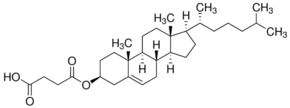
Cholesteryl hemisuccinate
C31H50O4
Organic & Printed Electronics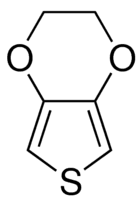
3,4-Ethylenedioxythiophene
Organic & Printed Electronics
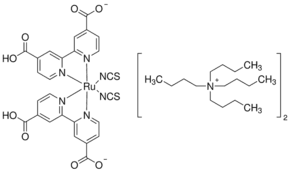
Di-tetrabutylammonium cis-bis(isothiocyanato)bis(2,2′-bipyridyl-4,4′-dicarboxylato)ruthenium(II)
Organic & Printed Electronics