
Di-μ-chlorotetrakis[2-(1-isoquinolinyl-N)phenyl-C]diiridium(III)
Di-μ-chlorotetrakis[2-(1-isoquinolinyl-N)phenyl-C]diiridium(III), CAS 435294-69-2, has the molecular formula C60H40Cl2Ir2N4 and a molecular weight of 1272.33 g/mol. This iridium complex serves as a key material in advanced electronic applications, particularly within the field of organic electronics. It is widely recognised for its utility as a light emitter and dopant in the fabrication of OLED and PLED devices, contributing to efficient and stable electroluminescence.
- IUPAC
- Iridium phenylquinoline dichloro-bridged dimer,[(pq)2IrCl]2
![Di-μ-chlorotetrakis[2-(1-isoquinolinyl-N)phenyl-C]diiridium(III) (C60H40Cl2Ir2N4) — chemical structure, CAS 435294-69-2; Materials Science, fine chemical supplied by Tech Serve Solutions](/_next/image?url=https%3A%2F%2Fpub-f4d920c906024441a773a96f7098e551.r2.dev%2Fimages%2Fproducts%2F435294-69-2.png&w=3840&q=75)
OLED and PLED Materials
This iridium complex is employed as a light-emitting material or dopant in the construction of Organic Light-Emitting Diodes (OLEDs) and Polymer Light-Emitting Diodes (PLEDs). Its unique photophysical properties contribute to efficient electroluminescence for display and lighting technologies.
Materials Science Research
As a sophisticated organometallic compound, it finds application in materials science research, enabling the investigation and development of novel functional materials. Its structure and properties are of interest for creating advanced electronic and optoelectronic components.
Ligand and Metal Complex Precursor
The compound can serve as a precursor or building block in the synthesis of more complex iridium-based catalysts or materials. Its dichloro-bridged dimeric structure offers versatile coordination chemistry.
Organic Electronics
This material is a valuable component in the development of organic electronic devices beyond displays, such as sensors or transistors, where precise control over electronic properties is essential.
| Molecular weight | 1272.33 |
|---|---|
| Empirical formula | C60H40Cl2Ir2N4 |
| Assay | 95% (HPLC) |
| Melting point | 440-455 °C |

Hazard statements
- H315Causes skin irritation
- H319Causes serious eye irritation
- H335May cause respiratory irritation
Precautionary statements
- P261Avoid breathing dust, fume, gas or vapours
- P305IF IN EYES
| Water hazard class (WGK, DE) | 3 |
|---|---|
| Hazard codes (EU) | Xi |
| Risk statements (R) | 36/37/38 |
| Safety statements (S) | 26 |
Hazard information is provided for guidance. Always consult the product Safety Data Sheet (SDS), available on request, before handling.
Documentation
Every batch ships with a Certificate of Analysis covering assay, identity and purity; the grade is confirmed against your enquiry. Safety Data Sheets and technical data sheets are available on request.
Supply & logistics
Samples for technical evaluation; bulk MOQ by grade and packaging. In-stock material ships in 7–10 working days, worldwide, with full export documentation.
What is Di-μ-chlorotetrakis[2-(1-isoquinolinyl-N)phenyl-C]diiridium(III) used for?
+
Di-μ-chlorotetrakis[2-(1-isoquinolinyl-N)phenyl-C]diiridium(III) is primarily used as a light emitter and dopant in OLED and PLED devices, and in materials science research for organic and printed electronics.
What are the CAS number and molecular formula?
+
The CAS number for this compound is 435294-69-2, and its molecular formula is C60H40Cl2Ir2N4.
What grade and purity does Tech Serve Solutions supply?
+
Tech Serve Solutions supplies this product at 95% (HPLC) purity. TSS does not represent this product as USP, BP, EP or pharmaceutical grade.
What are the safety and handling considerations?
+
This compound is classified with GHS07 symbol and a Warning signal word. It carries hazard statements H315 (Causes skin irritation), H319 (Causes serious eye irritation), and H335 (May cause respiratory irritation). Handle with appropriate personal protective equipment, ensuring good ventilation, and avoid contact with skin, eyes, and clothing. P261, P305 + P351 + P338.
How is the product typically packed and shipped?
+
Products are packed securely in appropriate containers suitable for chemical transport. Tech Serve Solutions exports globally, adhering to all relevant shipping regulations for hazardous materials.
How can I request a quote or sample?
+
To request a quote or sample, please contact our sales department via the website or by calling our main office. Our team will promptly assist you with your inquiry.
▶ Related products
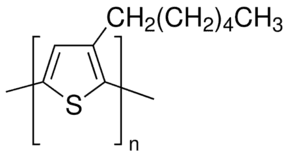
Poly(3-hexylthiophene-2,5-diyl)
Organic & Printed Electronics
![[6,6]-Phenyl C71 butyric acid methyl ester, mixture of isomers — chemical structure, CAS 609771-63-3; Organic & Printed Electronics, fine chemical supplied by Tech Serve Solutions](/_next/image?url=https%3A%2F%2Fpub-f4d920c906024441a773a96f7098e551.r2.dev%2Fimages%2Fproducts%2F609771-63-3.png&w=3840&q=75)
[6,6]-Phenyl C71 butyric acid methyl ester, mixture of isomers
Organic & Printed Electronics
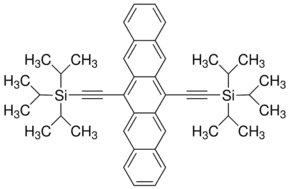
6,13-Bis(triisopropylsilylethynyl)pentacene
Organic & Printed Electronics
![[6,6]-Phenyl C61 butyric acid methyl ester — chemical structure, CAS 160848-22-6; Organic & Printed Electronics, fine chemical supplied by Tech Serve Solutions](/_next/image?url=https%3A%2F%2Fpub-f4d920c906024441a773a96f7098e551.r2.dev%2Fimages%2Fproducts%2F160848-22-6.png&w=3840&q=75)
[6,6]-Phenyl C61 butyric acid methyl ester
Organic & Printed Electronics
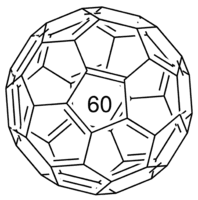
Fullerene-C60
C60
Organic & Printed Electronics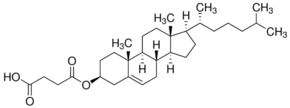
Cholesteryl hemisuccinate
C31H50O4
Organic & Printed Electronics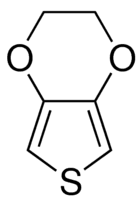
3,4-Ethylenedioxythiophene
Organic & Printed Electronics
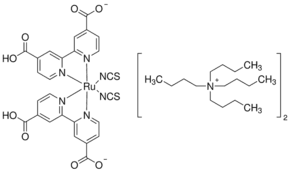
Di-tetrabutylammonium cis-bis(isothiocyanato)bis(2,2′-bipyridyl-4,4′-dicarboxylato)ruthenium(II)
Organic & Printed Electronics
▶ Explore more

Bis(cyclopentadienyl)cobalt(III) hexafluorophosphate
C10H10CoF6P
Catalysis & Inorganic
1-(4-Chlorophenyl)biguanide hydrochloride
ClC6H4NHC(NH)NHC(NH)NH2 · HCl
Chemical Synthesis
Bis(cyclopentadienyl)dimethylzirconium(IV)
Catalysis & Inorganic

1-(4-Chlorophenyl)ethanol
ClC6H4CH(CH3)OH
Chemical Synthesis