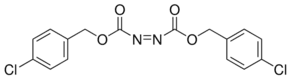
Di-(4-chlorobenzyl)azodicarboxylate
Di-(4-chlorobenzyl)azodicarboxylate (CAS: 916320-82-6) is a stable, solid reagent with the molecular formula C16H12Cl2N2O4 and a molecular weight of 367.18. It serves as a high-quality alternative to DEAD and DIAD in Mitsunobu reactions. Its notable advantage lies in the formation of a readily separable and recyclable hydrazine byproduct, simplifying reaction work-up and enhancing sustainability in synthetic chemistry.
- IUPAC
- Bis(4-chlorobenzyl)azodicarboxylate,DCAD
Mitsunobu Reactions
Di-(4-chlorobenzyl)azodicarboxylate functions effectively in Mitsunobu couplings. It offers a stable, solid alternative to commonly used azodicarboxylates, simplifying handling and improving reaction control.
C-X Bond Formation
This reagent is employed in synthetic strategies for forming carbon-heteroatom bonds. Its unique byproduct profile aids in achieving cleaner reaction outcomes and facilitating product isolation.
Chemical Synthesis
As a versatile synthetic reagent, Di-(4-chlorobenzyl)azodicarboxylate is valuable in complex organic synthesis pathways, enabling diverse chemical transformations with improved efficiency.
| Molecular weight | 367.18 |
|---|---|
| Empirical formula | C16H12Cl2N2O4 |
| Assay | 97% |
| Application | Di-(4-chlorobenzyl)azodicarboxylate (DCAD) is a novel, stable, solid alternative to DEAD and DIAD for a variety of Mitsunobu couplings giving a readily separable hydrazine byproduct that can be recycled.4 |
| Melting point | 108-112 °C |

Hazard statements
- H317May cause an allergic skin reaction
Precautionary statements
- P280Wear protective gloves, clothing and eye/face protection
| Water hazard class (WGK, DE) | 3 |
|---|---|
| Hazard codes (EU) | Xi |
| Risk statements (R) | 43 |
| Safety statements (S) | 36/37 |
Hazard information is provided for guidance. Always consult the product Safety Data Sheet (SDS), available on request, before handling.
Documentation
Every batch ships with a Certificate of Analysis covering assay, identity and purity; the grade is confirmed against your enquiry. Safety Data Sheets and technical data sheets are available on request.
Supply & logistics
Samples for technical evaluation; bulk MOQ by grade and packaging. In-stock material ships in 7–10 working days, worldwide, with full export documentation.
What is Di-(4-chlorobenzyl)azodicarboxylate used for?
+
Di-(4-chlorobenzyl)azodicarboxylate is primarily used as a stable, solid reagent in Mitsunobu reactions and other C-X bond-forming synthetic transformations, offering advantages over traditional azodicarboxylates due to its separable and recyclable byproduct.
What are the CAS number and molecular formula?
+
The CAS number for Di-(4-chlorobenzyl)azodicarboxylate is 916320-82-6, and its molecular formula is C16H12Cl2N2O4.
What grade and purity does Tech Serve Solutions supply?
+
Tech Serve Solutions supplies Di-(4-chlorobenzyl)azodicarboxylate with an assay of 97%. It is supplied as a research-grade chemical and is not represented as USP, BP, EP, or any pharmacopoeia grade.
What are the safety and handling considerations?
+
Di-(4-chlorobenzyl)azodicarboxylate is classified as a Warning (GHS07) and may cause an allergic skin reaction (H317). Handle with appropriate personal protective equipment, including gloves and protective clothing (P280, 43, 36/37).
How is Di-(4-chlorobenzyl)azodicarboxylate packed and shipped?
+
This chemical is carefully packed and exported globally by Tech Serve Solutions, adhering to all relevant regulations for the shipment of chemical reagents.
How can I request a sample or quote?
+
To request a sample or obtain a quotation for Di-(4-chlorobenzyl)azodicarboxylate, please contact our sales team through the TSS website or your dedicated account manager.
▶ Related products
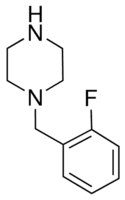
1-(2-Fluorobenzyl)piperazine
C11H15FN2
Chemical Synthesis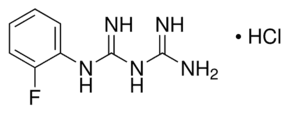
1-(2-Fluorophenyl)biguanide hydrochloride
Chemical Synthesis
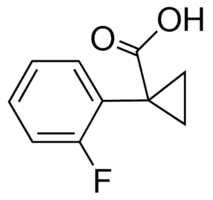
1-(2-Fluorophenyl)cyclopropanecarboxylic acid
C10H9FO2
Chemical Synthesis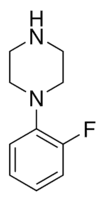
1-(2-Fluorophenyl)piperazine
C10H13FN2
Chemical Synthesis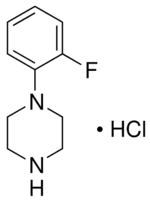
1-(2-Fluorophenyl)piperazine monohydrochloride
C10H13FN2 · HCl
Chemical Synthesis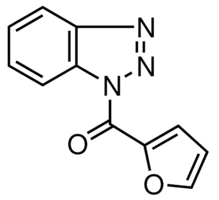
1-(2-Furoyl)-1H-benzotriazole
C11H7N3O2
Chemical Synthesis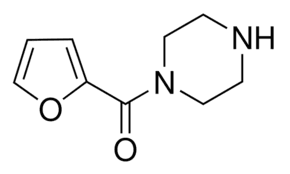
1-(2-Furoyl)piperazine
C9H12N2O2
Chemical Synthesis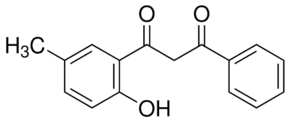
1-(2-Hydroxy-5-methylphenyl)-3-phenyl-1,3-propanedione
Chemical Synthesis