
DBP
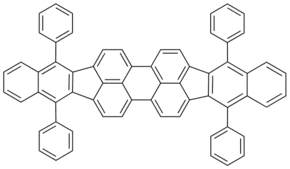
DBP (CAS: 175606-05-0), with the molecular formula C64H36 and a molecular weight of 804.97 g/mol, is an n-type organic semiconductor. This compound is integral to advancements in organic electronics, specifically finding application in the development of Organic Field-Effect Transistors (OFETs) and Organic Photovoltaics (OPVs). Its well-defined electronic properties make it a valuable material for research and development in next-generation electronic devices.
- IUPAC
- 5,10,15,20-Tetraphenylbisbenz[5,6]indeno[1,2,3-cd:1′,2′,3′-lm]perylene,Dibenzo{[f,f′]-4,4′,7,7′-tetraphenyl}diindeno[1,2,3-cd:1′,2′,3′-lm]perylene,Red 2
- Synonyms
- 5,10,15,20-Tetraphenylbisbenz[5,6]indeno[1,2,3-cd:1′,2′,3′-lm]perylene, Dibenzo{[f,f′]-4,4′,7,7′-tetraphenyl}diindeno[1,2,3-cd:1′,2′,3′-lm]perylene, Red 2
Organic Field-Effect Transistors (OFETs)
DBP serves as a key component in the fabrication of OFETs. Its properties as an n-type semiconductor are leveraged to control current flow, forming the basis for switching and amplification in organic electronic circuits.
Organic Photovoltaics (OPVs)
This compound is utilised in the development of OPVs, contributing to the active layer that converts sunlight into electricity. Its electronic characteristics influence device performance metrics such as short-circuit current density and open-circuit voltage.
Organic and Printed Electronics
DBP is an essential material within the broader field of organic and printed electronics. It enables the creation of flexible, lightweight, and potentially low-cost electronic devices through solution-processing techniques.
Materials Science Research
As a well-characterised organic semiconductor, DBP is frequently employed in materials science research to study charge transport mechanisms and explore new molecular designs for electronic applications.
| Molecular weight | 804.97 |
|---|---|
| Empirical formula | C64H36 |
| Assay | 98% (HPLC) |
| Loss on drying | 0.5 wt. %, 373 °C |
| Melting point | >400 °C |
| Orbital Energy | HOMO 5.5 eV (CV)LUMO 3.5 eV (CV) |
|---|---|
| Opv Device Performance | ITO/DBP/C60/BCP/Al1• Short-circuit current density (Jsc): 6.3 mA/cm2• Open-circuit voltage (Voc): 0.92 V• Fill Factor (FF): 0.62• Power Conversion Efficiency (PCE): 0.36 % |
Documentation
Every batch ships with a Certificate of Analysis covering assay, identity and purity; the grade is confirmed against your enquiry. Safety Data Sheets and technical data sheets are available on request.
Supply & logistics
Samples for technical evaluation; bulk MOQ by grade and packaging. In-stock material ships in 7–10 working days, worldwide, with full export documentation.
What is DBP used for?
+
DBP is primarily used in the development of Organic Field-Effect Transistors (OFETs) and Organic Photovoltaics (OPVs), serving as an n-type organic semiconductor material for organic and printed electronics research and applications.
What are the CAS number and formula for DBP?
+
The CAS number for DBP is 175606-05-0, and its molecular formula is C64H36.
What grade and purity does Tech Serve Solutions supply?
+
Tech Serve Solutions supplies DBP with an assay of 98% (HPLC). This product is intended for research and development purposes and is not represented as USP, BP, EP, or any other pharmacopoeia grade.
How should DBP be handled and stored?
+
DBP has a high melting point (>400 °C) and a high loss on drying (0.5 wt. % at 373 °C). Specific handling procedures should be followed according to standard laboratory safety protocols for organic chemicals. Please refer to the Safety Data Sheet (SDS) for detailed hazard information and recommended safety precautions. Germany's WGK classification is 3.
How is DBP packed, shipped, and exported?
+
DBP is carefully packed to ensure its integrity during transit. Tech Serve Solutions has extensive experience in global shipping and exporting fine chemicals, adhering to all relevant international regulations for safe and compliant transport.
How can I request a sample or quote for DBP?
+
To request a sample or a quote for DBP, please visit the product page on the Tech Serve Solutions website and utilise the online request forms, or contact our sales team directly via email or phone.
▶ Related products
Poly(3-hexylthiophene-2,5-diyl)
Organic & Printed Electronics
![[6,6]-Phenyl C71 butyric acid methyl ester, mixture of isomers — chemical structure, CAS 609771-63-3; Organic & Printed Electronics, fine chemical supplied by Tech Serve Solutions](/_next/image?url=https%3A%2F%2Fpub-f4d920c906024441a773a96f7098e551.r2.dev%2Fimages%2Fproducts%2F609771-63-3.png&w=3840&q=75)
[6,6]-Phenyl C71 butyric acid methyl ester, mixture of isomers
Organic & Printed Electronics
6,13-Bis(triisopropylsilylethynyl)pentacene
Organic & Printed Electronics
![[6,6]-Phenyl C61 butyric acid methyl ester — chemical structure, CAS 160848-22-6; Organic & Printed Electronics, fine chemical supplied by Tech Serve Solutions](/_next/image?url=https%3A%2F%2Fpub-f4d920c906024441a773a96f7098e551.r2.dev%2Fimages%2Fproducts%2F160848-22-6.png&w=3840&q=75)
[6,6]-Phenyl C61 butyric acid methyl ester
Organic & Printed Electronics
Fullerene-C60
C60
Organic & Printed Electronics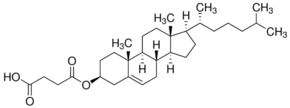
Cholesteryl hemisuccinate
C31H50O4
Organic & Printed Electronics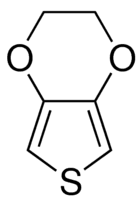
3,4-Ethylenedioxythiophene
Organic & Printed Electronics
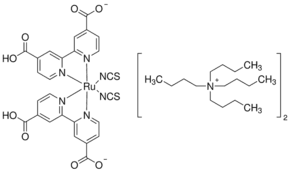
Di-tetrabutylammonium cis-bis(isothiocyanato)bis(2,2′-bipyridyl-4,4′-dicarboxylato)ruthenium(II)
Organic & Printed Electronics
▶ Explore more

Bis(cyclopentadienyl)cobalt(III) hexafluorophosphate
C10H10CoF6P
Catalysis & Inorganic
1-(4-Chlorophenyl)biguanide hydrochloride
ClC6H4NHC(NH)NHC(NH)NH2 · HCl
Chemical Synthesis
Bis(cyclopentadienyl)dimethylzirconium(IV)
Catalysis & Inorganic

1-(4-Chlorophenyl)ethanol
ClC6H4CH(CH3)OH
Chemical Synthesis