
D-Tryptophan
D-Tryptophan (CAS: 153-94-6, C11H12N2O2, MW: 204.23) is a non-proteinogenic amino acid derivative with significant applications in cell biology and neuroscience research. It serves as a crucial component in cell culture media, specifically noted for its use in human embryonic kidney cells. D-Tryptophan also plays a role in studying cellular signalling pathways, particularly in the release of incretins from enteroendocrine cells, and in neurotransmission research.
- IUPAC
- (R)-2-Amino-3-(3-indolyl)propionic acid,D-α-Amino-3-indolepropionic acid
- Synonyms
- (R)-2-Amino-3-(3-indolyl)propionic acidD-α-Amino-3-indolepropionic acid
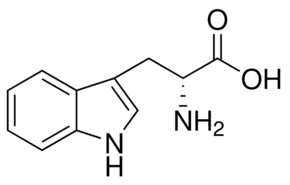
Cell Culture Media Component
D-Tryptophan is utilised in cell culture, notably in the cultivation of human embryonic kidney cells (HEK-293, ATCC: CRL-1573). Its inclusion supports specific cellular functions and research requirements within these cell lines.
Study of Incretin Release
This compound functions as a sweetener analogue in research investigating the mechanisms of incretin release from enteroendocrine cells. It helps differentiate responses triggered by sugars from those by non-sugar sweeteners.
Neuroscience and Neurotransmission Research
As a derivative of tryptophan, D-Tryptophan is employed in neuroscience to explore neurotransmission pathways and signalling mechanisms. Its structural relation to endogenous neurotransmitters makes it a valuable research tool.
| Molecular weight | 204.23 |
|---|---|
| Empirical formula | C11H12N2O2 |
| Assay | ≥98.0% (HPLC) |
| Application | D-Tryptophan can be used for Human embryonic kidney cell (HEK-293, ATCC: CRL-1573) culture.1The product is a sweetener used to study the release of incretins from enteroendocrine cells triggered by sugar but not by sweeteners.2 |
| Melting point | 282-285 °C (dec.)(lit.) |
| Protective equipment | Eyeshields, Gloves, type N95 (US), type P1 (EN143) respirator filter |
|---|---|
| Water hazard class (WGK, DE) | 3 |
Hazard information is provided for guidance. Always consult the product Safety Data Sheet (SDS), available on request, before handling.
| Gene Information | human ... GRINA(2907)mouse ... GRINA(66168)rat ... GRINA(266668) |
|---|
Documentation
Every batch ships with a Certificate of Analysis covering assay, identity and purity; the grade is confirmed against your enquiry. Safety Data Sheets and technical data sheets are available on request.
Supply & logistics
Samples for technical evaluation; bulk MOQ by grade and packaging. In-stock material ships in 7–10 working days, worldwide, with full export documentation.
What is D-Tryptophan used for?
+
D-Tryptophan is primarily used in cell culture, for instance, with human embryonic kidney cells (HEK-293), and in research related to cell signalling, incretin release, and neuroscience, including neurotransmission studies.
What are the CAS number and formula for D-Tryptophan?
+
The CAS number for D-Tryptophan is 153-94-6, and its molecular formula is C11H12N2O2.
What grade and purity does Tech Serve Solutions supply for D-Tryptophan?
+
Tech Serve Solutions supplies D-Tryptophan with a minimum purity of 98.0% (HPLC). We do not represent this product as USP, BP, EP, or other pharmacopoeia grades unless explicitly stated.
What are the safety and handling recommendations for D-Tryptophan?
+
Handling D-Tryptophan requires appropriate personal protective equipment, including eyeshields and gloves. A type N95 (US) or type P1 (EN143) respirator filter is recommended. The compound is classified with a WGK of 3 in Germany.
Is D-Tryptophan a controlled substance?
+
The provided data does not indicate that D-Tryptophan is a controlled substance.
How is D-Tryptophan packed, shipped, and exported?
+
D-Tryptophan is carefully packed for shipment and export in compliance with international regulations for chemical transport. Specific packaging details are available upon request.
How can I request a quote or sample of D-Tryptophan?
+
To request a quote or sample of D-Tryptophan, please contact our sales department through the website or by phone, providing your specific requirements.
▶ Related products
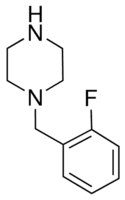
1-(2-Fluorobenzyl)piperazine
C11H15FN2
Chemical Synthesis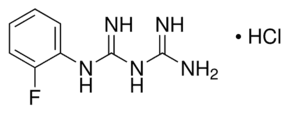
1-(2-Fluorophenyl)biguanide hydrochloride
Chemical Synthesis
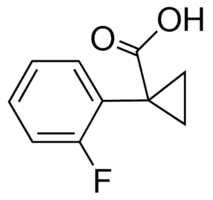
1-(2-Fluorophenyl)cyclopropanecarboxylic acid
C10H9FO2
Chemical Synthesis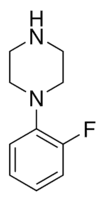
1-(2-Fluorophenyl)piperazine
C10H13FN2
Chemical Synthesis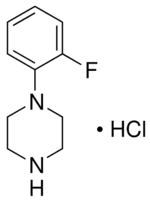
1-(2-Fluorophenyl)piperazine monohydrochloride
C10H13FN2 · HCl
Chemical Synthesis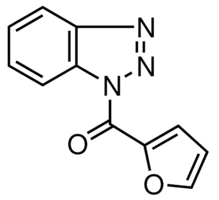
1-(2-Furoyl)-1H-benzotriazole
C11H7N3O2
Chemical Synthesis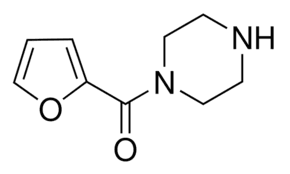
1-(2-Furoyl)piperazine
C9H12N2O2
Chemical Synthesis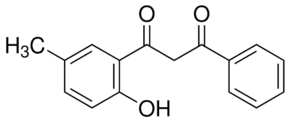
1-(2-Hydroxy-5-methylphenyl)-3-phenyl-1,3-propanedione
Chemical Synthesis
▶ Explore more

Bis(cyclopentadienyl)cobalt(III) hexafluorophosphate
C10H10CoF6P
Catalysis & Inorganic
1-(4-Chlorophenyl)biguanide hydrochloride
ClC6H4NHC(NH)NHC(NH)NH2 · HCl
Chemical Synthesis
Bis(cyclopentadienyl)dimethylzirconium(IV)
Catalysis & Inorganic

1-(4-Chlorophenyl)ethanol
ClC6H4CH(CH3)OH
Chemical Synthesis