
D-Lysine
D-Lysine (CAS: 923-27-3), with the molecular formula H2N(CH2)4CH(NH2)CO2H and a molecular weight of 146.19 g/mol, is an enantiomer of the essential amino acid lysine. It is commonly encountered as a chemical building block in synthesis and research. Supplied by Tech Serve Solutions, it is characterised by its specific optical activity.
- IUPAC
- (R)-2,6-Diaminocaproic acid
- Synonyms
- (R)-2,6-Diaminocaproic acid

Chemical Synthesis
D-Lysine serves as a chiral building block in the synthesis of complex organic molecules and peptides. Its defined stereochemistry is crucial for creating stereospecific compounds.
Biochemical Research
This D-enantiomer is utilised in biochemical studies, particularly in peptide chemistry and chemical biology, to investigate structure-activity relationships or to create non-natural peptide analogues.
Peptide Chemistry
It is employed in the construction of peptides where the incorporation of a D-amino acid is required to confer specific properties such as increased resistance to enzymatic degradation.
| Molecular weight | 146.19 |
|---|---|
| Linear formula | H2N(CH2)4CH(NH2)CO2H |
| Assay | ≥96.0% (dried material, NT) |
| Solubility | H2O: soluble |
| Optical activity | [α]20/D −15±2°, c = 1% in H2O |
| Storage temperature | −20°C |
| Impurities tested | ≤5% water |
| Melting point | 218 °C (dec.)(lit.)220-225 °C (dec.) |
| Protective equipment | Eyeshields, Gloves, type N95 (US), type P1 (EN143) respirator filter |
|---|---|
| Water hazard class (WGK, DE) | 1 |
Hazard information is provided for guidance. Always consult the product Safety Data Sheet (SDS), available on request, before handling.
Documentation
Every batch ships with a Certificate of Analysis covering assay, identity and purity; the grade is confirmed against your enquiry. Safety Data Sheets and technical data sheets are available on request.
Supply & logistics
Samples for technical evaluation; bulk MOQ by grade and packaging. In-stock material ships in 7–10 working days, worldwide, with full export documentation.
What is D-Lysine used for?
+
D-Lysine is used as a chiral building block in chemical synthesis, for biochemical research, and in peptide chemistry to create non-natural peptide analogues or study structure-activity relationships.
What is the CAS number and formula for D-Lysine?
+
The CAS number for D-Lysine is 923-27-3, and its linear formula is H2N(CH2)4CH(NH2)CO2H.
What grade and purity does Tech Serve Solutions supply?
+
Tech Serve Solutions supplies D-Lysine with an assay of ≥96.0% (dried material). It contains ≤5% water. TSS does not represent this product as USP, BP, or EP grade.
How should D-Lysine be handled and stored?
+
Handle D-Lysine with appropriate personal protective equipment, including eyeshields, gloves, and a suitable respirator filter. Store at −20°C. Refer to the safety data sheet for comprehensive handling information.
Is D-Lysine a controlled substance?
+
The provided data does not indicate that D-Lysine (CAS: 923-27-3) is a controlled substance.
How is D-Lysine shipped?
+
D-Lysine is typically shipped under conditions suitable for maintaining its stability, such as at −20°C. Tech Serve Solutions exports globally.
How can I request a sample or quote for D-Lysine?
+
Please contact the Tech Serve Solutions sales team via our website or direct contact details to request a sample or obtain a quotation for D-Lysine.
▶ Related products
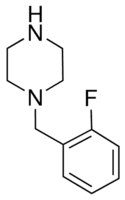
1-(2-Fluorobenzyl)piperazine
C11H15FN2
Chemical Synthesis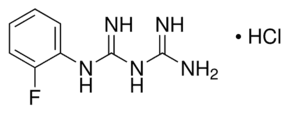
1-(2-Fluorophenyl)biguanide hydrochloride
Chemical Synthesis
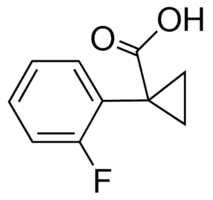
1-(2-Fluorophenyl)cyclopropanecarboxylic acid
C10H9FO2
Chemical Synthesis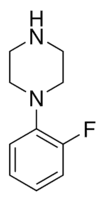
1-(2-Fluorophenyl)piperazine
C10H13FN2
Chemical Synthesis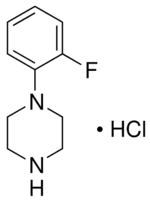
1-(2-Fluorophenyl)piperazine monohydrochloride
C10H13FN2 · HCl
Chemical Synthesis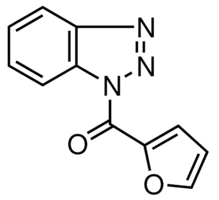
1-(2-Furoyl)-1H-benzotriazole
C11H7N3O2
Chemical Synthesis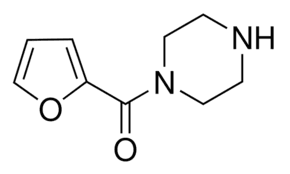
1-(2-Furoyl)piperazine
C9H12N2O2
Chemical Synthesis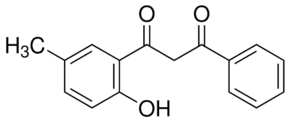
1-(2-Hydroxy-5-methylphenyl)-3-phenyl-1,3-propanedione
Chemical Synthesis
▶ Explore more

Bis(cyclopentadienyl)cobalt(III) hexafluorophosphate
C10H10CoF6P
Catalysis & Inorganic
1-(4-Chlorophenyl)biguanide hydrochloride
ClC6H4NHC(NH)NHC(NH)NH2 · HCl
Chemical Synthesis
Bis(cyclopentadienyl)dimethylzirconium(IV)
Catalysis & Inorganic

1-(4-Chlorophenyl)ethanol
ClC6H4CH(CH3)OH
Chemical Synthesis