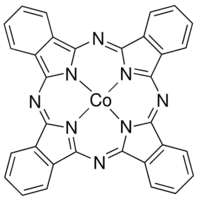
Cobalt(II) phthalocyanine
Cobalt(II) phthalocyanine (CAS: 3317-67-7), with the molecular formula C32H16CoN8 and a molecular weight of 571.46 g/mol, is a notable coordination complex. It is widely recognised for its intense colour and remarkable thermal and chemical stability. This compound finds significant utility as an infrared dye and in materials science, particularly within organic and printed electronics and photonic applications due to its unique optical properties.
- IUPAC
- Cobaltous phthalocyaninate,PcCo,Phthalocyanine cobalt(II) salt
- Synonyms
- Cobaltous phthalocyaninatePcCoPhthalocyanine cobalt(II) salt
Infrared (IR) Dyes
Cobalt(II) phthalocyanine is employed as a dye that absorbs and emits in the infrared spectrum. Its stable structure makes it suitable for applications requiring durable colourants.
Materials Science
This compound is a key material in advanced applications, including organic and printed electronics. Its properties are leveraged in the development of new electronic and optoelectronic devices.
Photonic and Optical Materials
The unique light absorption and emission characteristics of Cobalt(II) phthalocyanine make it valuable in photonic and optical materials research. It contributes to the development of devices that interact with light in specific ways.
Phthalocyanine Chemistry
As a representative of the phthalocyanine dye class, it serves as a model compound for research into the synthesis, properties, and applications of these macrocyclic compounds.
| Molecular weight | 571.46 |
|---|---|
| Empirical formula | C32H16CoN8 |
| Composition | Dye content, 97% |

Hazard statements
- H351Suspected of causing cancer
Precautionary statements
- P281Use personal protective equipment as required
| Protective equipment | Eyeshields, full-face particle respirator type N100 (US), Gloves, respirator cartridge type N100 (US), type P1 (EN143) respirator filter, type P3 (EN 143) respirator cartridges |
|---|---|
| Water hazard class (WGK, DE) | 3 |
| Hazard codes (EU) | Xn |
| Risk statements (R) | 40 |
| Safety statements (S) | 36/37 |
Hazard information is provided for guidance. Always consult the product Safety Data Sheet (SDS), available on request, before handling.
Documentation
Every batch ships with a Certificate of Analysis covering assay, identity and purity; the grade is confirmed against your enquiry. Safety Data Sheets and technical data sheets are available on request.
Supply & logistics
Samples for technical evaluation; bulk MOQ by grade and packaging. In-stock material ships in 7–10 working days, worldwide, with full export documentation.
What is Cobalt(II) phthalocyanine used for?
+
Cobalt(II) phthalocyanine is primarily used as an infrared (IR) dye, in materials science, and in organic and printed electronics, as well as photonic and optical materials.
What are the CAS number and molecular formula for Cobalt(II) phthalocyanine?
+
The CAS number is 3317-67-7 and the molecular formula is C32H16CoN8.
What grade and purity does Tech Serve Solutions supply?
+
Tech Serve Solutions supplies Cobalt(II) phthalocyanine with a dye content of 97%. This is a research or technical grade material, and TSS does not represent it as USP, BP, or EP grade.
What are the safety concerns when handling Cobalt(II) phthalocyanine?
+
Cobalt(II) phthalocyanine is classified as suspected of causing cancer (H351). Appropriate personal protective equipment, including eyeshields, gloves, and a P100 respirator cartridge, should be used during handling. Ensure adequate ventilation.
How is Cobalt(II) phthalocyanine packed and exported?
+
Cobalt(II) phthalocyanine is carefully packed to maintain its integrity during transit and is available for global export by Tech Serve Solutions.
How can I request a sample or a quote for Cobalt(II) phthalocyanine?
+
To request a sample or a quote, please contact our sales team via the website or direct email, providing your contact details and the required quantity.
▶ Related products
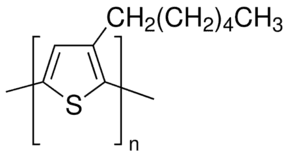
Poly(3-hexylthiophene-2,5-diyl)
Organic & Printed Electronics
![[6,6]-Phenyl C71 butyric acid methyl ester, mixture of isomers — chemical structure, CAS 609771-63-3; Organic & Printed Electronics, fine chemical supplied by Tech Serve Solutions](/_next/image?url=https%3A%2F%2Fpub-f4d920c906024441a773a96f7098e551.r2.dev%2Fimages%2Fproducts%2F609771-63-3.png&w=3840&q=75)
[6,6]-Phenyl C71 butyric acid methyl ester, mixture of isomers
Organic & Printed Electronics
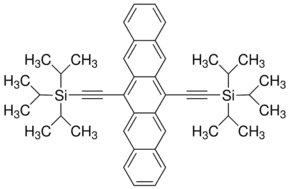
6,13-Bis(triisopropylsilylethynyl)pentacene
Organic & Printed Electronics
![[6,6]-Phenyl C61 butyric acid methyl ester — chemical structure, CAS 160848-22-6; Organic & Printed Electronics, fine chemical supplied by Tech Serve Solutions](/_next/image?url=https%3A%2F%2Fpub-f4d920c906024441a773a96f7098e551.r2.dev%2Fimages%2Fproducts%2F160848-22-6.png&w=3840&q=75)
[6,6]-Phenyl C61 butyric acid methyl ester
Organic & Printed Electronics
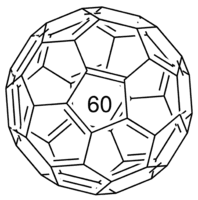
Fullerene-C60
C60
Organic & Printed Electronics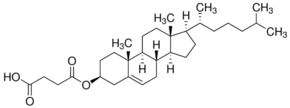
Cholesteryl hemisuccinate
C31H50O4
Organic & Printed Electronics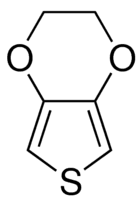
3,4-Ethylenedioxythiophene
Organic & Printed Electronics
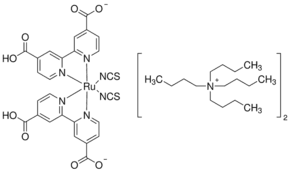
Di-tetrabutylammonium cis-bis(isothiocyanato)bis(2,2′-bipyridyl-4,4′-dicarboxylato)ruthenium(II)
Organic & Printed Electronics