
(±)-cis-Bicyclo[3.2.0]hept-2-en-6-one
(±)-cis-Bicyclo[3.2.0]hept-2-en-6-one (CAS: 13173-09-6; Formula: C7H8O; MW: 108.14) is a bicyclic ketone primarily utilized as a building block in organic synthesis. Its strained ring system and functional groups make it a valuable intermediate for creating complex molecular architectures. Applications include its use in studies of enantioselective oxidation and enzymatic reactions, particularly those involving microorganisms from extreme environments.
![(±)-cis-Bicyclo[3.2.0]hept-2-en-6-one (C7H8O) — chemical structure, CAS 13173-09-6; Chemistry, fine chemical supplied by Tech Serve Solutions](/_next/image?url=https%3A%2F%2Fpub-f4d920c906024441a773a96f7098e551.r2.dev%2Fimages%2Fproducts%2F13173-09-6.png&w=3840&q=75)
Enantioselective Baeyer–Villiger Oxidation Studies
This compound has been employed in research to investigate enantioselective Baeyer–Villiger oxidation processes, specifically using H₂O₂ mediated by Co(Salen) catalysts in aqueous surfactant systems. This helps in understanding stereoselective transformation mechanisms.
Enzyme Characterisation and Biocatalysis Research
It serves as a substrate in studies exploring the activity of extremophile enzymes, such as monooxygenases and hydrolases. Research involves isolating and characterising enzymes from deep-water petroleum reservoirs and high-temperature environments.
Organic Synthesis Intermediate
As a bicyclic ketone with a reactive double bond, it is a useful building block for the construction of more complex organic molecules and natural products. Its structure allows for diverse synthetic transformations.
| Molecular weight | 108.14 |
|---|---|
| Empirical formula | C7H8O |
| Assay | ≥98.0% (GC)≥98.0% |
| Boiling point | 158-160 °C(lit.) |
| Density | 1.025 g/mL at 25 °C(lit.) |
| Refractive index | n20/D 1.4820(lit.)n20/D 1.483 |
| Application | (-)-(1S,5R)-cis-bicyclo(3.2.0)hept-2-en-6-one has been used to study enantioselective Baeyer–Villiger oxidation of (±)-cis-bicyclo(3.2.0)hept-2-en-6-one with H2O2 mediated by Co(Salen) catalyst in water with surfactants1. It has been used to investigate the extremophile enzymes (monooxygenase and hydrolases) in microorganisms isolated from deep-water petroleum reservoir and at high temperatures using fluorogenic assays and multibioreactions2. |


Hazard statements
- H302Harmful if swallowed
- H315Causes skin irritation
- H318Causes serious eye damage
- H335May cause respiratory irritation
Precautionary statements
- P261Avoid breathing dust, fume, gas or vapours
- P280Wear protective gloves, clothing and eye/face protection
- P305IF IN EYES
| Protective equipment | Eyeshields, Faceshields, full-face respirator (US), Gloves, multi-purpose combination respirator cartridge (US), type ABEK (EN14387) respirator filter |
|---|---|
| Water hazard class (WGK, DE) | 3 |
| Hazard codes (EU) | Xn |
| Risk statements (R) | 22-37/38-41 |
| Safety statements (S) | 26-39 |
Hazard information is provided for guidance. Always consult the product Safety Data Sheet (SDS), available on request, before handling.
Documentation
Every batch ships with a Certificate of Analysis covering assay, identity and purity; the grade is confirmed against your enquiry. Safety Data Sheets and technical data sheets are available on request.
Supply & logistics
Samples for technical evaluation; bulk MOQ by grade and packaging. In-stock material ships in 7–10 working days, worldwide, with full export documentation.
What is (±)-cis-Bicyclo[3.2.0]hept-2-en-6-one used for?
+
(±)-cis-Bicyclo[3.2.0]hept-2-en-6-one is primarily used as a building block in organic synthesis and has been employed in studies related to enantioselective oxidation and the characterisation of extremophile enzymes.
What are the CAS number and formula for (±)-cis-Bicyclo[3.2.0]hept-2-en-6-one?
+
The CAS number is 13173-09-6 and the empirical formula is C7H8O.
What grade and purity does Tech Serve Solutions supply?
+
Tech Serve Solutions typically supplies this chemical with an assay of ≥98.0% (GC). TSS does not represent this product as USP, BP, EP, or other pharmacopoeia grades unless explicitly stated.
What are the safety considerations when handling this chemical?
+
This compound is classified under GHS with Danger signal word, presenting hazards such as H302 (Harmful if swallowed), H315 (Causes skin irritation), H318 (Causes serious eye damage), and H335 (May cause respiratory irritation). Appropriate personal protective equipment, including eyeshields, gloves, and respiratory protection, is essential.
Does TSS export (±)-cis-Bicyclo[3.2.0]hept-2-en-6-one?
+
Yes, Tech Serve Solutions is a specialist global supplier and exporter of fine chemicals.
How can I request a sample or quote?
+
To request a sample or a quote, please contact the Tech Serve Solutions sales team through our website or by phone.
▶ Related products
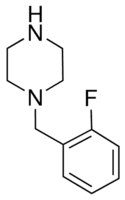
1-(2-Fluorobenzyl)piperazine
C11H15FN2
Chemical Synthesis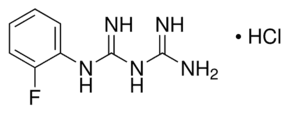
1-(2-Fluorophenyl)biguanide hydrochloride
Chemical Synthesis
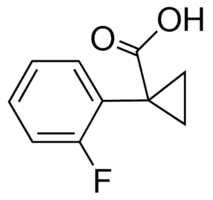
1-(2-Fluorophenyl)cyclopropanecarboxylic acid
C10H9FO2
Chemical Synthesis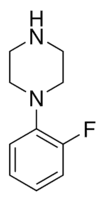
1-(2-Fluorophenyl)piperazine
C10H13FN2
Chemical Synthesis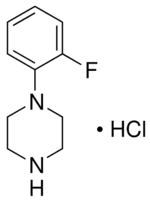
1-(2-Fluorophenyl)piperazine monohydrochloride
C10H13FN2 · HCl
Chemical Synthesis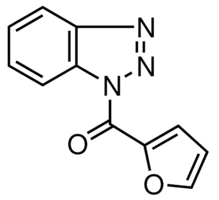
1-(2-Furoyl)-1H-benzotriazole
C11H7N3O2
Chemical Synthesis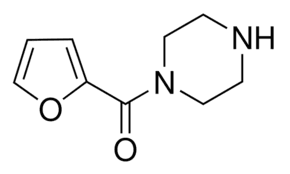
1-(2-Furoyl)piperazine
C9H12N2O2
Chemical Synthesis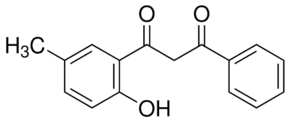
1-(2-Hydroxy-5-methylphenyl)-3-phenyl-1,3-propanedione
Chemical Synthesis
▶ Explore more

Bis(cyclopentadienyl)cobalt(III) hexafluorophosphate
C10H10CoF6P
Catalysis & Inorganic
1-(4-Chlorophenyl)biguanide hydrochloride
ClC6H4NHC(NH)NHC(NH)NH2 · HCl
Chemical Synthesis
Bis(cyclopentadienyl)dimethylzirconium(IV)
Catalysis & Inorganic

1-(4-Chlorophenyl)ethanol
ClC6H4CH(CH3)OH
Chemical Synthesis