
Chloroacetone
Chloroacetone (CAS 78-95-5), with the linear formula ClCH₂COCH₃ and a molecular weight of 92.52 g/mol, is a reactive organochlorine compound. This ketone is a valuable intermediate in organic synthesis, commonly employed as a building block. It is particularly useful in the preparation of surfactants and heterocyclic compounds. Chloroacetone is supplied by TSS with an assay of ≥96.0% (GC), typically stored under refrigeration.
- IUPAC
- 1-Chloropropan-2-one,Chloro-2-propanone,MCA
- Synonyms
- 1-Chloropropan-2-oneChloro-2-propanoneMCA
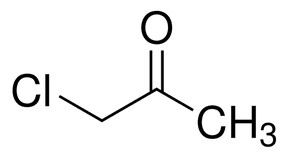
Surfactant Synthesis
Chloroacetone is utilized in the acid-catalyzed condensation with fatty alcohols to produce double-chain nonionic surfactants that possess an acid decomposition function.
Heterocyclic Chemistry
This compound serves as a precursor in the synthesis of complex organic molecules, such as the preparation of calix[4]pyrrole derivatives.
Organic Synthesis Building Block
As a versatile ketone, chloroacetone functions as a key intermediate in various organic transformations and the construction of carbon frameworks.
| Molecular weight | 92.52 |
|---|---|
| Linear formula | ClCH2COCH3 |
| Assay | ≥96.0% (GC) |
| Boiling point | 120 °C(lit.) |
| Density | 1.162 g/mL at 25 °C(lit.) |
| Refractive index | n20/D 1.432(lit.) |
| Solubility | H2O: soluble10 partsalcohol: misciblechloroform: misciblediethyl ether: miscible |
| Storage temperature | 2-8°C |
| Contains / stabiliser | ~0.1% Drapex 39 as stabilizer |
| Application | Chloroacetone was used in the synthesis of double-chain nonionic surfactants with an acid decomposition function via acid-catalyzed condensation with fatty alcohols (octyl, decyl and dodecyl)1. It was also used in the synthesis of meso-tetramethyl tetrakis-(4-phenoxy acetone)calix[4]pyrrole2. |


Hazard statements
- H226Flammable liquid and vapour
- H301Toxic if swallowed
- H310Fatal in contact with skin
- H315Causes skin irritation
- H319Causes serious eye irritation
- H335May cause respiratory irritation
- H400Very toxic to aquatic life
Precautionary statements
- P260Do not breathe dust, fume, gas, mist, vapours or spray
- P273Avoid release to the environment
- P280Wear protective gloves, clothing and eye/face protection
- P284Wear respiratory protection
- P301IF SWALLOWED
- P302IF ON SKIN
| Protective equipment | Eyeshields, Faceshields, full-face respirator (US), Gloves, multi-purpose combination respirator cartridge (US), type ABEK (EN14387) respirator filter |
|---|---|
| Flash point | 35 °C / 95 °F |
| Transport (UN / ADR) | UN 1695 6.1/PG 1 |
| Water hazard class (WGK, DE) | 3 |
| Hazard codes (EU) | T+,N |
| Risk statements (R) | 10-24/25-26-36/37/38-50/53 |
| Safety statements (S) | 16-23-36/37/39-45-60-61 |
Hazard information is provided for guidance. Always consult the product Safety Data Sheet (SDS), available on request, before handling.
Documentation
Every batch ships with a Certificate of Analysis covering assay, identity and purity; the grade is confirmed against your enquiry. Safety Data Sheets and technical data sheets are available on request.
Supply & logistics
Samples for technical evaluation; bulk MOQ by grade and packaging. In-stock material ships in 7–10 working days, worldwide, with full export documentation.
What is Chloroacetone used for?
+
Chloroacetone is primarily used as a building block in organic synthesis, including the preparation of surfactants and complex organic molecules. It is also employed in chemical synthesis and as a carbonyl compound.
What is the CAS number and formula for Chloroacetone?
+
The CAS number for Chloroacetone is 78-95-5, and its linear formula is ClCH₂COCH₃.
What grade and purity does Tech Serve Solutions supply?
+
Tech Serve Solutions supplies Chloroacetone with a minimum assay of 96.0% (GC). TSS does not represent this product as USP, BP, EP, or any other pharmacopoeia grade.
How should Chloroacetone be handled safely?
+
Chloroacetone is a dangerous substance. Handle with extreme caution, using appropriate personal protective equipment including eyeshields, face shields, and gloves. Ensure adequate ventilation and use a suitable respirator. Refer to the safety data sheet for full handling procedures.
Is Chloroacetone a controlled substance?
+
The provided data does not indicate that Chloroacetone is a controlled substance.
How is Chloroacetone packed, shipped, and exported?
+
Chloroacetone is typically packed in appropriate containers for safe transport, adhering to international shipping regulations for hazardous materials. TSS exports globally.
How can I request a quote or sample of Chloroacetone?
+
To request a quote or sample of Chloroacetone, please contact the TSS sales team via our website or direct inquiry channels.
▶ Related products
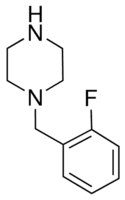
1-(2-Fluorobenzyl)piperazine
C11H15FN2
Chemical Synthesis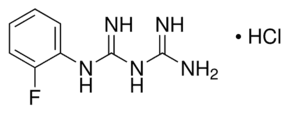
1-(2-Fluorophenyl)biguanide hydrochloride
Chemical Synthesis
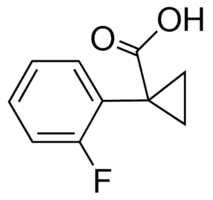
1-(2-Fluorophenyl)cyclopropanecarboxylic acid
C10H9FO2
Chemical Synthesis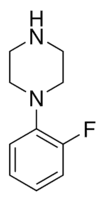
1-(2-Fluorophenyl)piperazine
C10H13FN2
Chemical Synthesis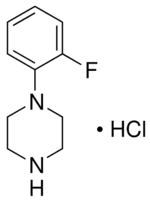
1-(2-Fluorophenyl)piperazine monohydrochloride
C10H13FN2 · HCl
Chemical Synthesis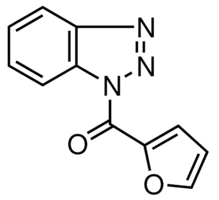
1-(2-Furoyl)-1H-benzotriazole
C11H7N3O2
Chemical Synthesis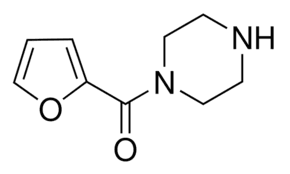
1-(2-Furoyl)piperazine
C9H12N2O2
Chemical Synthesis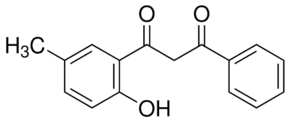
1-(2-Hydroxy-5-methylphenyl)-3-phenyl-1,3-propanedione
Chemical Synthesis
▶ Explore more

Bis(cyclopentadienyl)cobalt(III) hexafluorophosphate
C10H10CoF6P
Catalysis & Inorganic
1-(4-Chlorophenyl)biguanide hydrochloride
ClC6H4NHC(NH)NHC(NH)NH2 · HCl
Chemical Synthesis
Bis(cyclopentadienyl)dimethylzirconium(IV)
Catalysis & Inorganic

1-(4-Chlorophenyl)ethanol
ClC6H4CH(CH3)OH
Chemical Synthesis