Chloranilic acid
Chloranilic acid (CAS: 87-88-7, Formula: C6H2Cl2O4, MW: 208.98) is a dichloro-dihydroxy-p-benzoquinone derivative. This compound serves as a key building block in various chemical syntheses and research applications. Its utility spans organic synthesis, coordination chemistry, and material science, often acting as a proton donor or reacting with organic bases and metal complexes to form novel structures.
- IUPAC
- 2,5-Dichloro-3,6-dihydroxy-p-benzoquinone,2,5-Dichloro-3,6-dihydroxy-2,5-cyclohexadiene-1,4-dione,NSC 6108,NSC 97383

Proton Donor in Dimensionality Control Studies
Chloranilic acid acts as a proton donor in reactions investigated for controlling dimensionality in chemical structures. This property is valuable in designing self-assembled supramolecular architectures.
Synthesis of Bipyridyl Complexes
It is utilized in the synthesis of dimethylbipyridyl complexes. These complexes are often explored for their unique photophysical or catalytic properties.
Preparation of Metallacycles
The compound is employed in the synthesis of intricate molecular structures such as (nonylbenzimidazolylmeth<wbr>l)benzene, a precursor for neutral altitudinal rotor-shaped dirhenium metallacycles.
Charge-Transfer Reactions
Chloranilic acid participates in charge-transfer reactions, as demonstrated in its interactions with metoprolol tartrate. This highlights its potential as an electron acceptor.
Salt Formation with Organic Bases
It readily forms salts with organic bases. This acid-base chemistry is fundamental for purification, characterisation, or the development of new chemical entities.
Synthesis of Osmium Metalla-rectangles
The acid is a reactant in the synthesis of osmium metalla-rectangles, structures investigated for their potential anticancer activity, underscoring its role in medicinal chemistry research.
| Molecular weight | 208.98 |
|---|---|
| Empirical formula | C6H2Cl2O4 |
| Assay | ≥99.0% (T) |
| Application | Reactant involved in:• Acting as a proton donor in reactions studying dimensionality control1• Synthesis of dimethylbipyridyl complexes2• Synthesis of (nonylbenzimidazolylmethyl)benzene for preparation of neutral altitudinal rotor-shaped dirhenium metallacycles3• Charge-transfer reactions with metoprolol tartrate4• Salt formation with organic bases5• Synthesis of osmium metalla-rectangles with anticancer activity6 |
| Melting point | ≥300 °C(lit.) |

Hazard statements
- H315Causes skin irritation
- H319Causes serious eye irritation
- H335May cause respiratory irritation
Precautionary statements
- P261Avoid breathing dust, fume, gas or vapours
- P305IF IN EYES
| Protective equipment | dust mask type N95 (US), Eyeshields, Gloves |
|---|---|
| Water hazard class (WGK, DE) | 3 |
| Hazard codes (EU) | Xi |
| Risk statements (R) | 36/37/38 |
| Safety statements (S) | 26-36 |
Hazard information is provided for guidance. Always consult the product Safety Data Sheet (SDS), available on request, before handling.
Documentation
Every batch ships with a Certificate of Analysis covering assay, identity and purity; the grade is confirmed against your enquiry. Safety Data Sheets and technical data sheets are available on request.
Supply & logistics
Samples for technical evaluation; bulk MOQ by grade and packaging. In-stock material ships in 7–10 working days, worldwide, with full export documentation.
What is Chloranilic acid primarily used for?
+
Chloranilic acid is used as a reactant in various chemical syntheses and research applications, including acting as a proton donor, synthesis of metal complexes and metallacycles, charge-transfer reactions, and salt formation with organic bases.
What are the CAS number and formula for Chloranilic acid?
+
The CAS number for Chloranilic acid is 87-88-7, and its empirical formula is C6H2Cl2O4.
What grade and purity does Tech Serve Solutions supply for Chloranilic acid?
+
Tech Serve Solutions supplies Chloranilic acid with an assay of ≥99.0% (T). This product is typically supplied for laboratory and research purposes; TSS does not represent it as USP, BP, EP, or other pharmacopoeial grades unless explicitly stated in the product documentation.
What are the safety considerations when handling Chloranilic acid?
+
Chloranilic acid is classified with a 'Warning' signal word and has hazard statements H315 (causes skin irritation), H319 (causes serious eye irritation), and H335 (may cause respiratory irritation). Appropriate personal protective equipment, including eyeshields, gloves, and a dust mask type N95 (US), should be used. Handle in a well-ventilated area.
How is Chloranilic acid packed, shipped, and exported by TSS?
+
Tech Serve Solutions exports and ships chemicals globally, adhering to all relevant regulations for safe handling and transport. Specific packaging details depend on the quantity and destination, ensuring product integrity and compliance.
How can I request a sample or quote for Chloranilic acid?
+
To request a sample or obtain a quote for Chloranilic acid, please visit the Tech Serve Solutions website or contact our sales team directly through the provided channels, referencing the product name and CAS number (87-88-7).
▶ Related products
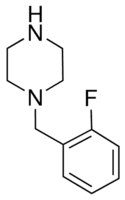
1-(2-Fluorobenzyl)piperazine
C11H15FN2
Chemical Synthesis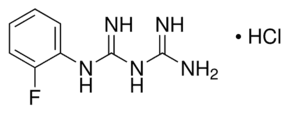
1-(2-Fluorophenyl)biguanide hydrochloride
Chemical Synthesis
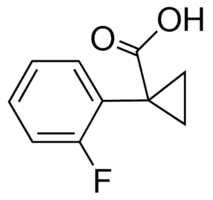
1-(2-Fluorophenyl)cyclopropanecarboxylic acid
C10H9FO2
Chemical Synthesis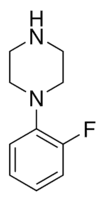
1-(2-Fluorophenyl)piperazine
C10H13FN2
Chemical Synthesis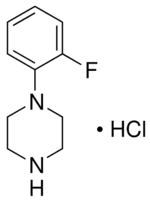
1-(2-Fluorophenyl)piperazine monohydrochloride
C10H13FN2 · HCl
Chemical Synthesis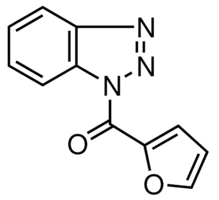
1-(2-Furoyl)-1H-benzotriazole
C11H7N3O2
Chemical Synthesis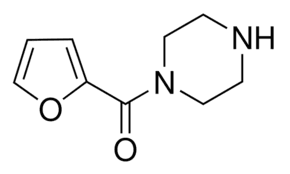
1-(2-Furoyl)piperazine
C9H12N2O2
Chemical Synthesis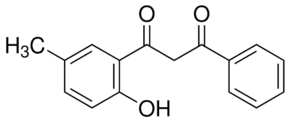
1-(2-Hydroxy-5-methylphenyl)-3-phenyl-1,3-propanedione
Chemical Synthesis