
Capsaicin
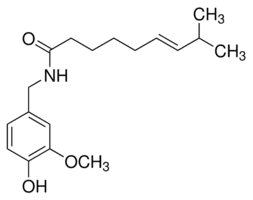
Capsaicin (CAS 404-86-4) is a natural alkaloid, predominantly found in chili peppers, known for its pungent properties. This compound is a key irritant and active component responsible for the heat in peppers. Tech Serve Solutions supplies Capsaicin for various research and chemical synthesis applications, providing a crucial ingredient for scientific exploration and product development.
- IUPAC
- 8-Methyl-N-vanillyl-trans-6-nonenamide
- Synonyms
- 8-Methyl-N-vanillylnonanamideN-Vanillylnonanamide, 8-methyl-
Pain Research
Capsaicin is extensively used in scientific research to study pain pathways, particularly by activating and subsequently desensitising transient receptor potential vanilloid 1 (TRPV1) channels. This makes it a valuable tool for investigating nociception and developing analgesics.
Chemical Synthesis
As a defined organic molecule with reactive functional groups, Capsaicin serves as a building block or reference compound in organic synthesis. Its unique structure can be a starting point for creating novel compounds with potential pharmacological activities.
Bioactivity Studies
This compound is investigated for its diverse biological activities, including anti-inflammatory and anti-cancer properties, in various cell culture and preclinical models. Research aims to understand its mechanisms and potential therapeutic applications.
Sensory Science
In sensory science, Capsaicin is used to study taste perception, pungency, and human response to stimuli. It helps researchers understand flavour profiles and food science applications.
| Molecular weight | 305.41 |
|---|---|
| Linear formula | (CH3)2CHCH=CH(CH2)4CONHCH2C6H3-4-(OH)-3-(OCH3) |
| Assay | ≥50% (HPLC) |
| Grade | natural |
| Storage temperature | 2-8°C |
| Impurities tested | ~35% dihydrocapsaicin |
| Composition | capsaicin, 65%dihydrocapsaicin, 35% |
| Melting point | 62-65 °C(lit.)62-65 °C |


Hazard statements
- H301Toxic if swallowed
- H315Causes skin irritation
- H317May cause an allergic skin reaction
- H319Causes serious eye irritation
- H334May cause allergy or asthma symptoms if inhaled
- H335May cause respiratory irritation
Precautionary statements
- P261Avoid breathing dust, fume, gas or vapours
- P280Wear protective gloves, clothing and eye/face protection
- P301IF SWALLOWED
- P305IF IN EYES
- P342
| Protective equipment | Eyeshields, Faceshields, Gloves, type P2 (EN 143) respirator cartridges |
|---|---|
| Flash point | 113 °C / 235.4 °F |
| Transport (UN / ADR) | UN 2811 6.1 / PGIII |
| Water hazard class (WGK, DE) | 3 |
| Hazard codes (EU) | T |
| Risk statements (R) | 25-36/37/38-42/43 |
| Safety statements (S) | 22-26-28-36/39-45 |
Hazard information is provided for guidance. Always consult the product Safety Data Sheet (SDS), available on request, before handling.
| Gene Information | human ... CYP1A2(1544), TRPV1(7442)rat ... Trpv1(83810), Trpv4(66026) |
|---|
Documentation
Every batch ships with a Certificate of Analysis covering assay, identity and purity; the grade is confirmed against your enquiry. Safety Data Sheets and technical data sheets are available on request.
Supply & logistics
Samples for technical evaluation; bulk MOQ by grade and packaging. In-stock material ships in 7–10 working days, worldwide, with full export documentation.
What is Capsaicin used for?
+
Capsaicin is primarily used in pain research to study TRPV1 channels, as a building block in chemical synthesis, for investigating its biological activities like anti-inflammatory effects, and in sensory science to study pungency and taste perception.
What is the CAS number and formula for Capsaicin?
+
The CAS number for Capsaicin is 404-86-4. Its linear formula is (CH3)2CHCH=CH(CH2)4CONHCH2C6H3-4-(OH)-3-(OCH3).
What grade and purity does Tech Serve Solutions supply?
+
Tech Serve Solutions supplies natural grade Capsaicin with an assay of ≥50% (HPLC), composed of approximately 65% capsaicin and 35% dihydrocapsaicin. We do not represent this product as USP, BP, or EP grade.
How should Capsaicin be handled safely?
+
Capsaicin is dangerous and requires careful handling. It is toxic if swallowed and causes skin and eye irritation. Inhalation may cause respiratory irritation. Always use appropriate personal protective equipment, including eyeshields, gloves, and respiratory protection (P2 cartridges), and handle in a well-ventilated area.
Is Capsaicin a controlled substance?
+
Based on the provided data, Capsaicin (CAS 404-86-4) is classified as toxic (H301) and an irritant, but it is not explicitly listed as a controlled substance in this information.
How is Capsaicin shipped and exported by TSS?
+
Capsaicin is shipped and exported according to its hazardous classification UN 2811, 6.1/PGIII.
How can I request a sample or quote for Capsaicin?
+
To request a sample or obtain a quote for Capsaicin, please contact our sales team through the website or by phone, specifying the CAS number 404-86-4.
▶ Related products
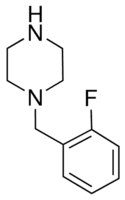
1-(2-Fluorobenzyl)piperazine
C11H15FN2
Chemical Synthesis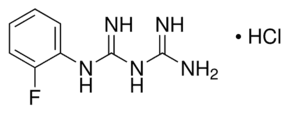
1-(2-Fluorophenyl)biguanide hydrochloride
Chemical Synthesis
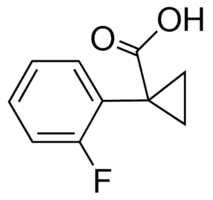
1-(2-Fluorophenyl)cyclopropanecarboxylic acid
C10H9FO2
Chemical Synthesis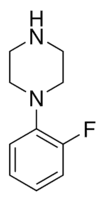
1-(2-Fluorophenyl)piperazine
C10H13FN2
Chemical Synthesis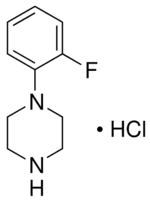
1-(2-Fluorophenyl)piperazine monohydrochloride
C10H13FN2 · HCl
Chemical Synthesis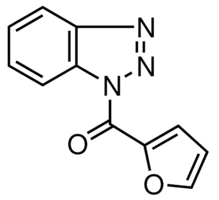
1-(2-Furoyl)-1H-benzotriazole
C11H7N3O2
Chemical Synthesis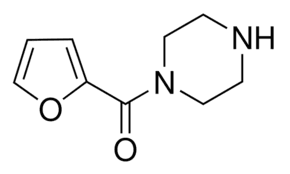
1-(2-Furoyl)piperazine
C9H12N2O2
Chemical Synthesis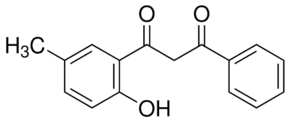
1-(2-Hydroxy-5-methylphenyl)-3-phenyl-1,3-propanedione
Chemical Synthesis
▶ Explore more

Bis(cyclopentadienyl)cobalt(III) hexafluorophosphate
C10H10CoF6P
Catalysis & Inorganic
1-(4-Chlorophenyl)biguanide hydrochloride
ClC6H4NHC(NH)NHC(NH)NH2 · HCl
Chemical Synthesis
Bis(cyclopentadienyl)dimethylzirconium(IV)
Catalysis & Inorganic

1-(4-Chlorophenyl)ethanol
ClC6H4CH(CH3)OH
Chemical Synthesis