
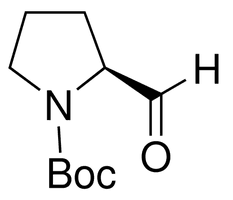
Boc-L-prolinal
Boc-L-prolinal (CAS 69610-41-9), with the molecular formula C10H17NO3 and a molecular weight of 199.25 g/mol, is a crucial chiral building block. This protected amino aldehyde derivative is frequently employed in complex organic synthesis. Its primary utility lies in its role as a key intermediate for the construction of various biologically relevant molecules, including alkaloids and other complex natural products. Available from TSS with a 97% assay.
- IUPAC
- (S)-N-Boc-pyrrolidine-2-carboxaldehyde,N-(tert-Butoxycarbonyl)-L-prolinal
- Synonyms
- (S)-N-Boc-pyrrolidine-2-carboxaldehydeN-(tert-Butoxycarbonyl)-L-prolinal
Synthesis of Norsecurinine-Type Alkaloids
Boc-L-prolinal serves as a vital precursor in the total synthesis of norsecurinine-type alkaloids. Its specific stereochemistry and functional groups enable the efficient construction of the complex polycyclic framework characteristic of these natural products.
Construction of Isaindigotidione Carboskeleton
This compound is utilized as a key building block for assembling the isaindigotidione carboskeleton. Its application facilitates the stereoselective formation of critical carbon-carbon bonds required for creating this intricate molecular architecture.
Peptide Chemistry and Modifications
As a protected amino aldehyde derived from L-proline, Boc-L-prolinal is valuable in peptide chemistry. It can be incorporated into peptide chains or used for modifying peptides, introducing specific structural features or functionalities.
Chiral Synthesis and Organic Building Blocks
Boc-L-prolinal is a versatile chiral synthon used in various asymmetric synthesis pathways. Its aldehyde functionality allows for diverse chemical transformations, making it a useful building block for creating complex organic molecules.
| Molecular weight | 199.25 |
|---|---|
| Empirical formula | C10H17NO3 |
| Assay | 97% |
| Boiling point | 211 °C(lit.) |
| Density | 1.063 g/mL at 25 °C(lit.) |
| Refractive index | n20/D 1.462(lit.) |
| Optical activity | [α]20/D −101°, c = 0.66 in chloroform |
| Storage temperature | −20°C |
| Application | Key building block for norsecurinine-type alkaloids and isaindigotidione carboskeleton.1,2 |


Hazard statements
- H226Flammable liquid and vapour
- H315Causes skin irritation
- H319Causes serious eye irritation
- H335May cause respiratory irritation
Precautionary statements
- P261Avoid breathing dust, fume, gas or vapours
- P305IF IN EYES
| Protective equipment | Eyeshields, full-face respirator (US), Gloves, multi-purpose combination respirator cartridge (US), type ABEK (EN14387) respirator filter |
|---|---|
| Flash point | 57 °C / 134.6 °F |
| Transport (UN / ADR) | UN 1989C 3 / PGIII |
| Water hazard class (WGK, DE) | 3 |
| Hazard codes (EU) | Xi |
| Risk statements (R) | 36/37/38 |
| Safety statements (S) | 26-36 |
Hazard information is provided for guidance. Always consult the product Safety Data Sheet (SDS), available on request, before handling.
Documentation
Every batch ships with a Certificate of Analysis covering assay, identity and purity; the grade is confirmed against your enquiry. Safety Data Sheets and technical data sheets are available on request.
Supply & logistics
Samples for technical evaluation; bulk MOQ by grade and packaging. In-stock material ships in 7–10 working days, worldwide, with full export documentation.
What is Boc-L-prolinal used for?
+
Boc-L-prolinal is primarily used as a key building block in organic synthesis, particularly for the construction of norsecurinine-type alkaloids and the isaindigotidione carboskeleton. It is also valuable in peptide chemistry and general chiral synthesis.
What are the CAS number and molecular formula of Boc-L-prolinal?
+
The CAS number for Boc-L-prolinal is 69610-41-9, and its molecular formula is C10H17NO3.
What grade and purity does Tech Serve Solutions supply?
+
Tech Serve Solutions supplies Boc-L-prolinal with a minimum assay of 97%. TSS does not represent this product as USP, BP, EP, or other pharmacopoeia grades.
How should Boc-L-prolinal be handled safely?
+
Boc-L-prolinal is a flammable liquid and vapour (H226) and can cause skin irritation (H315), serious eye irritation (H319), and respiratory irritation (H335). Handle with appropriate personal protective equipment, including eyeshields and gloves, in a well-ventilated area. Store away from heat and ignition sources.
How is Boc-L-prolinal shipped and exported?
+
Boc-L-prolinal is classified as UN 1989, Class 3, Packing Group III. Tech Serve Solutions handles all shipping and export documentation in compliance with international regulations.
How can I request a sample or quote for Boc-L-prolinal?
+
To request a sample or a quote for Boc-L-prolinal, please contact our sales department through the website or by phone, providing your contact details and required quantity.
▶ Related products
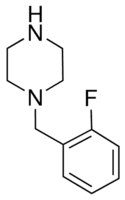
1-(2-Fluorobenzyl)piperazine
C11H15FN2
Chemical Synthesis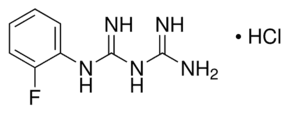
1-(2-Fluorophenyl)biguanide hydrochloride
Chemical Synthesis
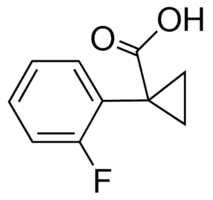
1-(2-Fluorophenyl)cyclopropanecarboxylic acid
C10H9FO2
Chemical Synthesis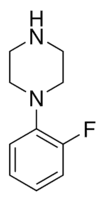
1-(2-Fluorophenyl)piperazine
C10H13FN2
Chemical Synthesis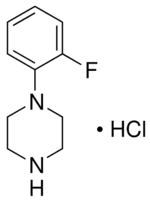
1-(2-Fluorophenyl)piperazine monohydrochloride
C10H13FN2 · HCl
Chemical Synthesis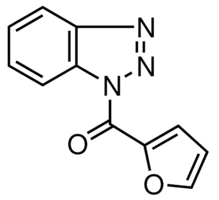
1-(2-Furoyl)-1H-benzotriazole
C11H7N3O2
Chemical Synthesis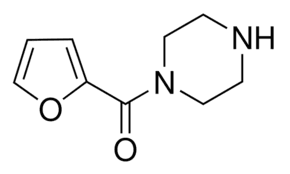
1-(2-Furoyl)piperazine
C9H12N2O2
Chemical Synthesis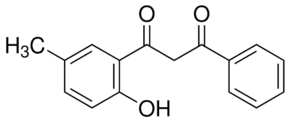
1-(2-Hydroxy-5-methylphenyl)-3-phenyl-1,3-propanedione
Chemical Synthesis
▶ Explore more

Bis(cyclopentadienyl)cobalt(III) hexafluorophosphate
C10H10CoF6P
Catalysis & Inorganic
1-(4-Chlorophenyl)biguanide hydrochloride
ClC6H4NHC(NH)NHC(NH)NH2 · HCl
Chemical Synthesis
Bis(cyclopentadienyl)dimethylzirconium(IV)
Catalysis & Inorganic

1-(4-Chlorophenyl)ethanol
ClC6H4CH(CH3)OH
Chemical Synthesis