
Bithionol
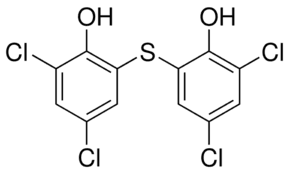
Bithionol (CAS: 97-18-7), with the empirical formula C12H6Cl4O2S and a molecular weight of 356.05, is a chlorinated bisphenol sulfide. It is primarily recognised for its historical use as an anthelmintic agent and topical antiseptic. Bithionol functions by disrupting cellular processes in parasites and microorganisms. It is supplied by TSS for chemical synthesis and research purposes, adhering to a purity of ≥97%.
- IUPAC
- 2,2′-Thio-bis(4,6-dichlorophenol),Bis(2-hydroxy-3,5-dichlorophenyl) sulfide
- Synonyms
- 2,2′-Thio-bis(4,6-dichlorophenol)Bis(2-hydroxy-3,5-dichlorophenyl) sulfide
Chemical Synthesis
Bithionol serves as a valuable building block in organic synthesis. Its unique structure with chlorine substituents and a sulfide linkage allows for diverse chemical transformations.
Research and Development
This compound is utilized in laboratory settings for research into new chemical entities and reaction pathways. Its established properties make it a reference compound in certain chemical studies.
Antimicrobial Research
Historically, Bithionol has been investigated for its antimicrobial and antiparasitic properties. Research may explore its efficacy or mechanisms of action in various biological contexts.
| Molecular weight | 356.05 |
|---|---|
| Empirical formula | C12H6Cl4O2S |
| Assay | ≥97% |

Hazard statements
- H300Fatal if swallowed
Precautionary statements
- P264Wash thoroughly after handling
- P301IF SWALLOWED
| Protective equipment | Eyeshields, Faceshields, full-face particle respirator type N100 (US), Gloves, respirator cartridge type N100 (US), type P1 (EN143) respirator filter, type P3 (EN 143) respirator cartridges |
|---|---|
| Transport (UN / ADR) | UN 2811 6.1 / PGII |
| Water hazard class (WGK, DE) | 3 |
| Hazard codes (EU) | T+ |
| Risk statements (R) | 28 |
| Safety statements (S) | 28-36/37-45 |
Hazard information is provided for guidance. Always consult the product Safety Data Sheet (SDS), available on request, before handling.
Documentation
Every batch ships with a Certificate of Analysis covering assay, identity and purity; the grade is confirmed against your enquiry. Safety Data Sheets and technical data sheets are available on request.
Supply & logistics
Samples for technical evaluation; bulk MOQ by grade and packaging. In-stock material ships in 7–10 working days, worldwide, with full export documentation.
What is Bithionol used for?
+
Bithionol has historical applications as an anthelmintic and topical antiseptic. It is also used as a building block in chemical synthesis and for research purposes.
What are the CAS number and formula for Bithionol?
+
The CAS number for Bithionol is 97-18-7, and its empirical formula is C12H6Cl4O2S.
What grade and purity does Tech Serve Solutions supply?
+
Tech Serve Solutions supplies Bithionol with an assay of ≥97%. This product is not represented as USP, BP, EP, or any pharmacopoeia grade.
How should Bithionol be handled safely?
+
Bithionol is classified as acutely toxic (H300) and requires extreme caution. Handle only with appropriate personal protective equipment, including eyeshields, face shields, and suitable respiratory protection (e.g., N100 or P3 filters). Ensure adequate ventilation and avoid ingestion.
Is Bithionol a controlled substance?
+
The provided data does not indicate that Bithionol is a controlled substance.
How is Bithionol packed and shipped?
+
Bithionol is packed according to safety regulations for hazardous materials, such as UN 2811, Class 6.1, Packing Group II. TSS exports chemicals globally, adhering to all international shipping standards.
How can I request a quote or sample for Bithionol?
+
To request a quote or sample, please contact the TSS sales department via the website or provided contact information, specifying the product name and CAS number.
▶ Related products
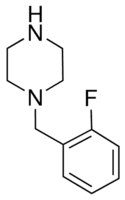
1-(2-Fluorobenzyl)piperazine
C11H15FN2
Chemical Synthesis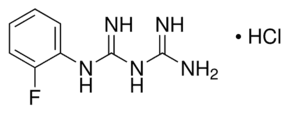
1-(2-Fluorophenyl)biguanide hydrochloride
Chemical Synthesis
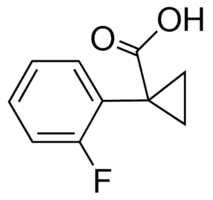
1-(2-Fluorophenyl)cyclopropanecarboxylic acid
C10H9FO2
Chemical Synthesis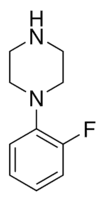
1-(2-Fluorophenyl)piperazine
C10H13FN2
Chemical Synthesis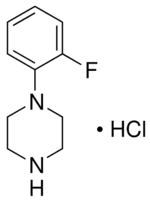
1-(2-Fluorophenyl)piperazine monohydrochloride
C10H13FN2 · HCl
Chemical Synthesis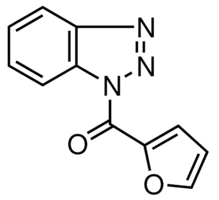
1-(2-Furoyl)-1H-benzotriazole
C11H7N3O2
Chemical Synthesis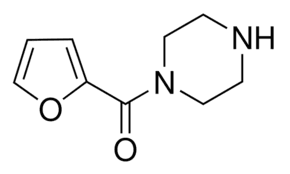
1-(2-Furoyl)piperazine
C9H12N2O2
Chemical Synthesis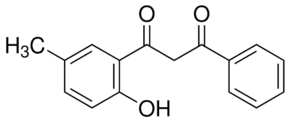
1-(2-Hydroxy-5-methylphenyl)-3-phenyl-1,3-propanedione
Chemical Synthesis
▶ Explore more

Bis(cyclopentadienyl)cobalt(III) hexafluorophosphate
C10H10CoF6P
Catalysis & Inorganic
1-(4-Chlorophenyl)biguanide hydrochloride
ClC6H4NHC(NH)NHC(NH)NH2 · HCl
Chemical Synthesis
Bis(cyclopentadienyl)dimethylzirconium(IV)
Catalysis & Inorganic

1-(4-Chlorophenyl)ethanol
ClC6H4CH(CH3)OH
Chemical Synthesis