
Bis[tris(2-methylphenyl)phosphine]palladium
Bis[tris(2-methylphenyl)phosphine]palladium (CAS 69861-71-8; C42H42P2Pd; molar mass 715.15 g/mol) is a homogeneous palladium(0) complex bearing two tri(o-tolyl)phosphine ligands, also written Pd[P(o-tol)3]2. Supplied as a defined-assay organometallic solid, it is a versatile pre-catalyst for palladium-catalysed cross-coupling chemistry, including Kumada and Heck couplings, arylations and aminations. Tech Serve Solutions supplies it as a research-grade catalyst to laboratory and fine-chemical customers worldwide.
- IUPAC
- Bis(tris(2-tolyl)phosphine)palladium,Pd[(o-tol)3P]2
- Synonyms
- Bis[tris(2-methylphenyl)phosphine]palladiumBis(tris(2-tolyl)phosphine)palladiumBis[tri(o-tolyl)phosphine]palladium(0)Pd[(o-tol)3P]2Bis(tri-o-tolylphosphine)palladium(0)Palladium bis(tri-o-tolylphosphine)

Cross-coupling catalysis
Acts as a palladium(0) source for a broad range of palladium-catalysed cross-coupling reactions used to form carbon-carbon and carbon-heteroatom bonds. The bulky tri(o-tolyl)phosphine ligands make it a useful pre-catalyst for demanding couplings.
Kumada coupling
Used to catalyse Kumada cross-couplings between organomagnesium (Grignard) reagents and organic halides, providing access to biaryls and substituted arenes in synthetic chemistry.
Heck coupling
Serves as a catalyst for Mizoroki-Heck reactions, coupling aryl or vinyl halides with alkenes to build substituted olefins commonly required in fine-chemical and intermediate synthesis.
Arylation
Employed in palladium-catalysed arylation reactions to introduce aryl groups onto organic substrates, supporting the preparation of advanced intermediates and building blocks.
Buchwald-Hartwig amination
Functions as a catalyst for palladium-catalysed amination, forming carbon-nitrogen bonds between aryl halides and amines en route to anilines and related nitrogen-containing structures.
| Molecular weight | 715.15 |
|---|---|
| Empirical formula | C42H42P2Pd |
| Assay | 97% |
| Storage temperature | −20°C |
| Application | Catalyst for:• Palladium-catalyzed cross-coupling reactions1 and aminations2• Kumada coupling3• Arylation4• Heck coupling5 |
| Melting point | 220-225 °C |
Documentation
Every batch ships with a Certificate of Analysis covering assay, identity and purity; the grade is confirmed against your enquiry. Safety Data Sheets and technical data sheets are available on request.
Supply & logistics
Samples for technical evaluation; bulk MOQ by grade and packaging. In-stock material ships in 7–10 working days, worldwide, with full export documentation.
What is Bis[tris(2-methylphenyl)phosphine]palladium used for?
+
It is a homogeneous palladium(0) catalyst (pre-catalyst) used in palladium-catalysed cross-coupling chemistry, including Kumada coupling, Heck coupling, arylation and amination reactions for forming carbon-carbon and carbon-nitrogen bonds in organic and fine-chemical synthesis.
What is the CAS number and molecular formula of Bis[tris(2-methylphenyl)phosphine]palladium?
+
Its CAS number is 69861-71-8 and its empirical formula is C42H42P2Pd (Hill notation), with a molecular weight of 715.15 g/mol and MDL number MFCD12911908. It is also known as Pd[(o-tol)3P]2.
What grade and purity does Tech Serve Solutions supply?
+
We supply this palladium complex at a typical assay of 97% as a research/technical-grade catalyst for laboratory and chemical-synthesis use. We do not represent it as a USP, BP or EP pharmacopoeial grade. A certificate of analysis can be provided with each consignment.
How should Bis[tris(2-methylphenyl)phosphine]palladium be stored and handled?
+
Store cold at around -20°C in a tightly closed container. As an organometallic palladium(0) phosphine complex it should be handled under an inert atmosphere where appropriate and kept away from air and moisture. It is assigned German Water Hazard Class WGK 3 (highly hazardous to water), so prevent release to drains, soil and water. Use suitable personal protective equipment and consult the Safety Data Sheet before use.
How is Bis[tris(2-methylphenyl)phosphine]palladium packed, shipped and exported?
+
It is supplied in sealed, appropriately labelled containers sized to the order, with cold storage conditions maintained where required. Packaging and documentation follow applicable transport and export regulations, and Tech Serve Solutions exports to laboratory and industrial customers internationally with full accompanying paperwork.
How do I request a sample or quote?
+
Contact Tech Serve Solutions with your required quantity, grade and destination, and our team will respond with availability, lead time and a formal quotation. Samples can be discussed on request, subject to availability and applicable regulations.
▶ Related products
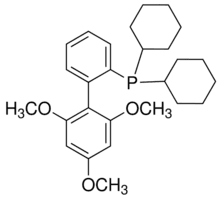
2′-Dicyclohexylphosphino-2,4,6-trimethoxybiphenyl
Catalysis & Inorganic

Dichloro[rac-ethylenebis(indenyl)]zirconium(IV)
C20H16Cl2Zr
Catalysis & Inorganic
Dichloro[rac-ethylenebis(4,5,6,7-tetrahydro-1-indenyl)]zirconium(IV)
C20H24Cl2Zr
Catalysis & Inorganic
Cadmium nitrate tetrahydrate
Cd(NO3)2 · 4H2O
Catalysis & Inorganic
1,3-Bis(dicyclohexylphosphino)propane bis(tetrafluoroborate)
Catalysis & Inorganic

Neodymium(III) chloride
Catalysis & Inorganic

Platinum(II) chloride
Catalysis & Inorganic

Tin(II) chloride dihydrate
Catalysis & Inorganic


