Bis[rhodium(α,α,α′,α′-tetramethyl-1,3-benzenedipropionic acid)]
Bis[rhodium(α,α,α′,α′-tetramethyl-1,3-benzenedipropionic acid)], CAS 819050-89-0, is a dirhodium(II) tetracarboxylate complex (empirical formula C32H40O8Rh2, molar mass 758.47 g/mol) widely known as Rh2(esp)2. This bridged paddlewheel catalyst is valued for efficient intermolecular C–H amination of tertiary and benzylic C–H bonds, and more broadly for metal-catalysed nitrene and carbene transfer in fine-chemical synthesis. Tech Serve Solutions supplies it as a research-grade reagent for laboratory use.
- IUPAC
- Rh2(esp)2
- Synonyms
- Rh2(esp)2Bis[rhodium(α,α,α′,α′-tetramethyl-1,3-benzenedipropionic acid)]Bis[rhodium(II) α,α,α′,α′-tetramethyl-1,3-benzenedipropionate]Du Bois catalystdirhodium(II) tetrakis(esp) complexC32H40O8Rh2CAS 819050-89-0MFCD08457636
![Bis[rhodium(α,α,α′,α′-tetramethyl-1,3-benzenedipropionic acid)] (C32H40O8Rh2) — chemical structure, CAS 819050-89-0; Chemistry, fine chemical supplied by Tech Serve Solutions](/_next/image?url=https%3A%2F%2Fpub-f4d920c906024441a773a96f7098e551.r2.dev%2Fimages%2Fproducts%2F819050-89-0.png&w=3840&q=75)
Intermolecular C–H amination
Rh2(esp)2 is an efficient catalyst for the intermolecular amination of tertiary and benzylic C–H bonds, enabling direct introduction of nitrogen functionality. It is a benchmark catalyst in C–H functionalisation methodology.
Nitrene transfer catalysis
The dirhodium(II) core mediates metal-nitrene transfer from reagents such as sulfamate esters and amides, supporting selective amination and aziridination chemistry.
Carbene transfer and metal-carbenoid reactions
As a dirhodium tetracarboxylate, the complex can catalyse carbenoid reactions including cyclopropanation and X–H insertion, consistent with the established reactivity of this catalyst class.
Late-stage functionalisation research
Its robustness and selectivity make it a useful tool for late-stage C–H functionalisation studies in medicinal-chemistry and complex-molecule synthesis laboratories.
Methodology and academic research
The catalyst is used as a reference reagent in academic and industrial method development for C–H activation and related transition-metal catalysis.
| Molecular weight | 758.47 |
|---|---|
| Empirical formula | C32H40O8Rh2 |
| Assay | 96% |
| Application | Catalyst for an efficient intermolecular amination of tertiary, benzylic C-H bonds.1 |
| Melting point | >300 °C |
| Protective equipment | Eyeshields, Gloves, type N95 (US), type P1 (EN143) respirator filter |
|---|---|
| Water hazard class (WGK, DE) | 3 |
Hazard information is provided for guidance. Always consult the product Safety Data Sheet (SDS), available on request, before handling.
Documentation
Every batch ships with a Certificate of Analysis covering assay, identity and purity; the grade is confirmed against your enquiry. Safety Data Sheets and technical data sheets are available on request.
Supply & logistics
Samples for technical evaluation; bulk MOQ by grade and packaging. In-stock material ships in 7–10 working days, worldwide, with full export documentation.
What is Bis[rhodium(α,α,α′,α′-tetramethyl-1,3-benzenedipropionic acid)] used for?
+
It is used as a homogeneous catalyst, best known for the efficient intermolecular amination of tertiary and benzylic C–H bonds. As a dirhodium(II) tetracarboxylate (commonly called Rh2(esp)2), it also supports nitrene- and carbene-transfer reactions in fine-chemical and pharmaceutical-intermediate synthesis.
What is the CAS number and molecular formula of Bis[rhodium(α,α,α′,α′-tetramethyl-1,3-benzenedipropionic acid)]?
+
Its CAS number is 819050-89-0 and its empirical formula is C32H40O8Rh2 (Hill notation), with a molecular weight of 758.47 g/mol. The MDL number is MFCD08457636 and the PubChem Substance ID is 24884595. It is widely referred to as Rh2(esp)2.
What grade and purity does Tech Serve Solutions supply?
+
Tech Serve Solutions supplies this material with a typical assay of 96%, as a research/reagent-grade catalyst for laboratory use. We do not represent it as USP, BP or EP pharmacopoeial grade. A certificate of analysis can be provided with each batch on request.
How should this catalyst be handled safely?
+
Handle only with suitable personal protective equipment, including eye shields, gloves and an N95 (US) or P1 (EN143) respirator filter to avoid inhaling dust. The material is classified WGK 3 in Germany (severely hazardous to water), so prevent any release to drains, soil or watercourses. Always consult the Safety Data Sheet before use.
What are the physical properties of this compound?
+
It is a rhodium-based solid with a melting point above 300 °C. It is typically handled as a fine powder; refer to the product Safety Data Sheet and certificate of analysis for batch-specific physical data.
How is Bis[rhodium(α,α,α′,α′-tetramethyl-1,3-benzenedipropionic acid)] packed, shipped and exported?
+
It is packed in tightly sealed, appropriately labelled containers sized to the order, from gram quantities upward, and supplied with documentation. As a precious-metal catalyst it is handled with care for global export; packaging and transport are arranged in line with applicable dangerous-goods and destination requirements.
How do I request a sample or quote?
+
Contact Tech Serve Solutions with your required quantity and destination, and our team will respond with availability, lead time and documentation. Samples can be arranged on request, subject to availability.
▶ Related products
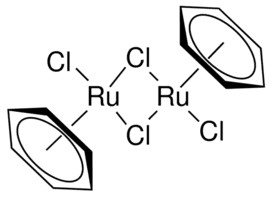
Benzeneruthenium(II) chloride dimer
Ru2(C6H6)2Cl4
Catalysis & Inorganic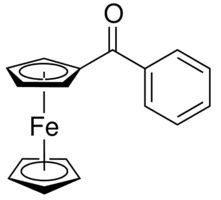
Benzoylferrocene
C17H14FeO
Catalysis & Inorganic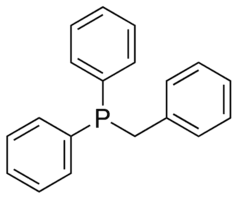
Benzyldiphenylphosphine
C6H5CH2P(C6H5)2
Catalysis & Inorganic
Beryllium
Be
Catalysis & Inorganic
Beryllium oxide
BeO
Catalysis & Inorganic![Bicyclo[2.2.1]hepta-2,5-diene-rhodium(I) chloride dimer — chemical structure, CAS 12257-42-0; Catalysis & Inorganic, fine chemical supplied by Tech Serve Solutions](/_next/image?url=https%3A%2F%2Fpub-f4d920c906024441a773a96f7098e551.r2.dev%2Fimages%2Fproducts%2F12257-42-0.png&w=3840&q=75)
Bicyclo[2.2.1]hepta-2,5-diene-rhodium(I) chloride dimer
Catalysis & Inorganic
![Bis[(10,11-η)-5-[(11bS)-dinaphtho[2,1-d:1′,2′-f][1,3,2]dioxaphosphepin-4-yl- κP4]-5H-dibenz[b,f]azepine]rhodium(I) tetrafluorobo — chemical structure, CAS 1228149-03-8; Catalysis & Inorganic, fine chemical supplied by Tech Serve Solutions](/_next/image?url=https%3A%2F%2Fpub-f4d920c906024441a773a96f7098e551.r2.dev%2Fimages%2Fproducts%2F1228149-03-8.png&w=3840&q=75)
Bis[(10,11-η)-5-[(11bS)-dinaphtho[2,1-d:1′,2′-f][1,3,2]dioxaphosphepin-4-yl- κP4]-5H-dibenz[b,f]azepine]rhodium(I) tetrafluorobo
1-d:1′
Catalysis & Inorganic![Bis[(2-dimethylamino)phenyl]amine nickel(II) chloride (C16H20ClN3Ni) — chemical structure, CAS 1033772-47-2; Catalysis & Inorganic, fine chemical supplied by Tech Serve Solutions](/_next/image?url=https%3A%2F%2Fpub-f4d920c906024441a773a96f7098e551.r2.dev%2Fimages%2Fproducts%2F1033772-47-2.png&w=3840&q=75)
Bis[(2-dimethylamino)phenyl]amine nickel(II) chloride
C16H20ClN3Ni
Catalysis & Inorganic