Bis(dimethylamino)chlorophosphine
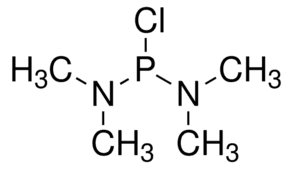
Bis(dimethylamino)chlorophosphine (CAS 3348-44-5; C4H12ClN2P; molar mass 154.58 g/mol) is a reactive trivalent organophosphorus reagent bearing a phosphorus-chlorine bond and two dimethylamino groups. Supplied as a moisture-sensitive liquid, it reacts violently with water and serves chiefly as a phosphorylating and derivatising building block in organophosphorus and phosphoramidite chemistry. Tech Serve Solutions supplies it as a research-grade reagent for synthesis and ligand preparation. We do not represent it as a pharmacopoeial grade.
- Synonyms
- Bis(dimethylamino)chlorophosphineChlorobis(dimethylamino)phosphineN,N,N',N'-Tetramethylphosphorodiamidic chlorideBis(dimethylamino)phosphorus chlorideCAS 3348-44-5
Phosphoramidite and P-N reagent chemistry
The reactive P-Cl centre allows controlled displacement by alcohols, amines and other nucleophiles, making it a useful intermediate for preparing aminophosphines and phosphoramidite-type derivatives in organophosphorus synthesis.
Ligand and precursor synthesis
It is used as a building block toward phosphorus(III) ligands and related coordination compounds, in line with its classification among phosphine compounds and phosphine ligands.
Derivatisation and phosphorylation
As a chlorophosphine reagent, it introduces a dimethylamino-substituted phosphorus moiety onto suitable substrates, supporting derivatisation and phosphorylation steps in research-scale chemical synthesis.
Catalysis and inorganic chemistry research
The compound is applied in catalysis and inorganic chemistry studies where a reactive P-Cl, P-N reagent is required for constructing tailored phosphorus frameworks.
| Molecular weight | 154.58 |
|---|---|
| Empirical formula | C4H12ClN2P |
| Assay | 96% |
| Density | 1.060 at 25 °C |
| Refractive index | n20/D 1.500 |
| Storage temperature | 2-8°C |

Hazard statements
- H314Causes severe skin burns and eye damage
Precautionary statements
- P280Wear protective gloves, clothing and eye/face protection
- P305IF IN EYES
- P310Immediately call a POISON CENTER or doctor
| Flash point | 76 °C / 168.8 °F |
|---|---|
| Transport (UN / ADR) | UN 3265 8 / PGII |
| Water hazard class (WGK, DE) | 3 |
| Hazard codes (EU) | C |
| Risk statements (R) | 14-34 |
| Safety statements (S) | 23-26-36-36/37/39-45 |
| Supplemental hazards | Reacts violently with water. |
Hazard information is provided for guidance. Always consult the product Safety Data Sheet (SDS), available on request, before handling.
Documentation
Every batch ships with a Certificate of Analysis covering assay, identity and purity; the grade is confirmed against your enquiry. Safety Data Sheets and technical data sheets are available on request.
Supply & logistics
Samples for technical evaluation; bulk MOQ by grade and packaging. In-stock material ships in 7–10 working days, worldwide, with full export documentation.
What is Bis(dimethylamino)chlorophosphine used for?
+
It is used mainly as a reactive organophosphorus reagent for synthesis. The phosphorus-chlorine bond reacts readily with nucleophiles such as alcohols and amines, so the compound serves as a building block for aminophosphines, phosphoramidite-type derivatives and phosphorus(III) ligands in chemical synthesis, catalysis and inorganic chemistry research.
What is the CAS number and molecular formula of Bis(dimethylamino)chlorophosphine?
+
The CAS number is 3348-44-5 and the molecular formula is C4H12ClN2P, with a molecular weight of 154.58 g/mol. Related identifiers include EC number 222-100-5 and MDL number MFCD00014862.
What grade and purity does Tech Serve Solutions supply?
+
Tech Serve Solutions supplies Bis(dimethylamino)chlorophosphine as a research-grade reagent with a typical assay of 96%. Indicative physical data include refractive index n20/D 1.500 and density 1.060 at 25 degrees C. We do not represent it as USP, BP or EP pharmacopoeial grade. A certificate of analysis can accompany each batch on request.
What are the safety and handling hazards of Bis(dimethylamino)chlorophosphine?
+
It is classified GHS05 with the signal word Danger and hazard statement H314 (causes severe skin burns and eye damage), and it reacts violently with water. Handle under dry, inert conditions away from moisture, wear protective gloves, eye and face protection (P280), and in case of contact rinse and seek medical attention (P305+P351+P338, P310). It carries water-hazard class WGK 3. Always consult the Safety Data Sheet before use.
How is Bis(dimethylamino)chlorophosphine packed, shipped and exported?
+
Because it is moisture-sensitive and reacts violently with water, it is packed in tightly sealed, moisture-excluding containers and recommended for storage at 2-8 degrees C. For transport it is classified as a Class 8 corrosive substance, UN 3265, Packing Group II. Tech Serve Solutions arranges compliant export documentation and dangerous-goods packaging to suit the destination.
How do I request a sample or quote?
+
Contact Tech Serve Solutions with your required quantity, purity and destination, and our team will respond with availability, lead time, packaging options and applicable documentation. We support both sample-scale and bulk enquiries for global supply and export.
▶ Related products
Benzeneruthenium(II) chloride dimer
Ru2(C6H6)2Cl4
Catalysis & Inorganic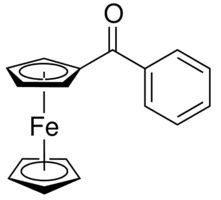
Benzoylferrocene
C17H14FeO
Catalysis & Inorganic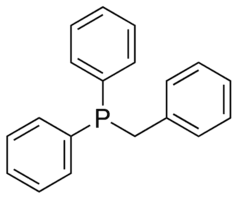
Benzyldiphenylphosphine
C6H5CH2P(C6H5)2
Catalysis & Inorganic
Beryllium
Be
Catalysis & Inorganic
Beryllium oxide
BeO
Catalysis & Inorganic![Bicyclo[2.2.1]hepta-2,5-diene-rhodium(I) chloride dimer — chemical structure, CAS 12257-42-0; Catalysis & Inorganic, fine chemical supplied by Tech Serve Solutions](/_next/image?url=https%3A%2F%2Fpub-f4d920c906024441a773a96f7098e551.r2.dev%2Fimages%2Fproducts%2F12257-42-0.png&w=3840&q=75)
Bicyclo[2.2.1]hepta-2,5-diene-rhodium(I) chloride dimer
Catalysis & Inorganic
![Bis[(10,11-η)-5-[(11bS)-dinaphtho[2,1-d:1′,2′-f][1,3,2]dioxaphosphepin-4-yl- κP4]-5H-dibenz[b,f]azepine]rhodium(I) tetrafluorobo — chemical structure, CAS 1228149-03-8; Catalysis & Inorganic, fine chemical supplied by Tech Serve Solutions](/_next/image?url=https%3A%2F%2Fpub-f4d920c906024441a773a96f7098e551.r2.dev%2Fimages%2Fproducts%2F1228149-03-8.png&w=3840&q=75)
Bis[(10,11-η)-5-[(11bS)-dinaphtho[2,1-d:1′,2′-f][1,3,2]dioxaphosphepin-4-yl- κP4]-5H-dibenz[b,f]azepine]rhodium(I) tetrafluorobo
1-d:1′
Catalysis & Inorganic![Bis[(2-dimethylamino)phenyl]amine nickel(II) chloride (C16H20ClN3Ni) — chemical structure, CAS 1033772-47-2; Catalysis & Inorganic, fine chemical supplied by Tech Serve Solutions](/_next/image?url=https%3A%2F%2Fpub-f4d920c906024441a773a96f7098e551.r2.dev%2Fimages%2Fproducts%2F1033772-47-2.png&w=3840&q=75)
Bis[(2-dimethylamino)phenyl]amine nickel(II) chloride
C16H20ClN3Ni
Catalysis & Inorganic