Bis(diethylamino)phenylphosphine
Bis(diethylamino)phenylphosphine (CAS 1636-14-2; C6H5P(N(CH2CH3)2)2; molar mass 252.34 g/mol) is a trivalent aminophosphine in which a phenyl group and two diethylamino groups are bound to phosphorus. Supplied as a colourless to pale liquid of around 97% assay, it is an air- and moisture-sensitive P(III) reagent used principally as a ligand and ligand precursor in transition-metal catalysis and as a building block in organophosphorus synthesis. Tech Serve Solutions supplies it to research and manufacturing customers worldwide.
- IUPAC
- N,N,N′N′-Tetraethylphenylphosphonous diamide,NSC 244337,Phenylphosphonous tetraethyldiamide
- Synonyms
- Bis(diethylamino)phenylphosphineN,N,N',N'-Tetraethylphenylphosphonous diamidePhenylphosphonous tetraethyldiamidePhenylbis(diethylamino)phosphineNSC 244337

Ligand in transition-metal catalysis
Acts as an electron-rich phosphorus donor for transition-metal complexes. It has been used as an electron-withdrawing cocatalyst in rhodium-catalysed hydroformylation and as a ligand precatalyst for Heck coupling reactions.
Precursor to chiral and bidentate P-N ligands
The two diethylamino groups are readily displaced, making the compound a convenient reactant for preparing palladium chiral P-N ligand complexes used in regio- and stereo-selective dimerisation reactions.
Synthesis of phosphinite ligands for cross-coupling
Serves as a starting material for palladium tautomeric ferrocenylphosphinites employed as catalysts in Suzuki-Miyaura coupling, allowing access to tailored phosphinite ligand frameworks.
Organophosphorus building block
Used in the trimethylsilyl halide-promoted Michaelis-Arbuzov rearrangement of phosphinites and phosphites, and more generally as an aminophosphine reagent for constructing P-O and P-C bonds.
| Molecular weight | 252.34 |
|---|---|
| Linear formula | C6H5P(N(CH2CH3)2)2 |
| Assay | 97% |
| Boiling point | 80 °C/0.005 mmHg(lit.) |
| Density | 0.971 g/mL at 25 °C(lit.) |
| Application | • Electron-withdrawing cocatalyst in rhodium catalyzed hydroformylation reactions1• Ligand precatalyst for Heck coupling reactions2Reactant for: • Preparation of palladium chiral P-N ligand complexes for regio- and stereo-selective dimerization reactions3• Preparation of palladium tautomeric ferrocenylphosphinites as catalysts for Suzuki-Miyaura coupling4• Trimethylsilyl halide-promoted Michaelis-Arbuzov rearrangement of phosphinites and phosphites5 |
| Protective equipment | Eyeshields, Gloves |
|---|---|
| Flash point | 106 °C / 222.8 °F |
| Water hazard class (WGK, DE) | 3 |
Hazard information is provided for guidance. Always consult the product Safety Data Sheet (SDS), available on request, before handling.
Documentation
Every batch ships with a Certificate of Analysis covering assay, identity and purity; the grade is confirmed against your enquiry. Safety Data Sheets and technical data sheets are available on request.
Supply & logistics
Samples for technical evaluation; bulk MOQ by grade and packaging. In-stock material ships in 7–10 working days, worldwide, with full export documentation.
What is Bis(diethylamino)phenylphosphine used for?
+
It is used chiefly as a phosphorus(III) ligand and ligand precursor in transition-metal catalysis. Documented uses include a cocatalyst in rhodium-catalysed hydroformylation, a precatalyst for Heck coupling, and a reactant for palladium P-N and ferrocenylphosphinite ligands used in selective dimerisation and Suzuki-Miyaura coupling. It also features in Michaelis-Arbuzov rearrangements as an organophosphorus building block.
What is the CAS number and molecular formula of Bis(diethylamino)phenylphosphine?
+
The CAS number is 1636-14-2 and the molecular formula is C6H5P(N(CH2CH3)2)2, with a molecular weight of 252.34 g/mol. Its MDL number is MFCD01634466. It is also known as N,N,N',N'-tetraethylphenylphosphonous diamide.
What grade and purity does Tech Serve Solutions supply?
+
Tech Serve Solutions supplies Bis(diethylamino)phenylphosphine as a research and synthesis-grade reagent with a typical assay of about 97%. We do not represent it as a USP, BP or EP pharmacopoeial grade. A certificate of analysis can be provided with each batch on request.
How should Bis(diethylamino)phenylphosphine be handled and stored safely?
+
As a trivalent aminophosphine it is air- and moisture-sensitive and should be handled under dry, inert gas using suitable eye protection and gloves. It is a combustible liquid (flash point 106 °C), so keep it away from heat and ignition sources. It is classified as a severe hazard to water (WGK 3 in Germany) and must be prevented from entering drains or waterways. Always consult the current Safety Data Sheet before use.
How is Bis(diethylamino)phenylphosphine packed, shipped and exported?
+
It is supplied in tightly sealed, moisture-excluding containers sized to the order, typically under inert headspace to protect the air-sensitive liquid. Tech Serve Solutions exports worldwide with full documentation and labelling in line with applicable transport regulations for the product and destination. Specific pack sizes and compliant shipping arrangements are confirmed at the quotation stage.
How do I request a sample or quote?
+
Contact Tech Serve Solutions with your required quantity, purity and destination, quoting CAS 1636-14-2, and our team will respond with availability, lead time and documentation. Samples can be arranged subject to availability and handling requirements for this air-sensitive reagent.
▶ Related products
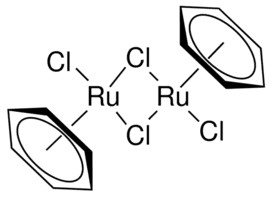
Benzeneruthenium(II) chloride dimer
Ru2(C6H6)2Cl4
Catalysis & Inorganic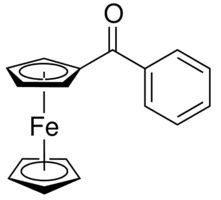
Benzoylferrocene
C17H14FeO
Catalysis & Inorganic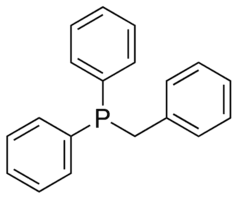
Benzyldiphenylphosphine
C6H5CH2P(C6H5)2
Catalysis & Inorganic
Beryllium
Be
Catalysis & Inorganic
Beryllium oxide
BeO
Catalysis & Inorganic![Bicyclo[2.2.1]hepta-2,5-diene-rhodium(I) chloride dimer — chemical structure, CAS 12257-42-0; Catalysis & Inorganic, fine chemical supplied by Tech Serve Solutions](/_next/image?url=https%3A%2F%2Fpub-f4d920c906024441a773a96f7098e551.r2.dev%2Fimages%2Fproducts%2F12257-42-0.png&w=3840&q=75)
Bicyclo[2.2.1]hepta-2,5-diene-rhodium(I) chloride dimer
Catalysis & Inorganic
![Bis[(10,11-η)-5-[(11bS)-dinaphtho[2,1-d:1′,2′-f][1,3,2]dioxaphosphepin-4-yl- κP4]-5H-dibenz[b,f]azepine]rhodium(I) tetrafluorobo — chemical structure, CAS 1228149-03-8; Catalysis & Inorganic, fine chemical supplied by Tech Serve Solutions](/_next/image?url=https%3A%2F%2Fpub-f4d920c906024441a773a96f7098e551.r2.dev%2Fimages%2Fproducts%2F1228149-03-8.png&w=3840&q=75)
Bis[(10,11-η)-5-[(11bS)-dinaphtho[2,1-d:1′,2′-f][1,3,2]dioxaphosphepin-4-yl- κP4]-5H-dibenz[b,f]azepine]rhodium(I) tetrafluorobo
1-d:1′
Catalysis & Inorganic![Bis[(2-dimethylamino)phenyl]amine nickel(II) chloride (C16H20ClN3Ni) — chemical structure, CAS 1033772-47-2; Catalysis & Inorganic, fine chemical supplied by Tech Serve Solutions](/_next/image?url=https%3A%2F%2Fpub-f4d920c906024441a773a96f7098e551.r2.dev%2Fimages%2Fproducts%2F1033772-47-2.png&w=3840&q=75)
Bis[(2-dimethylamino)phenyl]amine nickel(II) chloride
C16H20ClN3Ni
Catalysis & Inorganic