Bis(cyclopentadienyl)zirconium(IV) chloride hydride
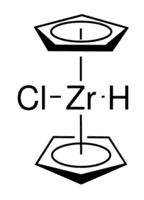
Bis(cyclopentadienyl)zirconium(IV) chloride hydride (CAS 37342-97-5), widely known as Schwartz's reagent, is an air- and moisture-sensitive organozirconium complex with the formula C10H11ClZr and a molecular weight of 257.87. Comprising a zirconium centre bearing two cyclopentadienyl rings, a chloride and a hydride, it is a versatile reagent in organic synthesis, valued for the hydrozirconation of alkenes and alkynes and the conversion of amides to aldehydes. Tech Serve Solutions supplies it as a research-grade reagent to laboratories worldwide.
- IUPAC
- Di(cyclopentadienyl)zirconium(IV) chloride hydride,Schwartz’ reagent,Zirconocene chloride hydride
- Synonyms
- Bis(cyclopentadienyl)zirconium(IV) chloride hydrideDi(cyclopentadienyl)zirconium(IV) chloride hydrideSchwartz's reagentZirconocene chloride hydrideChlorobis(cyclopentadienyl)hydridozirconiumCp2Zr(H)Cl
Conversion of amides to aldehydes
Schwartz's reagent enables the direct, mild reduction of amides to the corresponding aldehydes, offering chemoselectivity that is difficult to achieve with conventional hydride reducing agents.
Hydrozirconation of alkenes and alkynes
The Zr-H bond adds across carbon-carbon multiple bonds to give well-defined organozirconium intermediates, a foundational step for downstream functionalisation in synthesis.
Formation of carbon-carbon and carbon-heteroatom bonds
Alkyl- and vinylzirconocene intermediates generated by hydrozirconation can be transmetallated or trapped with electrophiles, supporting stereodefined bond construction in complex molecule synthesis.
Reagent for research and method development
As a defined metal hydride, it is used in academic and industrial laboratories for reduction chemistry, organometallic methodology and reaction screening.
| Molecular weight | 257.87 |
|---|---|
| Empirical formula | C10H11ClZr |
| Assay | 95% |
| Application | Conversion of amides to aldehydes.1 |


Hazard statements
- H261In contact with water releases flammable gas
- H314Causes severe skin burns and eye damage
Precautionary statements
- P231Handle under inert gas
- P280Wear protective gloves, clothing and eye/face protection
- P305IF IN EYES
- P310Immediately call a POISON CENTER or doctor
- P422
| Protective equipment | Eyeshields, Faceshields, full-face particle respirator type N100 (US), Gloves, respirator cartridge type N100 (US), type P1 (EN143) respirator filter, type P3 (EN 143) respirator cartridges |
|---|---|
| Transport (UN / ADR) | UN 3131 4.3/PG 2 |
| Water hazard class (WGK, DE) | 3 |
| Hazard codes (EU) | F,C |
| Risk statements (R) | 11-15-34 |
| Safety statements (S) | 16-26-27-36/37/39 |
Hazard information is provided for guidance. Always consult the product Safety Data Sheet (SDS), available on request, before handling.
Documentation
Every batch ships with a Certificate of Analysis covering assay, identity and purity; the grade is confirmed against your enquiry. Safety Data Sheets and technical data sheets are available on request.
Supply & logistics
Samples for technical evaluation; bulk MOQ by grade and packaging. In-stock material ships in 7–10 working days, worldwide, with full export documentation.
What is Bis(cyclopentadienyl)zirconium(IV) chloride hydride used for?
+
It is an organozirconium reagent, commonly called Schwartz's reagent, used in organic synthesis for the hydrozirconation of alkenes and alkynes and for the selective conversion of amides to aldehydes. The organozirconium intermediates it forms are valuable for subsequent carbon-carbon and carbon-heteroatom bond formation.
What is the CAS number and molecular formula of Bis(cyclopentadienyl)zirconium(IV) chloride hydride?
+
The CAS number is 37342-97-5 and the empirical formula is C10H11ClZr (Hill notation), with a molecular weight of 257.87. The EC number is 253-479-5 and the MDL number is MFCD02089401.
What grade and purity does Tech Serve Solutions supply?
+
Tech Serve Solutions supplies this material as a research-grade reagent with a typical assay of 95%. It is offered for research and manufacturing use; we do not represent it as USP, BP or EP pharmacopoeial grade. A Certificate of Analysis can be provided with each batch.
What are the safety and handling hazards of Bis(cyclopentadienyl)zirconium(IV) chloride hydride?
+
It is classified GHS02 and GHS05, signal word Danger. The hazard statements are H261 (in contact with water releases flammable gases) and H314 (causes severe skin burns and eye damage). It is air- and moisture-sensitive and should be handled under inert atmosphere with eye, face and skin protection and suitable respiratory protection, away from water. It is assigned Water Hazard Class (WGK) 3.
How is Bis(cyclopentadienyl)zirconium(IV) chloride hydride packed, shipped and exported?
+
Because it is moisture-sensitive and water-reactive, it is packed under inert, airtight conditions in appropriately sized containers and shipped as a dangerous good. Transport classification is UN 3131, Class 4.3, Packing Group II. Tech Serve Solutions arranges compliant labelling, documentation and export logistics worldwide.
Is Bis(cyclopentadienyl)zirconium(IV) chloride hydride a controlled or scheduled substance?
+
The supplied data does not indicate any narcotics or precursor control scheduling for this compound. It is, however, regulated for transport as a Class 4.3 water-reactive dangerous good (UN 3131) and is assigned WGK 3 in Germany; handling, storage and shipment must follow the applicable hazardous-materials regulations.
How do I request a sample or quote?
+
Contact Tech Serve Solutions with your required quantity, purity and destination, and our team will respond with availability, lead time and documentation. We supply both sample and bulk quantities to laboratories and manufacturers internationally.
▶ Related products
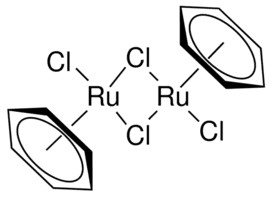
Benzeneruthenium(II) chloride dimer
Ru2(C6H6)2Cl4
Catalysis & Inorganic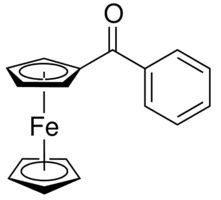
Benzoylferrocene
C17H14FeO
Catalysis & Inorganic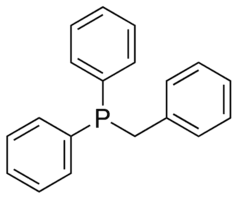
Benzyldiphenylphosphine
C6H5CH2P(C6H5)2
Catalysis & Inorganic
Beryllium
Be
Catalysis & Inorganic
Beryllium oxide
BeO
Catalysis & Inorganic![Bicyclo[2.2.1]hepta-2,5-diene-rhodium(I) chloride dimer — chemical structure, CAS 12257-42-0; Catalysis & Inorganic, fine chemical supplied by Tech Serve Solutions](/_next/image?url=https%3A%2F%2Fpub-f4d920c906024441a773a96f7098e551.r2.dev%2Fimages%2Fproducts%2F12257-42-0.png&w=3840&q=75)
Bicyclo[2.2.1]hepta-2,5-diene-rhodium(I) chloride dimer
Catalysis & Inorganic
![Bis[(10,11-η)-5-[(11bS)-dinaphtho[2,1-d:1′,2′-f][1,3,2]dioxaphosphepin-4-yl- κP4]-5H-dibenz[b,f]azepine]rhodium(I) tetrafluorobo — chemical structure, CAS 1228149-03-8; Catalysis & Inorganic, fine chemical supplied by Tech Serve Solutions](/_next/image?url=https%3A%2F%2Fpub-f4d920c906024441a773a96f7098e551.r2.dev%2Fimages%2Fproducts%2F1228149-03-8.png&w=3840&q=75)
Bis[(10,11-η)-5-[(11bS)-dinaphtho[2,1-d:1′,2′-f][1,3,2]dioxaphosphepin-4-yl- κP4]-5H-dibenz[b,f]azepine]rhodium(I) tetrafluorobo
1-d:1′
Catalysis & Inorganic![Bis[(2-dimethylamino)phenyl]amine nickel(II) chloride (C16H20ClN3Ni) — chemical structure, CAS 1033772-47-2; Catalysis & Inorganic, fine chemical supplied by Tech Serve Solutions](/_next/image?url=https%3A%2F%2Fpub-f4d920c906024441a773a96f7098e551.r2.dev%2Fimages%2Fproducts%2F1033772-47-2.png&w=3840&q=75)
Bis[(2-dimethylamino)phenyl]amine nickel(II) chloride
C16H20ClN3Ni
Catalysis & Inorganic