Bis(cyclopentadienyl)cobalt(III) hexafluorophosphate
Bis(cyclopentadienyl)cobalt(III) hexafluorophosphate (CAS 12427-42-8), commonly called cobaltocenium hexafluorophosphate, is the air-stable salt of the 18-electron cobaltocenium sandwich cation paired with the hexafluorophosphate anion. With molecular formula C10H10CoF6P and a molar mass of 334.08 g/mol, it is a redox-active organometallic reagent. Tech Serve Solutions supplies it at 98% assay for use as a cocatalyst, an electrode-modification reactant and a building block for cobaltocenium-containing polymers.
- IUPAC
- Cobaltocenium hexafluorophosphate
- Synonyms
- Cobaltocenium hexafluorophosphateBis(cyclopentadienyl)cobalt(III) hexafluorophosphateCobaltocenium hexafluorophosphate(V)Bis(eta5-cyclopentadienyl)cobalt(1+) hexafluorophosphateCobalticenium hexafluorophosphateCobaltocene hexafluorophosphateCAS 12427-42-8

Cocatalyst in palladium-catalysed coupling
Used as a cocatalyst for the Heck reaction of aryl iodides with alkenes under palladium catalysis in aqueous media. It supports carbon-carbon bond formation in cross-coupling chemistry.
Modification of organometallic electrode surfaces
Serves as a reactant for the functionalisation of organometallic electrode surfaces through cathodic reduction, exploiting the well-defined cobaltocenium/cobaltocene redox couple.
Cobaltocenium-containing polymers
Acts as a reactant in the synthesis and solution self-assembly of side-chain cobaltocenium-containing block copolymers, enabling redox-active and metallopolymer materials research.
Redox reagent and reference
As an isolable, robust 18-electron cation, the cobaltocenium ion is a recognised redox-active reagent in organometallic and electrochemical chemistry. Such uses should be confirmed against your own protocols.
| Molecular weight | 334.08 |
|---|---|
| Empirical formula | C10H10CoF6P |
| Assay | 98% |
| Application | Uses:• Cocatalyst for Heck reaction of aryl iodides with alkenes using palladium as catalyst in water1• Reactant for modification of organometallic electrodes surfaces through cathodic reduction2• Reactant in synthesis and solution self-assembly of side-chain cobaltocenium-containing block copolymers3 |

Hazard statements
- H302Harmful if swallowed
- H315Causes skin irritation
- H319Causes serious eye irritation
- H335May cause respiratory irritation
Precautionary statements
- P261Avoid breathing dust, fume, gas or vapours
- P280Wear protective gloves, clothing and eye/face protection
- P305IF IN EYES
| Protective equipment | dust mask type N95 (US), Eyeshields, Gloves |
|---|---|
| Water hazard class (WGK, DE) | 3 |
| Hazard codes (EU) | Xn |
| Risk statements (R) | 20/21/22-36/37/38 |
| Safety statements (S) | 26-37/39 |
Hazard information is provided for guidance. Always consult the product Safety Data Sheet (SDS), available on request, before handling.
Documentation
Every batch ships with a Certificate of Analysis covering assay, identity and purity; the grade is confirmed against your enquiry. Safety Data Sheets and technical data sheets are available on request.
Supply & logistics
Samples for technical evaluation; bulk MOQ by grade and packaging. In-stock material ships in 7–10 working days, worldwide, with full export documentation.
What is Bis(cyclopentadienyl)cobalt(III) hexafluorophosphate used for?
+
It is used chiefly as a research-grade organometallic reagent: as a cocatalyst for palladium-catalysed Heck reactions of aryl iodides with alkenes in water, as a reactant for modifying organometallic electrode surfaces by cathodic reduction, and as a building block for cobaltocenium-containing block copolymers. The cobaltocenium cation is valued for its stable, well-defined redox behaviour.
What is the CAS number and molecular formula of Bis(cyclopentadienyl)cobalt(III) hexafluorophosphate?
+
The CAS number is 12427-42-8 and the molecular formula is C10H10CoF6P, with a molecular weight of 334.08 g/mol. Related identifiers include EC number 235-655-3, MDL number MFCD00011874 and PubChem Substance ID 24856910. It is widely known as cobaltocenium hexafluorophosphate.
What grade and purity does Tech Serve Solutions supply?
+
Tech Serve Solutions supplies Bis(cyclopentadienyl)cobalt(III) hexafluorophosphate at a typical assay of 98% as a research and laboratory-reagent grade material. We do not represent it as a USP, BP or EP pharmacopoeia grade. A current specification or certificate of analysis can be provided with your enquiry.
What are the safety and handling requirements?
+
Under GHS this product carries pictogram GHS07 and the signal word Warning. Hazard statements are H302 + H312 + H332 (harmful if swallowed, in contact with skin or if inhaled), H315 (causes skin irritation), H319 (causes serious eye irritation) and H335 (may cause respiratory irritation). Handle with a type N95 dust mask, eye protection and gloves, and avoid forming dust. It is highly water-hazardous (WGK 3), so prevent release to drains and watercourses. Always consult the Safety Data Sheet before use.
How is Bis(cyclopentadienyl)cobalt(III) hexafluorophosphate packed, shipped and exported?
+
It is supplied as a solid in tightly sealed containers with sizes to suit laboratory and bulk requirements. Each consignment travels with full documentation, including a Safety Data Sheet and certificate of analysis, and is packed and labelled in line with applicable transport regulations. Tech Serve Solutions exports worldwide and can advise on the appropriate option for your destination.
How do I request a sample or quote?
+
Contact Tech Serve Solutions with your required quantity, purity and destination, quoting CAS 12427-42-8. We will respond with availability, lead time, specification and export documentation, and can arrange a sample where appropriate.
▶ Related products
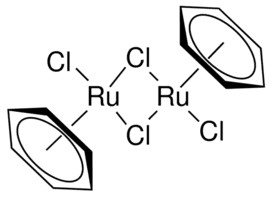
Benzeneruthenium(II) chloride dimer
Ru2(C6H6)2Cl4
Catalysis & Inorganic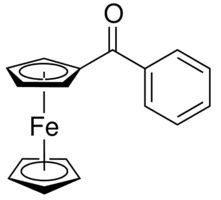
Benzoylferrocene
C17H14FeO
Catalysis & Inorganic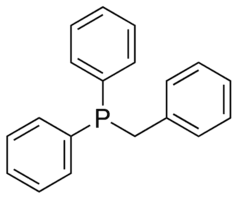
Benzyldiphenylphosphine
C6H5CH2P(C6H5)2
Catalysis & Inorganic
Beryllium
Be
Catalysis & Inorganic
Beryllium oxide
BeO
Catalysis & Inorganic![Bicyclo[2.2.1]hepta-2,5-diene-rhodium(I) chloride dimer — chemical structure, CAS 12257-42-0; Catalysis & Inorganic, fine chemical supplied by Tech Serve Solutions](/_next/image?url=https%3A%2F%2Fpub-f4d920c906024441a773a96f7098e551.r2.dev%2Fimages%2Fproducts%2F12257-42-0.png&w=3840&q=75)
Bicyclo[2.2.1]hepta-2,5-diene-rhodium(I) chloride dimer
Catalysis & Inorganic
![Bis[(10,11-η)-5-[(11bS)-dinaphtho[2,1-d:1′,2′-f][1,3,2]dioxaphosphepin-4-yl- κP4]-5H-dibenz[b,f]azepine]rhodium(I) tetrafluorobo — chemical structure, CAS 1228149-03-8; Catalysis & Inorganic, fine chemical supplied by Tech Serve Solutions](/_next/image?url=https%3A%2F%2Fpub-f4d920c906024441a773a96f7098e551.r2.dev%2Fimages%2Fproducts%2F1228149-03-8.png&w=3840&q=75)
Bis[(10,11-η)-5-[(11bS)-dinaphtho[2,1-d:1′,2′-f][1,3,2]dioxaphosphepin-4-yl- κP4]-5H-dibenz[b,f]azepine]rhodium(I) tetrafluorobo
1-d:1′
Catalysis & Inorganic![Bis[(2-dimethylamino)phenyl]amine nickel(II) chloride (C16H20ClN3Ni) — chemical structure, CAS 1033772-47-2; Catalysis & Inorganic, fine chemical supplied by Tech Serve Solutions](/_next/image?url=https%3A%2F%2Fpub-f4d920c906024441a773a96f7098e551.r2.dev%2Fimages%2Fproducts%2F1033772-47-2.png&w=3840&q=75)
Bis[(2-dimethylamino)phenyl]amine nickel(II) chloride
C16H20ClN3Ni
Catalysis & Inorganic