Bis(benzonitrile)palladium(II) chloride
Bis(benzonitrile)palladium(II) chloride (CAS 14220-64-5; (C6H5CN)2PdCl2; molar mass 383.57 g/mol) is an orange-yellow palladium(II) complex bearing two labile benzonitrile ligands. The weakly bound nitriles are readily displaced, making it a convenient, soluble palladium(II) source and homogeneous precatalyst for organometallic and organic synthesis. Tech Serve Solutions supplies it as a research-grade reagent at a typical assay of 95% for catalysis, ligand-exchange and coordination chemistry. It melts at about 131 degrees C.
- IUPAC
- Benzonitrile, palladium complex,Bis(benzonitrile)dichloropalladium(II),Bis(benzonitrile)palladium(II) chloride,Bis(phenylnitrile)dichloropalladium,Dibenzonitrilepalladium dichloride,Dichlorobis(benzonitrile)palladium(II),Dichlorobis(benzonitrile)palladium,Dichlorobis(phenyl cyanide)palladium,Palladium dichloride bis(benzonitrile),Palladium(II) chloride bis(benzonitrile) complex
- Synonyms
- Bis(benzonitrile)palladium(II) chlorideBis(benzonitrile)dichloropalladium(II)Dichlorobis(benzonitrile)palladium(II)Dichlorobis(benzonitrile)palladiumBis(phenylnitrile)dichloropalladiumDichlorobis(phenyl cyanide)palladiumDibenzonitrilepalladium dichloridePalladium dichloride bis(benzonitrile)Palladium(II) chloride bis(benzonitrile) complexBenzonitrile, palladium complex

Homogeneous palladium precatalyst
Serves as a soluble palladium(II) source whose labile benzonitrile ligands are easily exchanged for phosphines and other donors, generating active catalysts in situ for a range of palladium-mediated transformations.
Ligand exchange and complex synthesis
Acts as a versatile starting material in coordination chemistry, where the two benzonitrile groups are displaced to prepare well-defined phosphine, N-heterocyclic carbene and other palladium(II) complexes.
Catalysis in chemical synthesis
Used in homogeneous catalysis and chemical synthesis as a palladium catalyst or catalyst precursor, supporting carbon-carbon and carbon-heteroatom bond-forming methodology in research laboratories.
Research and method development
Employed as a reference palladium(II) reagent in academic and process-development studies of reaction mechanism, catalyst design and organometallic reactivity.
| Molecular weight | 383.57 |
|---|---|
| Linear formula | (C6H5CN)2PdCl2 |
| Assay | 95% |
| Melting point | 131 °C(lit.) |
| Protective equipment | Eyeshields, Gloves, type N95 (US), type P1 (EN143) respirator filter |
|---|---|
| Water hazard class (WGK, DE) | 3 |
Hazard information is provided for guidance. Always consult the product Safety Data Sheet (SDS), available on request, before handling.
| Greener Alternative Product Characteristics | Catalysis |
|---|
Documentation
Every batch ships with a Certificate of Analysis covering assay, identity and purity; the grade is confirmed against your enquiry. Safety Data Sheets and technical data sheets are available on request.
Supply & logistics
Samples for technical evaluation; bulk MOQ by grade and packaging. In-stock material ships in 7–10 working days, worldwide, with full export documentation.
What is Bis(benzonitrile)palladium(II) chloride used for?
+
It is used mainly as a homogeneous palladium(II) precatalyst and palladium source in organometallic and organic synthesis. Its two benzonitrile ligands are labile and easily replaced by phosphines or other donor ligands, allowing active palladium catalysts and well-defined complexes to be generated for catalysis and coordination-chemistry research.
What is the CAS number and molecular formula of Bis(benzonitrile)palladium(II) chloride?
+
The CAS number is 14220-64-5 and the linear formula is (C6H5CN)2PdCl2, with a molecular weight of 383.57 g/mol. Related identifiers include EC number 238-085-3, MDL number MFCD00013123 and Beilstein registry number 3981730.
What grade and purity does Tech Serve Solutions supply?
+
Tech Serve Solutions supplies Bis(benzonitrile)palladium(II) chloride as a research-grade reagent at a typical assay of 95%, suitable for catalysis and synthesis. We do not represent this material as USP, BP or EP pharmacopoeia grade. A certificate of analysis can be provided with each batch on request.
What safety and handling precautions apply to Bis(benzonitrile)palladium(II) chloride?
+
Handle it as a fine-chemical palladium complex under good laboratory practice. The supplied data specify personal protective equipment including eye shields, gloves and an N95 (US) or P1 (EN143) respirator filter, and assign Water Hazard Class WGK 3 (severely hazardous to water), so it must be kept out of drains and watercourses. Always consult the current Safety Data Sheet before use.
How is Bis(benzonitrile)palladium(II) chloride packed, shipped and exported?
+
It is packed in tightly closed containers appropriate to the order quantity, with full labelling and documentation, and stored and shipped cool and dry. As a precious-metal palladium complex it is typically handled in laboratory and small bulk pack sizes. As a specialist exporter since 1998, Tech Serve Solutions arranges compliant international dispatch with the required transport and safety paperwork.
How do I request a sample or quote?
+
Contact Tech Serve Solutions with your required quantity, packaging and destination, and our team will respond with availability, lead time and export details. Samples and a certificate of analysis can be arranged to support your evaluation and qualification.
▶ Related products
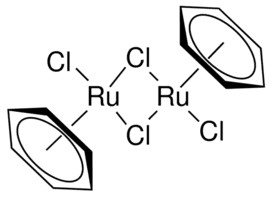
Benzeneruthenium(II) chloride dimer
Ru2(C6H6)2Cl4
Catalysis & Inorganic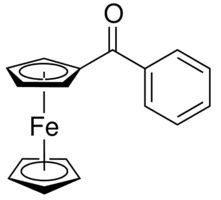
Benzoylferrocene
C17H14FeO
Catalysis & Inorganic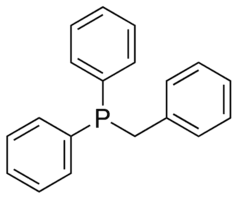
Benzyldiphenylphosphine
C6H5CH2P(C6H5)2
Catalysis & Inorganic
Beryllium
Be
Catalysis & Inorganic
Beryllium oxide
BeO
Catalysis & Inorganic![Bicyclo[2.2.1]hepta-2,5-diene-rhodium(I) chloride dimer — chemical structure, CAS 12257-42-0; Catalysis & Inorganic, fine chemical supplied by Tech Serve Solutions](/_next/image?url=https%3A%2F%2Fpub-f4d920c906024441a773a96f7098e551.r2.dev%2Fimages%2Fproducts%2F12257-42-0.png&w=3840&q=75)
Bicyclo[2.2.1]hepta-2,5-diene-rhodium(I) chloride dimer
Catalysis & Inorganic
![Bis[(10,11-η)-5-[(11bS)-dinaphtho[2,1-d:1′,2′-f][1,3,2]dioxaphosphepin-4-yl- κP4]-5H-dibenz[b,f]azepine]rhodium(I) tetrafluorobo — chemical structure, CAS 1228149-03-8; Catalysis & Inorganic, fine chemical supplied by Tech Serve Solutions](/_next/image?url=https%3A%2F%2Fpub-f4d920c906024441a773a96f7098e551.r2.dev%2Fimages%2Fproducts%2F1228149-03-8.png&w=3840&q=75)
Bis[(10,11-η)-5-[(11bS)-dinaphtho[2,1-d:1′,2′-f][1,3,2]dioxaphosphepin-4-yl- κP4]-5H-dibenz[b,f]azepine]rhodium(I) tetrafluorobo
1-d:1′
Catalysis & Inorganic![Bis[(2-dimethylamino)phenyl]amine nickel(II) chloride (C16H20ClN3Ni) — chemical structure, CAS 1033772-47-2; Catalysis & Inorganic, fine chemical supplied by Tech Serve Solutions](/_next/image?url=https%3A%2F%2Fpub-f4d920c906024441a773a96f7098e551.r2.dev%2Fimages%2Fproducts%2F1033772-47-2.png&w=3840&q=75)
Bis[(2-dimethylamino)phenyl]amine nickel(II) chloride
C16H20ClN3Ni
Catalysis & Inorganic