Bis[2-(2-bromoisobutyryloxy)undecyl] disulfide
Bis[2-(2-bromoisobutyryloxy)undecyl] disulfide (CAS: 402828-41-5) is a specialized organic compound with the empirical formula C30H56Br2O4S2. As an Atom Transfer Radical Polymerization (ATRP) initiator, it is predominantly utilized for functionalizing noble metal surfaces and creating polymers with temperature- and light-sensitive cleavage regions. This compound serves critical roles in advanced materials science and polymer chemistry, enabling precise control over polymer architecture and surface modification.
- IUPAC
- 11,11′-Dithiobis[1-(2-bromo-2-methylpropionyloxy)undecane],DTBU
- Synonyms
- 11,11′-Dithiobis[1-(2-bromo-2-methylpropionyloxy)undecane],DTBU
![Bis[2-(2-bromoisobutyryloxy)undecyl] disulfide (C30H56Br2O4S2) — chemical structure, CAS 402828-41-5; Materials Science, fine chemical supplied by Tech Serve Solutions](/_next/image?url=https%3A%2F%2Fpub-f4d920c906024441a773a96f7098e551.r2.dev%2Fimages%2Fproducts%2F402828-41-5.png&w=3840&q=75)
Surface Functionalization via ATRP
This compound acts as an effective ATRP initiator for grafting polymer chains onto noble metal surfaces. It allows for controlled polymer growth directly from the surface, enabling the creation of functionalized materials with tailored properties.
Controlled Polymerization
Utilized in Atom Transfer Radical Polymerization (ATRP), this initiator facilitates the synthesis of polymers with well-defined molecular weights and architectures. It is particularly useful for developing polymers that exhibit sensitivity to temperature and light.
Development of Stimuli-Responsive Materials
The ability to introduce regions sensitive to temperature and light makes this compound valuable for creating smart materials. These materials can undergo controlled cleavage or changes in properties in response to specific environmental stimuli.
Materials Science and Micro/Nanoelectronics
Its applications extend to materials science, particularly in the fabrication of micro- and nanoelectronic devices. The controlled surface modification capabilities are crucial for developing advanced materials for these fields.
| Empirical formula | C30H56Br2O4S2 |
|---|---|
| Assay | 97% |
| Density | 1.177 g/mL at 25 °C |
| Solubility | : soluble1.500 at 20 °C |
| Application | Atom Transfer Radical Polymerization (ATRP) initiator commonly used to functionalize noble metal surfaces. This can also be used to introduce temperature and light sensitive regions to cleave the polymer. |

Hazard statements
- H315Causes skin irritation
- H319Causes serious eye irritation
- H335May cause respiratory irritation
Precautionary statements
- P261Avoid breathing dust, fume, gas or vapours
- P305IF IN EYES
| Flash point | >110 °C / >230 °F |
|---|---|
| Water hazard class (WGK, DE) | 3 |
| Hazard codes (EU) | Xi |
| Risk statements (R) | 36/37/38 |
| Safety statements (S) | 26-36 |
Hazard information is provided for guidance. Always consult the product Safety Data Sheet (SDS), available on request, before handling.
Documentation
Every batch ships with a Certificate of Analysis covering assay, identity and purity; the grade is confirmed against your enquiry. Safety Data Sheets and technical data sheets are available on request.
Supply & logistics
Samples for technical evaluation; bulk MOQ by grade and packaging. In-stock material ships in 7–10 working days, worldwide, with full export documentation.
What is Bis[2-(2-bromoisobutyryloxy)undecyl] disulfide used for?
+
Bis[2-(2-bromoisobutyryloxy)undecyl] disulfide (CAS: 402828-41-5) is primarily used as an Atom Transfer Radical Polymerization (ATRP) initiator for functionalizing noble metal surfaces and for creating polymers with temperature- and light-sensitive cleavage regions.
What is the CAS number and formula for Bis[2-(2-bromoisobutyryloxy)undecyl] disulfide?
+
The CAS number is 402828-41-5 and the empirical formula is C30H56Br2O4S2.
What grade and purity does Tech Serve Solutions supply?
+
Tech Serve Solutions supplies this chemical with an assay of 97%. It is supplied for research and development purposes and is not represented as USP, BP, EP, or any other pharmacopoeia grade.
How should Bis[2-(2-bromoisobutyryloxy)undecyl] disulfide be handled?
+
According to GHS, this compound is a Warning. It may cause skin irritation (H315), serious eye irritation (H319), and may cause respiratory irritation (H335). Handle with appropriate personal protective equipment (PPE) and avoid breathing dust/fume/gas/mist/vapours/spray (P261). If in eyes, rinse cautiously with water for several minutes (P305 + P351 + P338).
How is this product packed and shipped?
+
This chemical is carefully packed and exported by Tech Serve Solutions in compliance with international shipping regulations for hazardous materials.
How can I request a sample or quote?
+
To request a sample or a quote for Bis[2-(2-bromoisobutyryloxy)undecyl] disulfide, please contact our sales department through the website or by phone.
▶ Related products
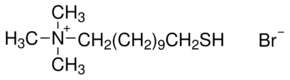
(11-Mercaptoundecyl)-N,N,N-trimethylammonium bromide
Micro / NanoElectronics

(11-Mercaptoundecyl)hexa(ethylene glycol)
C23H48O7S
Micro / NanoElectronics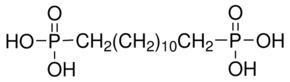
(12-Phosphonododecyl)phosphonic acid
C12H28O6P2
Micro / NanoElectronics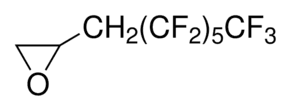
(2,2,3,3,4,4,5,5,6,6,7,7,7-Tridecafluoroheptyl)oxirane
C9H5F13O
Micro / NanoElectronics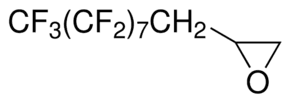
(2,2,3,3,4,4,5,5,6,6,7,7,8,8,9,9,9-Heptadecafluorononyl)oxirane
C11H5F17O
Micro / NanoElectronics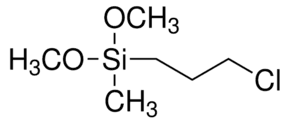
(3-Chloropropyl)dimethoxymethylsilane
Cl(CH2)3Si(OCH3)2CH3
Micro / NanoElectronics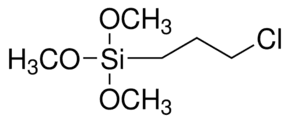
(3-Chloropropyl)trimethoxysilane
Cl(CH2)3Si(OCH3)3
Micro / NanoElectronics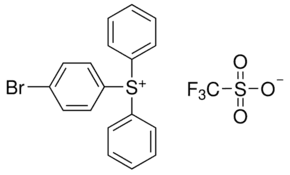
(4-Bromophenyl)diphenylsulfonium triflate
C19H14BrF3O3S2
Micro / NanoElectronics