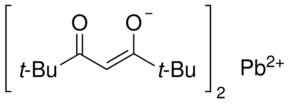
Bis(2,2,6,6-tetramethyl-3,5-heptanedionato)lead(II)
Bis(2,2,6,6-tetramethyl-3,5-heptanedionato)lead(II) (CAS 21319-43-7), commonly written Pb(TMHD)2, is a volatile lead(II) beta-diketonate complex with the linear formula Pb(OCC(CH3)3CHCOC(CH3)3)2 and a molar mass of 573.73 g/mol. Supplied as a 97% assay solid, it is used chiefly as a metal-organic precursor for depositing lead-containing thin films by CVD, ALD and sol-gel routes. Tech Serve Solutions supplies and exports it worldwide for catalysis, inorganic chemistry and materials research.
- IUPAC
- Lead bis(2,2,6,6-tetramethyl-3,5-heptanedionate),Pb(TMHD)2
- Synonyms
- Lead bis(2,2,6,6-tetramethyl-3,5-heptanedionate)Pb(TMHD)2Lead(II) 2,2,6,6-tetramethyl-3,5-heptanedionateBis(2,2,6,6-tetramethyl-3,5-heptanedionato)lead(II)Lead dipivaloylmethanateCAS 21319-43-7
Thin-film precursor (CVD/ALD/MOCVD)
As a volatile, thermally tractable lead source, Pb(TMHD)2 is widely used in chemical and atomic-layer deposition to grow lead-bearing oxide films. The bulky tetramethylheptanedionate ligands give the clean volatility and stability needed for vapour-phase delivery.
Ferroelectric and dielectric oxide films
It serves as the lead component in the deposition of complex oxides such as lead zirconate titanate (PZT) and lead titanate, which are studied for ferroelectric, piezoelectric and high-permittivity dielectric applications.
Sol-gel and metal-organic deposition (MOD)
The complex is soluble in common organic solvents, making it a convenient molecular precursor for sol-gel and MOD routes to lead oxide and mixed-metal oxide coatings and powders.
Catalysis and inorganic synthesis
As a well-defined, soluble lead source, it is used in catalysis research and in the preparation of other lead complexes and materials within the laboratory.
| Molecular weight | 573.73 |
|---|---|
| Linear formula | Pb(OCC(CH3)3CHCOC(CH3)3)2 |
| Assay | 97% |
| Storage temperature | 2-8°C |
| Melting point | 129-131 °C(lit.)129-133 °C |


Hazard statements
- H272May intensify fire; oxidiser
- H302Harmful if swallowed
- H332Harmful if inhaled
- H360DF
- H373May cause damage to organs through prolonged exposure
- H410Very toxic to aquatic life with long-lasting effects
Precautionary statements
- P201Obtain special instructions before use
- P220Keep away from clothing and combustible materials
- P273Avoid release to the environment
- P308IF exposed or concerned
- P501Dispose of contents and container per local regulations
| Transport (UN / ADR) | UN 2291 6.1 / PGIII |
|---|---|
| Water hazard class (WGK, DE) | 3 |
| Hazard codes (EU) | T,N |
| Risk statements (R) | 61-20/22-33-50/53-62 |
| Safety statements (S) | 53-45-60-61 |
Hazard information is provided for guidance. Always consult the product Safety Data Sheet (SDS), available on request, before handling.
Documentation
Every batch ships with a Certificate of Analysis covering assay, identity and purity; the grade is confirmed against your enquiry. Safety Data Sheets and technical data sheets are available on request.
Supply & logistics
Samples for technical evaluation; bulk MOQ by grade and packaging. In-stock material ships in 7–10 working days, worldwide, with full export documentation.
What is Bis(2,2,6,6-tetramethyl-3,5-heptanedionato)lead(II) used for?
+
It is used mainly as a volatile lead(II) precursor for depositing lead-containing thin films by CVD, ALD/MOCVD and sol-gel methods, including ferroelectric oxides such as PZT and lead titanate. It also serves as a soluble lead source in catalysis and inorganic synthesis research.
What is the CAS number and molecular formula of Bis(2,2,6,6-tetramethyl-3,5-heptanedionato)lead(II)?
+
The CAS number is 21319-43-7. The linear formula is Pb(OCC(CH3)3CHCOC(CH3)3)2 (the lead(II) bis-2,2,6,6-tetramethyl-3,5-heptanedionate, Pb(TMHD)2), with a molecular weight of 573.73 g/mol and MDL number MFCD00070468.
What grade and purity does Tech Serve Solutions supply?
+
Tech Serve Solutions supplies this material at 97% assay as a research and technical grade product for catalysis, materials and inorganic chemistry use. We do not represent it as a USP, BP or EP pharmacopoeial grade. A certificate of analysis can be provided with each batch.
What are the safety and handling hazards of Pb(TMHD)2?
+
This is a hazardous lead compound carrying the signal word Danger. It is classified as an oxidiser (H272), harmful if swallowed or inhaled (H302, H332), may damage fertility or the unborn child (H360Df), may cause damage to organs through prolonged exposure (H373) and is very toxic to aquatic life with long-lasting effects (H410). Keep away from combustible material, avoid release to the environment, use appropriate personal protective equipment, and consult the Safety Data Sheet before use.
How is Bis(2,2,6,6-tetramethyl-3,5-heptanedionato)lead(II) stored, packed, shipped and exported?
+
It is stored cold at 2-8 degrees C in tightly closed containers. For transport it is classified as UN 2291, Class 6.1, Packing Group III (water germ-hazard class WGK 3). Tech Serve Solutions packs it in suitable laboratory and bulk containers with full hazard labelling and documentation, and exports it worldwide in line with applicable dangerous-goods regulations.
How do I request a sample or quote?
+
Contact Tech Serve Solutions with your required quantity, packaging and destination, quoting CAS 21319-43-7. We will respond with availability, lead time, documentation and a formal quotation, and can arrange compliant export shipping.
▶ Related products
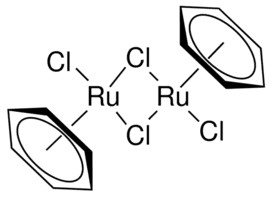
Benzeneruthenium(II) chloride dimer
Ru2(C6H6)2Cl4
Catalysis & Inorganic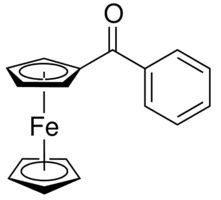
Benzoylferrocene
C17H14FeO
Catalysis & Inorganic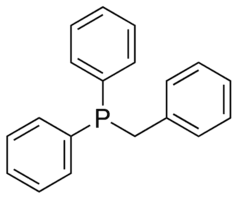
Benzyldiphenylphosphine
C6H5CH2P(C6H5)2
Catalysis & Inorganic
Beryllium
Be
Catalysis & Inorganic
Beryllium oxide
BeO
Catalysis & Inorganic![Bicyclo[2.2.1]hepta-2,5-diene-rhodium(I) chloride dimer — chemical structure, CAS 12257-42-0; Catalysis & Inorganic, fine chemical supplied by Tech Serve Solutions](/_next/image?url=https%3A%2F%2Fpub-f4d920c906024441a773a96f7098e551.r2.dev%2Fimages%2Fproducts%2F12257-42-0.png&w=3840&q=75)
Bicyclo[2.2.1]hepta-2,5-diene-rhodium(I) chloride dimer
Catalysis & Inorganic
![Bis[(10,11-η)-5-[(11bS)-dinaphtho[2,1-d:1′,2′-f][1,3,2]dioxaphosphepin-4-yl- κP4]-5H-dibenz[b,f]azepine]rhodium(I) tetrafluorobo — chemical structure, CAS 1228149-03-8; Catalysis & Inorganic, fine chemical supplied by Tech Serve Solutions](/_next/image?url=https%3A%2F%2Fpub-f4d920c906024441a773a96f7098e551.r2.dev%2Fimages%2Fproducts%2F1228149-03-8.png&w=3840&q=75)
Bis[(10,11-η)-5-[(11bS)-dinaphtho[2,1-d:1′,2′-f][1,3,2]dioxaphosphepin-4-yl- κP4]-5H-dibenz[b,f]azepine]rhodium(I) tetrafluorobo
1-d:1′
Catalysis & Inorganic![Bis[(2-dimethylamino)phenyl]amine nickel(II) chloride (C16H20ClN3Ni) — chemical structure, CAS 1033772-47-2; Catalysis & Inorganic, fine chemical supplied by Tech Serve Solutions](/_next/image?url=https%3A%2F%2Fpub-f4d920c906024441a773a96f7098e551.r2.dev%2Fimages%2Fproducts%2F1033772-47-2.png&w=3840&q=75)
Bis[(2-dimethylamino)phenyl]amine nickel(II) chloride
C16H20ClN3Ni
Catalysis & Inorganic