
(Bicyclo[2.2.1]hepta-2,5-diene)[(2S,3S)-bis(diphenylphosphino)butane]rhodium(I) perchlorate
(Bicyclo[2.2.1]hepta-2,5-diene)[(2S,3S)-bis(diphenylphosphino)butane]rhodium(I) perchlorate, CAS 65012-74-0, C35H32ClO4P2Rh, with a molecular weight of 716.93 g/mol, is a rhodium-based chiral catalyst. It is primarily employed in asymmetric synthesis, particularly for hydrogenation reactions where high enantioselectivity is crucial. This organometallic compound is a valuable reagent for the precise construction of chiral molecules in research and development settings.
- Synonyms
- 65012-74-0C35H32ClO4P2Rh
![(Bicyclo[2.2.1]hepta-2,5-diene)[(2S,3S)-bis(diphenylphosphino)butane]rhodium(I) perchlorate (C35H32ClO4P2Rh) — chemical structure, CAS 65012-74-0; Chemistry, fine chemical supplied by Tech Serve Solutions](/_next/image?url=https%3A%2F%2Fpub-f4d920c906024441a773a96f7098e551.r2.dev%2Fimages%2Fproducts%2F65012-74-0.png&w=3840&q=75)
Asymmetric Hydrogenation
This rhodium complex serves as a highly effective catalyst for the enantioselective hydrogenation of various prochiral substrates. It enables the synthesis of chiral compounds with high optical purity, which is critical in pharmaceutical and fine chemical manufacturing.
Chiral Synthesis
As a chiral catalyst and ligand precursor, it is instrumental in stereoselective transformations. Its application facilitates the creation of specific enantiomers, a key requirement for biologically active molecules.
Chemical Synthesis Reagent
This compound is utilised as a specialised reagent in complex organic synthesis. Its unique structure and reactivity allow for controlled catalytic processes in the development of novel chemical entities.
| Molecular weight | 716.93 |
|---|---|
| Empirical formula | C35H32ClO4P2Rh |
| Melting point | 210 °C (dec.)(lit.) |


Hazard statements
- H272May intensify fire; oxidiser
- H315Causes skin irritation
- H319Causes serious eye irritation
- H335May cause respiratory irritation
Precautionary statements
- P220Keep away from clothing and combustible materials
- P261Avoid breathing dust, fume, gas or vapours
- P305IF IN EYES
| Protective equipment | dust mask type N95 (US), Eyeshields, full-face particle respirator type N100 (US), Gloves, respirator cartridge type N100 (US), type P1 (EN143) respirator filter, type P3 (EN 143) respirator cartridges |
|---|---|
| Transport (UN / ADR) | UN 1479 5.1 / PGII |
| Water hazard class (WGK, DE) | 3 |
| Hazard codes (EU) | O,Xi |
| Risk statements (R) | 8-36/37/38 |
| Safety statements (S) | 17-26-36 |
Hazard information is provided for guidance. Always consult the product Safety Data Sheet (SDS), available on request, before handling.
Documentation
Every batch ships with a Certificate of Analysis covering assay, identity and purity; the grade is confirmed against your enquiry. Safety Data Sheets and technical data sheets are available on request.
Supply & logistics
Samples for technical evaluation; bulk MOQ by grade and packaging. In-stock material ships in 7–10 working days, worldwide, with full export documentation.
What is (Bicyclo[2.2.1]hepta-2,5-diene)[(2S,3S)-bis(diphenylphosphino)butane]rhodium(I) perchlorate used for?
+
This rhodium complex is primarily used as a chiral catalyst in asymmetric synthesis, particularly for enantioselective hydrogenation reactions.
What is the CAS number and formula for this rhodium complex?
+
The CAS number is 65012-74-0 and the empirical formula is C35H32ClO4P2Rh.
What grade and purity does Tech Serve Solutions supply?
+
Tech Serve Solutions supplies this product as a research-grade chemical. We do not represent it as meeting USP, BP, or EP pharmacopoeia standards.
How should this chemical be handled safely?
+
This compound is an oxidiser (H272) and causes skin irritation (H315), serious eye irritation (H319), and respiratory irritation (H335). Handle with appropriate personal protective equipment, including a dust mask (N95), eyeshields, gloves, and a respirator (N100 or P3 filter). Store away from combustible materials and keep container tightly closed.
How is this product shipped?
+
As an oxidising substance (UN 1479, 5.1/PGII), this product is packaged and shipped in accordance with international regulations for hazardous materials.
How can I request a sample or quote?
+
Please contact our sales team via the website or by phone to request a sample or a quotation for this product.
▶ Related products
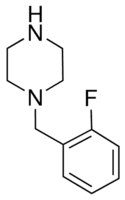
1-(2-Fluorobenzyl)piperazine
C11H15FN2
Chemical Synthesis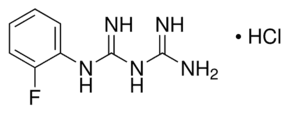
1-(2-Fluorophenyl)biguanide hydrochloride
Chemical Synthesis
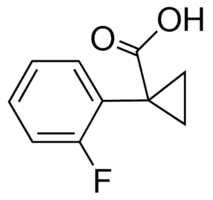
1-(2-Fluorophenyl)cyclopropanecarboxylic acid
C10H9FO2
Chemical Synthesis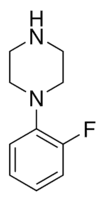
1-(2-Fluorophenyl)piperazine
C10H13FN2
Chemical Synthesis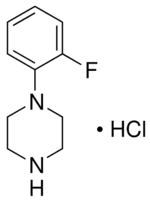
1-(2-Fluorophenyl)piperazine monohydrochloride
C10H13FN2 · HCl
Chemical Synthesis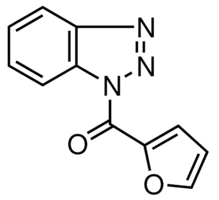
1-(2-Furoyl)-1H-benzotriazole
C11H7N3O2
Chemical Synthesis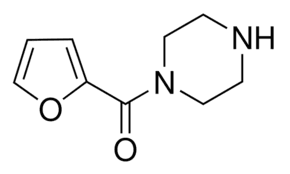
1-(2-Furoyl)piperazine
C9H12N2O2
Chemical Synthesis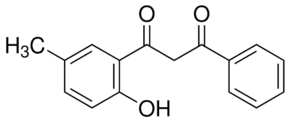
1-(2-Hydroxy-5-methylphenyl)-3-phenyl-1,3-propanedione
Chemical Synthesis
▶ Explore more

Bis(cyclopentadienyl)cobalt(III) hexafluorophosphate
C10H10CoF6P
Catalysis & Inorganic
1-(4-Chlorophenyl)biguanide hydrochloride
ClC6H4NHC(NH)NHC(NH)NH2 · HCl
Chemical Synthesis
Bis(cyclopentadienyl)dimethylzirconium(IV)
Catalysis & Inorganic

1-(4-Chlorophenyl)ethanol
ClC6H4CH(CH3)OH
Chemical Synthesis