
B-Chlorocatecholborane
2-Chloro-1,3,2-benzodioxaborole (CAS 55718-76-8), with the molecular formula C6H4BClO2 and a molecular weight of 154.36 g/mol, is a specialized reagent used in organic synthesis. Its primary application lies in haloboration reactions, facilitating C-X bond formation. This compound is supplied by TSS with an assay of 97%, suitable for advanced chemical research and synthetic processes.
- IUPAC
- 2-Chloro-1,3,2-benzodioxaborole
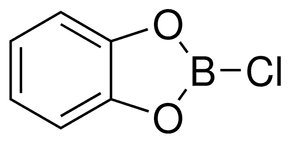
Haloboration Reactions
B-Chlorocatecholborane is a key reagent for introducing a boron-halogen functionality into organic molecules. This process is crucial for subsequent synthetic transformations.
C-X Bond Formation
This compound enables the formation of carbon-halogen bonds, a fundamental step in many synthetic pathways leading to complex organic structures.
Chemical Synthesis
As a versatile synthetic reagent, it is employed in various organic synthesis protocols, aiding in the construction of diverse chemical entities for research and development.
| Molecular weight | 154.36 |
|---|---|
| Empirical formula | C6H4BClO2 |
| Assay | 97% |
| Melting point | 56-58 °C(lit.) |


Hazard statements
- H228Flammable solid
- H314Causes severe skin burns and eye damage
- H335May cause respiratory irritation
Precautionary statements
- P210Keep away from heat, sparks and open flames. No smoking
- P261Avoid breathing dust, fume, gas or vapours
- P280Wear protective gloves, clothing and eye/face protection
- P305IF IN EYES
- P310Immediately call a POISON CENTER or doctor
| Protective equipment | Eyeshields, Faceshields, full-face particle respirator type N100 (US), Gloves, respirator cartridge type N100 (US), type P1 (EN143) respirator filter, type P3 (EN 143) respirator cartridges |
|---|---|
| Flash point | 60 °C / 140 °F |
| Transport (UN / ADR) | UN 2925 4.1/PG 2 |
| Water hazard class (WGK, DE) | 3 |
| Hazard codes (EU) | F,C |
| Risk statements (R) | 11-14-34-37 |
| Safety statements (S) | 16-26-36/37/39-45 |
| Supplemental hazards | Reacts violently with water. |
Hazard information is provided for guidance. Always consult the product Safety Data Sheet (SDS), available on request, before handling.
Documentation
Every batch ships with a Certificate of Analysis covering assay, identity and purity; the grade is confirmed against your enquiry. Safety Data Sheets and technical data sheets are available on request.
Supply & logistics
Samples for technical evaluation; bulk MOQ by grade and packaging. In-stock material ships in 7–10 working days, worldwide, with full export documentation.
What is B-Chlorocatecholborane used for?
+
B-Chlorocatecholborane is primarily used as a reagent in haloboration reactions to facilitate C-X bond formation during chemical synthesis.
What is the CAS number and formula for B-Chlorocatecholborane?
+
The CAS number for B-Chlorocatecholborane is 55718-76-8, and its empirical formula (Hill notation) is C6H4BClO2.
What grade and purity does Tech Serve Solutions supply?
+
Tech Serve Solutions supplies B-Chlorocatecholborane with an assay of 97%. This is a technical/research grade and is not represented as USP, BP, or EP grade.
How should B-Chlorocatecholborane be handled safely?
+
B-Chlorocatecholborane is a flammable solid and corrosive material that reacts violently with water. Handle with appropriate personal protective equipment, including eyeshields, gloves, and a respirator, in a well-ventilated area, away from ignition sources and water. Refer to the Safety Data Sheet for detailed handling instructions.
How is B-Chlorocatecholborane packed and shipped?
+
B-Chlorocatecholborane is shipped according to UN 2925, Hazard Class 4.1, Packing Group II regulations, reflecting its hazardous nature.
How can I request a quote or sample for B-Chlorocatecholborane?
+
To request a quote or sample of B-Chlorocatecholborane, please contact the Tech Serve Solutions sales team through our website or by phone.
▶ Related products
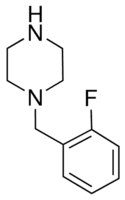
1-(2-Fluorobenzyl)piperazine
C11H15FN2
Chemical Synthesis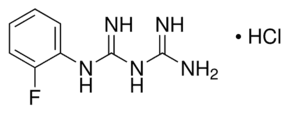
1-(2-Fluorophenyl)biguanide hydrochloride
Chemical Synthesis
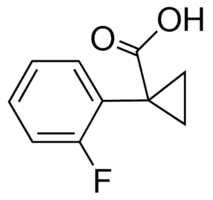
1-(2-Fluorophenyl)cyclopropanecarboxylic acid
C10H9FO2
Chemical Synthesis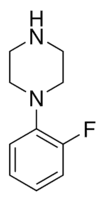
1-(2-Fluorophenyl)piperazine
C10H13FN2
Chemical Synthesis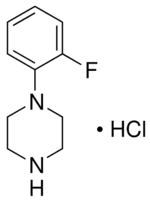
1-(2-Fluorophenyl)piperazine monohydrochloride
C10H13FN2 · HCl
Chemical Synthesis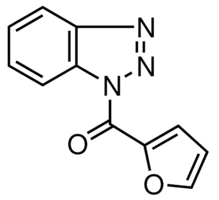
1-(2-Furoyl)-1H-benzotriazole
C11H7N3O2
Chemical Synthesis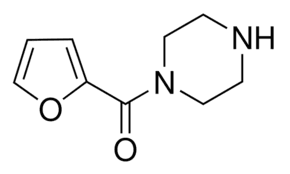
1-(2-Furoyl)piperazine
C9H12N2O2
Chemical Synthesis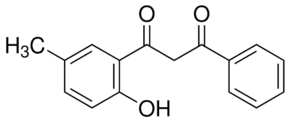
1-(2-Hydroxy-5-methylphenyl)-3-phenyl-1,3-propanedione
Chemical Synthesis
▶ Explore more

Bis(cyclopentadienyl)cobalt(III) hexafluorophosphate
C10H10CoF6P
Catalysis & Inorganic
1-(4-Chlorophenyl)biguanide hydrochloride
ClC6H4NHC(NH)NHC(NH)NH2 · HCl
Chemical Synthesis
Bis(cyclopentadienyl)dimethylzirconium(IV)
Catalysis & Inorganic

1-(4-Chlorophenyl)ethanol
ClC6H4CH(CH3)OH
Chemical Synthesis