
Ammonium persulfate
Ammonium persulfate (CAS: 7727-54-0, Molar Mass: 228.20 g/mol) is a potent oxidizing agent widely utilised in chemical synthesis and life sciences. This compound is essential for initiating polymerisation reactions, notably in the creation of polyacrylamide gels for electrophoresis. Its ability to generate free radicals in aqueous solutions makes it a critical reagent for gel casting and the separation of macromolecules by size in various electrophoretic techniques.
- IUPAC
- AP,APS,Ammonium peroxodisulfate,Ammonium peroxydisulfate,PER

Polymerisation Initiator
Ammonium persulfate serves as a key initiator for the polymerisation of acrylamide and bis-acrylamide. In the presence of a catalyst, such as TEMED, it generates free radicals that drive the formation of polyacrylamide gels.
Gel Casting for Electrophoresis
It is indispensable for casting polyacrylamide gels, a standard matrix for separating proteins and nucleic acids based on size and charge through electrophoresis.
Chemical Synthesis
As a strong oxidizing agent, ammonium persulfate finds application in various organic synthesis reactions, facilitating specific chemical transformations.
Life Science Reagents
Widely used in molecular biology and glycobiology for DNA/RNA electrophoresis, nucleic acid purification, protein electrophoresis, and Western blotting applications.
| Molecular weight | 228.20 |
|---|---|
| Linear formula | (NH4)2S2O8 |
| Assay | ≥98.5% |
| Grade | for electrophoresisfor molecular biology |
| Solubility | H2O: soluble |
| Vapour density | 7.9 (vs air) |
| Application | Ammonium persulfate forms oxygen free radicals in aqueous solution by a base-catalyzed mechanism1. The bases most commonly used as catalysts are tertiary amines such as N,N,N′,N′-tetramethylethylenediamine (TEMED) or 3-dimethylaminopropionitrile (DMAPN). The free radicals will cause acrylamide and bis-acrylamide to polymerize to form a gel matrix, which can be used for separating macromolecules by size. |


Hazard statements
- H272May intensify fire; oxidiser
- H302Harmful if swallowed
- H315Causes skin irritation
- H317May cause an allergic skin reaction
- H319Causes serious eye irritation
- H334May cause allergy or asthma symptoms if inhaled
- H335May cause respiratory irritation
Precautionary statements
- P220Keep away from clothing and combustible materials
- P261Avoid breathing dust, fume, gas or vapours
- P280Wear protective gloves, clothing and eye/face protection
- P305IF IN EYES
- P342
| Protective equipment | Eyeshields, Faceshields, full-face particle respirator type N100 (US), Gloves, respirator cartridge type N100 (US), type P1 (EN143) respirator filter, type P3 (EN 143) respirator cartridges |
|---|---|
| Transport (UN / ADR) | UN 1444 5.1 / PGIII |
| Water hazard class (WGK, DE) | 1 |
| Hazard codes (EU) | O,Xn |
| Risk statements (R) | 8-22-36/37/38-42/43 |
| Safety statements (S) | 22-24-26-37 |
| Cation traces | Fe: heavy metals (as Pb): <50 ppm |
| Anion traces | chloride (Cl-): <10 ppm |
Hazard information is provided for guidance. Always consult the product Safety Data Sheet (SDS), available on request, before handling.
Documentation
Every batch ships with a Certificate of Analysis covering assay, identity and purity; the grade is confirmed against your enquiry. Safety Data Sheets and technical data sheets are available on request.
Supply & logistics
Samples for technical evaluation; bulk MOQ by grade and packaging. In-stock material ships in 7–10 working days, worldwide, with full export documentation.
What is Ammonium Persulfate used for?
+
Ammonium persulfate is primarily used as a polymerisation initiator for creating polyacrylamide gels for electrophoresis, and as a general oxidizing agent in chemical synthesis and various life science applications like DNA/RNA and protein electrophoresis.
What is the CAS number and formula for Ammonium Persulfate?
+
The CAS number for Ammonium Persulfate is 7727-54-0, and its linear formula is (NH <sub>4</sub> )<sub>2</sub>S<sub>2</sub>O<sub>8</sub>.
What grade and purity does Tech Serve Solutions supply?
+
Tech Serve Solutions supplies Ammonium Persulfate with an assay of ≥98.5%, suitable for electrophoresis and molecular biology applications. We do not represent this product as USP, BP, or EP grade.
How should Ammonium Persulfate be handled safely?
+
Ammonium Persulfate is a strong oxidizer and can cause severe eye irritation, skin irritation, and respiratory irritation. It may also cause an allergic skin reaction and sensitization by inhalation. Always wear appropriate personal protective equipment, including eyeshields, gloves, and a respirator, and handle in a well-ventilated area. Refer to the Safety Data Sheet for detailed handling instructions.
How is Ammonium Persulfate packed and shipped?
+
Ammonium Persulfate is shipped as a UN 1444 (Oxidizing Solid, n.o.s.), Hazard Class 5.1, Packing Group III. Specific packaging details are available upon request.
How can I request a quote or sample for Ammonium Persulfate?
+
To request a quote or sample for Ammonium Persulfate, please contact our sales team through the website or by phone. Please specify the quantity and your intended application.
▶ Related products
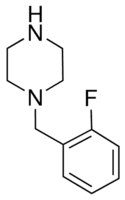
1-(2-Fluorobenzyl)piperazine
C11H15FN2
Chemical Synthesis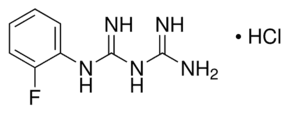
1-(2-Fluorophenyl)biguanide hydrochloride
Chemical Synthesis
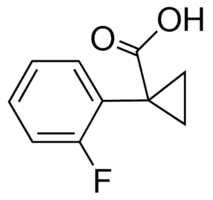
1-(2-Fluorophenyl)cyclopropanecarboxylic acid
C10H9FO2
Chemical Synthesis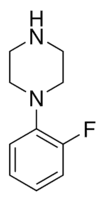
1-(2-Fluorophenyl)piperazine
C10H13FN2
Chemical Synthesis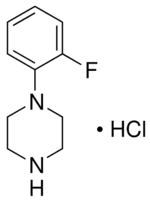
1-(2-Fluorophenyl)piperazine monohydrochloride
C10H13FN2 · HCl
Chemical Synthesis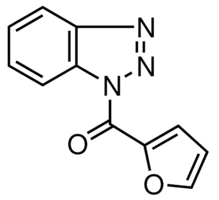
1-(2-Furoyl)-1H-benzotriazole
C11H7N3O2
Chemical Synthesis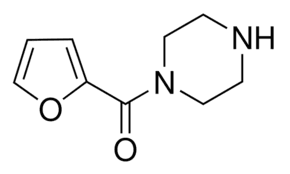
1-(2-Furoyl)piperazine
C9H12N2O2
Chemical Synthesis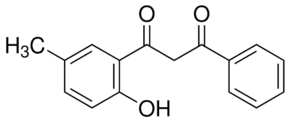
1-(2-Hydroxy-5-methylphenyl)-3-phenyl-1,3-propanedione
Chemical Synthesis
▶ Explore more

Bis(cyclopentadienyl)cobalt(III) hexafluorophosphate
C10H10CoF6P
Catalysis & Inorganic
1-(4-Chlorophenyl)biguanide hydrochloride
ClC6H4NHC(NH)NHC(NH)NH2 · HCl
Chemical Synthesis
Bis(cyclopentadienyl)dimethylzirconium(IV)
Catalysis & Inorganic

1-(4-Chlorophenyl)ethanol
ClC6H4CH(CH3)OH
Chemical Synthesis