
Allyltriphenylphosphonium bromide
Allyltriphenylphosphonium bromide (CAS 1560-54-9) is a versatile organophosphorus compound with the molecular formula H₂C=CHCH₂P(C₆H₅)₃Br and a molecular weight of 383.26 g/mol. This Wittig reagent is crucial for carbon-carbon bond formation through olefination reactions. It is widely employed in synthetic organic chemistry for the preparation of alkenes and functionalised organic molecules, serving as a key building block in various chemical syntheses.
- IUPAC
- 2-Propenyltriphenylphosphonium bromide,NSC 110609,NSC 59815
- Synonyms
- 2-Propenyltriphenylphosphonium bromide
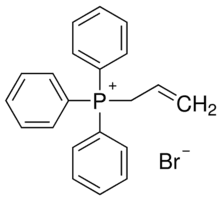
Wittig Olefination for Diene Synthesis
Allyltriphenylphosphonium bromide reacts with aldehydes in Wittig olefination reactions to efficiently prepare conjugated dienes, valuable intermediates in organic synthesis.
Synthesis of Vinyl Arenes
This reagent facilitates the stereoselective synthesis of vinyl arenes through the olefination of *N*-sulfonyl imines.
Preparation of Functionalised Cyclohexadienes
It is utilised in tandem Michael addition/ylide olefination sequences to construct highly functionalised cyclohexadiene derivatives.
Alkene Addition Reactions
Allyltriphenylphosphonium bromide participates in alkene addition reactions involving frustrated Lewis pairs, contributing to novel synthetic methodologies.
Regioselective Alkene Synthesis
The compound serves as a reactant in the regioselective synthesis of alkenes, including transformations via semihydrogenation and semihydrogenation-oxidation of dienes.
| Molecular weight | 383.26 |
|---|---|
| Linear formula | H2C=CHCH2P(C6H5)3Br |
| Assay | 99% |
| Application | Reactant for: • Preparation of a diol and carbamate chemistry library for common functional groups1• Regioselective synthesis of alkenes via semihydrogenation and semihydrogenation-oxidation of dienes2• Alkene addition of frustrated Lewis pairs3• Olefination of N-sulfonyl imines for stereoselective synthesis of vinyl arenes4• Wittig olefination of aldehydes for preparation of conjugated dienes5• Tandem Michael addition / ylide olefination reactions for the synthesis of highly functionalized cyclohexadienes6 |
| Melting point | 222-225 °C(lit.) |

Hazard statements
- H315Causes skin irritation
- H319Causes serious eye irritation
- H335May cause respiratory irritation
Precautionary statements
- P261Avoid breathing dust, fume, gas or vapours
- P305IF IN EYES
| Protective equipment | dust mask type N95 (US), Eyeshields, Gloves |
|---|---|
| Water hazard class (WGK, DE) | 3 |
| Hazard codes (EU) | Xi |
| Risk statements (R) | 36/37/38 |
| Safety statements (S) | 26-37/39 |
Hazard information is provided for guidance. Always consult the product Safety Data Sheet (SDS), available on request, before handling.
Documentation
Every batch ships with a Certificate of Analysis covering assay, identity and purity; the grade is confirmed against your enquiry. Safety Data Sheets and technical data sheets are available on request.
Supply & logistics
Samples for technical evaluation; bulk MOQ by grade and packaging. In-stock material ships in 7–10 working days, worldwide, with full export documentation.
What is Allyltriphenylphosphonium bromide used for?
+
Allyltriphenylphosphonium bromide is primarily used as a Wittig reagent for olefination reactions in organic synthesis, particularly for the preparation of alkenes, conjugated dienes, and functionalised cyclic compounds. It is also a reactant in various C-C bond formation and alkene addition reactions.
What are the CAS number and formula for Allyltriphenylphosphonium bromide?
+
The CAS number for Allyltriphenylphosphonium bromide is 1560-54-9, and its linear formula is H₂C=CHCH₂P(C₆H₅)₃Br.
What grade and purity does Tech Serve Solutions supply?
+
Tech Serve Solutions supplies Allyltriphenylphosphonium bromide with a purity of 99% (assay). This product is supplied for research and chemical synthesis purposes and is not represented as USP, BP, or EP grade.
How should Allyltriphenylphosphonium bromide be handled safely?
+
Allyltriphenylphosphonium bromide is classified as a Warning substance, causing skin irritation (H315), serious eye irritation (H319), and respiratory irritation (H335). Safe handling requires wearing a dust mask (N95), eyeshields, and gloves. Ensure adequate ventilation and avoid breathing dust. In case of eye contact, rinse cautiously with water for several minutes and remove contact lenses if present and easy to do.
Is Allyltriphenylphosphonium bromide a controlled substance?
+
The provided data does not indicate that Allyltriphenylphosphonium bromide is a controlled substance.
How is Allyltriphenylphosphonium bromide packed and shipped?
+
Allyltriphenylphosphonium bromide is packed according to industry standards to ensure safe transport and is exported globally by Tech Serve Solutions.
How can I request a sample or quote for Allyltriphenylphosphonium bromide?
+
To request a sample or a quotation for Allyltriphenylphosphonium bromide, please contact our sales team through the website or by calling our customer service.
▶ Related products
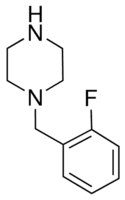
1-(2-Fluorobenzyl)piperazine
C11H15FN2
Chemical Synthesis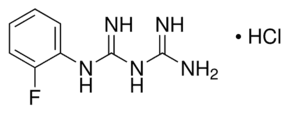
1-(2-Fluorophenyl)biguanide hydrochloride
Chemical Synthesis
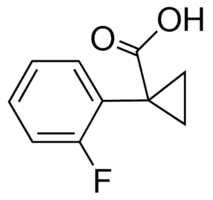
1-(2-Fluorophenyl)cyclopropanecarboxylic acid
C10H9FO2
Chemical Synthesis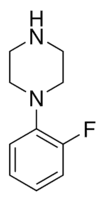
1-(2-Fluorophenyl)piperazine
C10H13FN2
Chemical Synthesis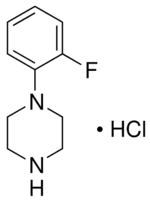
1-(2-Fluorophenyl)piperazine monohydrochloride
C10H13FN2 · HCl
Chemical Synthesis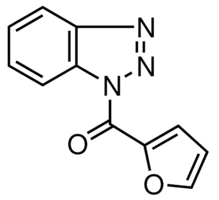
1-(2-Furoyl)-1H-benzotriazole
C11H7N3O2
Chemical Synthesis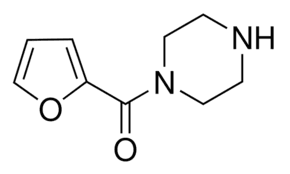
1-(2-Furoyl)piperazine
C9H12N2O2
Chemical Synthesis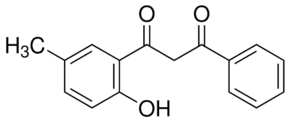
1-(2-Hydroxy-5-methylphenyl)-3-phenyl-1,3-propanedione
Chemical Synthesis
▶ Explore more

Bis(cyclopentadienyl)cobalt(III) hexafluorophosphate
C10H10CoF6P
Catalysis & Inorganic
1-(4-Chlorophenyl)biguanide hydrochloride
ClC6H4NHC(NH)NHC(NH)NH2 · HCl
Chemical Synthesis
Bis(cyclopentadienyl)dimethylzirconium(IV)
Catalysis & Inorganic

1-(4-Chlorophenyl)ethanol
ClC6H4CH(CH3)OH
Chemical Synthesis