9-Borabicyclo[3.3.1]nonane dimer
9-Borabicyclo[3.3.1]nonane dimer (CAS: 21205-91-4, Formula: C16H30B2, MW: 244.03) is an air-stable, crystalline borane reagent. It is primarily utilised in organic synthesis for the selective reductive cleavage of cyclic acetals and ketals, yielding 1,2-diols with a single benzyl protecting group. Its distinct chemical properties make it a valuable tool in complex molecular construction and synthetic route development.
- IUPAC
- 9-BBN
![9-Borabicyclo[3.3.1]nonane dimer (C16H30B2) — chemical structure, CAS 21205-91-4; Chemistry, fine chemical supplied by Tech Serve Solutions](/_next/image?url=https%3A%2F%2Fpub-f4d920c906024441a773a96f7098e551.r2.dev%2Fimages%2Fproducts%2F21205-91-4.png&w=3840&q=75)
Reductive Cleavage of Acetals and Ketals
This reagent is specifically employed to reductively cleave cyclic acetals and ketals. This process yields 1,2-diols that are monobenzylated, offering a precise method for deprotection in multi-step syntheses.
Chemical Synthesis
As a borane derivative, it functions as a versatile synthetic reagent. Its applications extend to various organic transformations where selective reduction or functional group manipulation is required.
Laboratory Reagent
Its crystalline and air-stable nature makes it a convenient and reliable reagent for laboratory use in academic and industrial research settings. It aids in the synthesis of complex organic molecules.
| Molecular weight | 244.03 |
|---|---|
| Empirical formula | C16H30B2 |
| Application | Air-stable, crystalline reagent used to reductively cleave cyclic acetals and ketals to monobenzylated 1,2-diols.1 |
| Melting point | 150-152 °C(lit.) |


Hazard statements
- H228Flammable solid
- H261In contact with water releases flammable gas
- H315Causes skin irritation
- H319Causes serious eye irritation
- H335May cause respiratory irritation
Precautionary statements
- P210Keep away from heat, sparks and open flames. No smoking
- P231Handle under inert gas
- P261Avoid breathing dust, fume, gas or vapours
- P305IF IN EYES
- P422
| Protective equipment | Eyeshields, full-face particle respirator type N100 (US), Gloves, respirator cartridge type N100 (US), type P1 (EN143) respirator filter, type P3 (EN 143) respirator cartridges |
|---|---|
| Transport (UN / ADR) | UN 3396 4.3/PG 2 |
| Water hazard class (WGK, DE) | 3 |
| Hazard codes (EU) | F,Xi |
| Risk statements (R) | 11-14/15-36/37/38 |
| Safety statements (S) | 26-43 |
| Supplemental hazards | Reacts violently with water. |
Hazard information is provided for guidance. Always consult the product Safety Data Sheet (SDS), available on request, before handling.
Documentation
Every batch ships with a Certificate of Analysis covering assay, identity and purity; the grade is confirmed against your enquiry. Safety Data Sheets and technical data sheets are available on request.
Supply & logistics
Samples for technical evaluation; bulk MOQ by grade and packaging. In-stock material ships in 7–10 working days, worldwide, with full export documentation.
What is 9-Borabicyclo[3.3.1]nonane dimer used for?
+
9-Borabicyclo[3.3.1]nonane dimer is used for the reductive cleavage of cyclic acetals and ketals to monobenzylated 1,2-diols. It is a valuable synthetic reagent in organic chemistry.
What are the CAS number and formula for 9-Borabicyclo[3.3.1]nonane dimer?
+
The CAS number is 21205-91-4, and the empirical formula (as a dimer) is C16H30B2.
What grade and purity does Tech Serve Solutions supply?
+
Tech Serve Solutions supplies this chemical as a research grade reagent. We do not represent it as meeting USP, BP, EP, or other pharmacopoeia standards. Please refer to the product specifications for available purity levels.
How should 9-Borabicyclo[3.3.1]nonane dimer be handled safely?
+
This compound is flammable and reacts violently with water, releasing flammable gases. It can cause skin, eye, and respiratory irritation. Handle with appropriate personal protective equipment including eyeshields, gloves, and a suitable respirator in a well-ventilated area. Avoid contact with water and ignition sources.
Is 9-Borabicyclo[3.3.1]nonane dimer a controlled substance?
+
The provided data does not indicate that 9-Borabicyclo[3.3.1]nonane dimer is a controlled substance. However, users should always verify local regulations.
How is 9-Borabicyclo[3.3.1]nonane dimer packed and exported?
+
This chemical is packed according to UN 3396, Class 4.3, Packing Group II specifications for transport. TSS exports this product globally, adhering to all relevant shipping and customs regulations.
How can I request a sample or quote for 9-Borabicyclo[3.3.1]nonane dimer?
+
To request a sample or a quote, please use the contact form on our website or email our sales department, referencing the product name and CAS number 21205-91-4.
▶ Related products
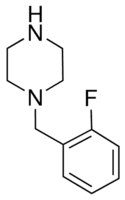
1-(2-Fluorobenzyl)piperazine
C11H15FN2
Chemical Synthesis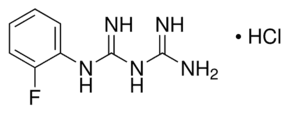
1-(2-Fluorophenyl)biguanide hydrochloride
Chemical Synthesis
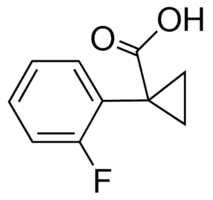
1-(2-Fluorophenyl)cyclopropanecarboxylic acid
C10H9FO2
Chemical Synthesis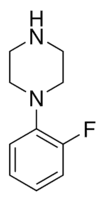
1-(2-Fluorophenyl)piperazine
C10H13FN2
Chemical Synthesis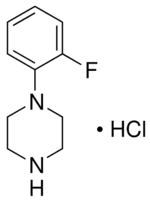
1-(2-Fluorophenyl)piperazine monohydrochloride
C10H13FN2 · HCl
Chemical Synthesis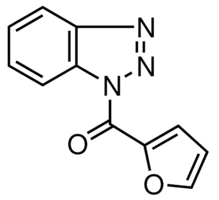
1-(2-Furoyl)-1H-benzotriazole
C11H7N3O2
Chemical Synthesis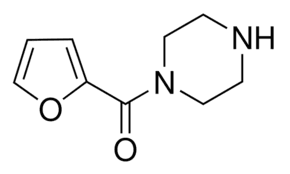
1-(2-Furoyl)piperazine
C9H12N2O2
Chemical Synthesis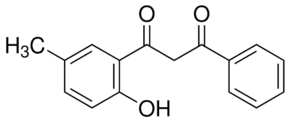
1-(2-Hydroxy-5-methylphenyl)-3-phenyl-1,3-propanedione
Chemical Synthesis