
9,9-Di(2-ethylhexyl)fluorene-2,7-diboronic acid bis(1,3-propanediol) ester solution
9,9-Di(2-ethylhexyl)fluorene-2,7-diboronic acid bis(1,3-propanediol) ester solution (CAS: 344782-49-6) is an organoboron compound with the molecular formula C35H52B2O4 and a molecular weight of 558.41 g/mol. Supplied as a 0.5 M solution in toluene, this material serves as a key building block in advanced materials science, particularly for the synthesis of polyfluorene-based organic electronic materials.
- IUPAC
- 9,9-Di(2′-ethylhexyl)fluorene-2,7-bis(trimethylene borate) solution
- Synonyms
- 3-propanediol) ester solution344782-49-6C35H52B2O49,9-Di(2′-ethylhexyl)fluorene-2,7-bis(trimethylene borate) solution

Organic Electronics Synthesis
This diboronic ester derivative of fluorene is a crucial monomer for synthesizing conjugated polymers, such as polyfluorenes. These polymers are essential components in organic light-emitting diodes (OLEDs), organic photovoltaics (OPVs), and organic field-effect transistors (OFETs) due to their favourable electronic and photophysical properties.
Materials Science Research
The unique fluorene backbone, functionalised with solubilising alkyl chains and reactive boronate ester groups, makes this compound valuable for researchers developing novel functional materials. It enables the precise control of polymer architecture and electronic properties for next-generation electronic devices.
Supramolecular Chemistry
Fluorene-based structures are often explored for their ability to form ordered supramolecular assemblies. This diboronic ester can be used in the construction of complex molecular architectures with potential applications in sensing and molecular recognition.
| Molecular weight | 558.41 |
|---|---|
| Empirical formula | C35H52B2O4 |
| Boiling point | 117-118 °C |
| Density | 0.906 g/mL at 25 °C |
| Refractive index | n20/D 1.5160 |
| Concentration | 0.5 M in toluene |


Hazard statements
- H225Highly flammable liquid and vapour
- H304May be fatal if swallowed and enters airways
- H315Causes skin irritation
- H336May cause drowsiness or dizziness
- H361D
- H373May cause damage to organs through prolonged exposure
Precautionary statements
- P210Keep away from heat, sparks and open flames. No smoking
- P261Avoid breathing dust, fume, gas or vapours
- P281Use personal protective equipment as required
- P301IF SWALLOWED
- P331Do NOT induce vomiting
| Flash point | 13 °C / 55.4 °F |
|---|---|
| Transport (UN / ADR) | UN 1294 3 / PGII |
| Water hazard class (WGK, DE) | 3 |
| Hazard codes (EU) | F,Xn |
| Risk statements (R) | 63-11-38-48/20-65-67 |
| Safety statements (S) | 16-36/37-62 |
Hazard information is provided for guidance. Always consult the product Safety Data Sheet (SDS), available on request, before handling.
Documentation
Every batch ships with a Certificate of Analysis covering assay, identity and purity; the grade is confirmed against your enquiry. Safety Data Sheets and technical data sheets are available on request.
Supply & logistics
Samples for technical evaluation; bulk MOQ by grade and packaging. In-stock material ships in 7–10 working days, worldwide, with full export documentation.
What is 9,9-Di(2-ethylhexyl)fluorene-2,7-diboronic acid bis(1,3-propanediol) ester solution used for?
+
This compound is primarily used as a monomer in the synthesis of polyfluorene-based conjugated polymers for applications in organic electronics, such as OLEDs, OPVs, and OFETs, and in materials science research for developing novel functional materials.
What are the CAS number and formula for this product?
+
The CAS number is 344782-49-6, and the empirical formula (Hill notation) is C35H52B2O4.
What grade and purity does Tech Serve Solutions supply?
+
Tech Serve Solutions supplies this product as a 0.5 M solution in toluene. We do not specify a particular purity or grade beyond this information, and it is not represented as USP, BP, EP, or any other pharmacopoeia grade.
How should this chemical be handled safely?
+
This material is a flammable liquid and vapour (H225), may be fatal if swallowed and enters airways (H304), causes skin irritation (H315), may cause drowsiness or dizziness (H336), is suspected of damaging fertility or the unborn child (H361d), and may cause damage to organs through prolonged or repeated exposure (H373). Handle with appropriate personal protective equipment in a well-ventilated area, away from ignition sources. Consult the Safety Data Sheet (SDS) for comprehensive safety information.
Is this product controlled or scheduled?
+
The provided data does not indicate that this product is a controlled or scheduled substance.
How is this chemical packed, shipped, and exported?
+
This product is classified as UN 1294, Class 3, Packing Group II, indicating it is a flammable liquid. Shipping and export will comply with all relevant international, national, and local regulations for hazardous materials.
How can I request a sample or quote for this product?
+
Please contact our sales team via the website or direct email to request a sample or obtain a quotation for 9,9-Di(2-ethylhexyl)fluorene-2,7-diboronic acid bis(1,3-propanediol) ester solution.
▶ Related products
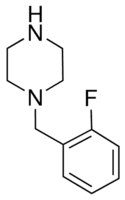
1-(2-Fluorobenzyl)piperazine
C11H15FN2
Chemical Synthesis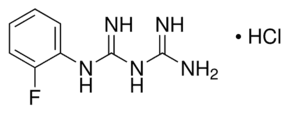
1-(2-Fluorophenyl)biguanide hydrochloride
Chemical Synthesis
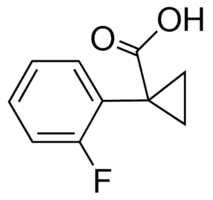
1-(2-Fluorophenyl)cyclopropanecarboxylic acid
C10H9FO2
Chemical Synthesis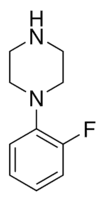
1-(2-Fluorophenyl)piperazine
C10H13FN2
Chemical Synthesis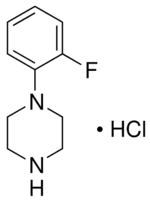
1-(2-Fluorophenyl)piperazine monohydrochloride
C10H13FN2 · HCl
Chemical Synthesis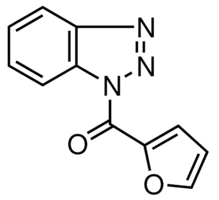
1-(2-Furoyl)-1H-benzotriazole
C11H7N3O2
Chemical Synthesis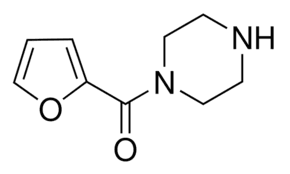
1-(2-Furoyl)piperazine
C9H12N2O2
Chemical Synthesis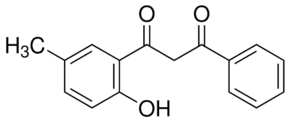
1-(2-Hydroxy-5-methylphenyl)-3-phenyl-1,3-propanedione
Chemical Synthesis
▶ Explore more

Bis(cyclopentadienyl)cobalt(III) hexafluorophosphate
C10H10CoF6P
Catalysis & Inorganic
1-(4-Chlorophenyl)biguanide hydrochloride
ClC6H4NHC(NH)NHC(NH)NH2 · HCl
Chemical Synthesis
Bis(cyclopentadienyl)dimethylzirconium(IV)
Catalysis & Inorganic

1-(4-Chlorophenyl)ethanol
ClC6H4CH(CH3)OH
Chemical Synthesis