8-Anilino-1-naphthalenesulfonic acid ammonium salt
8-Anilino-1-naphthalenesulfonic acid ammonium salt (CAS: 28836-03-5) is a chemical compound with the formula C16H13NO3S · NH3 and a molecular weight of 316.37. It is known for its fluorescent properties and its ability to form inclusion complexes. This compound finds application in the development of sensors and as a probe in various biochemical and materials science investigations, particularly those involving molecular assemblies and environmental sensing.
- IUPAC
- 1,8-ANS NH4,ANSA,Ammonium 8-anilino-1-naphthalenesulfonate,N-Phenyl peri acid
- Synonyms
- Ammonium 8-anilino-1-naphthalenesulfonate, ANSA, 1,8-ANS NH4

Fluorescent Probe for Molecular Assemblies
8-Anilino-1-naphthalenesulfonic acid ammonium salt is commonly employed as a fluorescence probe to study the behaviour of surfactants and amphiphilic polymers. Changes in its emission spectrum can indicate alterations in the local environment, such as temperature or pH.
Inclusion Complex Studies
This compound forms inclusion complexes with molecules like cyclodextrin. These model systems are valuable for mimicking biological recognition processes, with fluorescence changes indicating binding events.
Sensor Development
It has been utilised in the reagent phase of fibre-optic sensors, for example, in sodium-selective sensors. Its fluorescence is modulated by the presence of specific ions, enabling detection.
Polymer Release Investigations
The compound can be incorporated into di-block polymers, allowing for studies on the release of the probe in response to changes in environmental conditions such as temperature and pH.
| Molecular weight | 316.37 |
|---|---|
| Linear formula | C16H13NO3S · NH3 |
| Assay | ≥90% (NT) |
| Grade | technical |
| Solubility | NaOH: soluble1 NH2O: solublemethanol: soluble |
| Application | ANS forms an inclusion complex with cyclodextrin. Such model systems are useful to mimic biological recognition and can be studied by measuring the change in fluorescence of free-ANS to complexed-ANS. When ANS enters the hydrophobic core of cyclodestrin, it’s fluorescence increases 1,2. Utilized in the reagent phase of a sodium-selective fiber-optic sensor. The reagent phase also contains a copper(II) polyelectrolyte, which binds to ANSA in the absence of sodium and quenches the fluorescence. In the presence of sodium, ANSA forms a cationic complex creating ion-pairs, causing it to fluoresce 3. ANS is often incorporated into di-block polymers and can be released by changes in the local environment (i.e., temperature, pH, etc.) 4,5,6. ANS is commonly used as a fluorescence probe to investigate molecular assemblies of surfactants and amphiphilic polymers because a blue shift of the emission maximum indicates the flu |

Hazard statements
- H315Causes skin irritation
- H319Causes serious eye irritation
- H335May cause respiratory irritation
Precautionary statements
- P261Avoid breathing dust, fume, gas or vapours
- P305IF IN EYES
| Protective equipment | dust mask type N95 (US), Eyeshields, Gloves |
|---|---|
| Water hazard class (WGK, DE) | 3 |
| Hazard codes (EU) | Xi |
| Risk statements (R) | 36/37/38 |
| Safety statements (S) | 26-36 |
Hazard information is provided for guidance. Always consult the product Safety Data Sheet (SDS), available on request, before handling.
| Fluorescence | λex 388 nm; λem 470 nm in 0.1 M Tris, 0.2 M KCl, pH 9.0, BSA |
|---|
Documentation
Every batch ships with a Certificate of Analysis covering assay, identity and purity; the grade is confirmed against your enquiry. Safety Data Sheets and technical data sheets are available on request.
Supply & logistics
Samples for technical evaluation; bulk MOQ by grade and packaging. In-stock material ships in 7–10 working days, worldwide, with full export documentation.
What is 8-Anilino-1-naphthalenesulfonic acid ammonium salt used for?
+
It is used as a fluorescent probe for studying molecular assemblies of surfactants and polymers, in inclusion complex research with molecules like cyclodextrins, and in the development of ion-selective sensors. Its fluorescence changes indicate environmental alterations and binding events.
What is the CAS number and chemical formula?
+
The CAS number is 28836-03-5 and the linear formula is C16H13NO3S · NH3.
What grade and purity does Tech Serve Solutions supply?
+
Tech Serve Solutions supplies this product at a technical grade with an assay of ≥90% (NT). We do not represent this product as USP, BP, or EP grade.
How should 8-Anilino-1-naphthalenesulfonic acid ammonium salt be handled?
+
This compound may cause skin irritation (H315), serious eye irritation (H319), and respiratory irritation (H335). Appropriate personal protective equipment, including a dust mask (type N95 US), eyeshields, and gloves, should be worn. Ensure good ventilation.
Is this chemical controlled or scheduled?
+
The provided data does not indicate that this chemical is controlled or scheduled under drug regulations.
How is this chemical packed, shipped, or exported?
+
As a global supplier and exporter of fine chemicals, Tech Serve Solutions has established logistics for packing, shipping, and exporting a wide range of products, adhering to all relevant regulations.
How can I request a sample or quote?
+
To request a sample or a quotation for 8-Anilino-1-naphthalenesulfonic acid ammonium salt, please contact our sales team via the website or phone.
▶ Related products
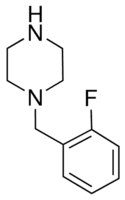
1-(2-Fluorobenzyl)piperazine
C11H15FN2
Chemical Synthesis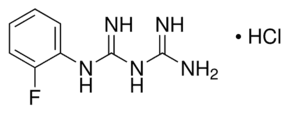
1-(2-Fluorophenyl)biguanide hydrochloride
Chemical Synthesis
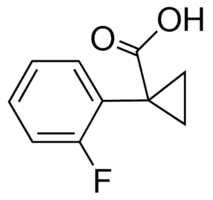
1-(2-Fluorophenyl)cyclopropanecarboxylic acid
C10H9FO2
Chemical Synthesis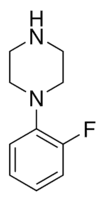
1-(2-Fluorophenyl)piperazine
C10H13FN2
Chemical Synthesis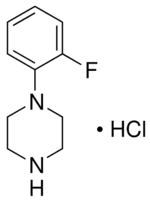
1-(2-Fluorophenyl)piperazine monohydrochloride
C10H13FN2 · HCl
Chemical Synthesis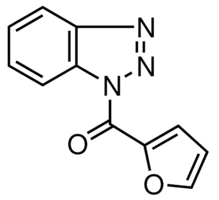
1-(2-Furoyl)-1H-benzotriazole
C11H7N3O2
Chemical Synthesis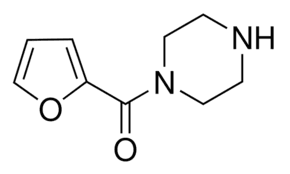
1-(2-Furoyl)piperazine
C9H12N2O2
Chemical Synthesis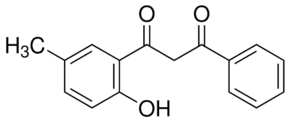
1-(2-Hydroxy-5-methylphenyl)-3-phenyl-1,3-propanedione
Chemical Synthesis