
7-Hydroxyflavone
7-Hydroxyflavone (CAS: 6665-86-7; C15H10O3) is a valuable organic compound with a molecular weight of 238.24 g/mol. It serves as a key building block and reactant in various chemical syntheses. Its primary applications include acting as a biologically relevant acceptor in glycosidation reactions and being utilised in the development of pancreatic cholesterol esterase inhibitors. This compound is essential for researchers engaged in organic synthesis, medicinal chemistry, and cell biology.
- IUPAC
- 7-Hydroxy-2-phenyl-4H-1-benzopyran-4-one,NSC 94258

Glycosidation Reactions
7-Hydroxyflavone serves as a biologically important acceptor in O-glycosidation reactions. This is crucial for synthesising modified flavonoids with altered biological properties.
Synthesis of Enzyme Inhibitors
It is involved in the synthesis of fully phosphorylated flavones, which are developed as potent inhibitors of pancreatic cholesterol esterase. This application is significant in biochemical research and drug discovery.
O-Methylation Reactions
The compound can undergo O-methylation using reagents like di-methyl carbonate. This is a standard synthetic pathway for modifying the hydroxyl group of flavones.
Development of Adrenoceptor Antagonists
7-Hydroxyflavone can be linked by a polymethylene chain, a strategy employed in the synthesis of alpha1-adrenoceptor antagonists.
Baylis-Hillman Reactions
This compound participates in Baylis-Hillman reactions, a versatile carbon-carbon bond-forming reaction in organic synthesis.
Glucosylation of Flavonoids
It is utilised in phase-transfer catalyzed glucosylation processes, enabling the synthesis of glucosylated flavonoid derivatives.
| Molecular weight | 238.24 |
|---|---|
| Empirical formula | C15H10O3 |
| Assay | ≥98% |
| Application | Reactant:• Acting as a biologically valuable acceptor in O-glycosidation reactions1• Involved in synthesis of fully phosphorylated flavones for use as pancreatic cholesterol esterase inhibitors2• For O-methylation with di-Me carbonate3• Linked by a polymethylene chain for synthesis of α1-adrenoceptor antagonists4• Involved in Baylis-Hillman reactions5• Involved in phase-transfer catalyzed glucosylation for synthesis of glucosylated flavonoids6 |
| Melting point | 245-247 °C(lit.) |

Hazard statements
- H315Causes skin irritation
- H319Causes serious eye irritation
- H335May cause respiratory irritation
Precautionary statements
- P261Avoid breathing dust, fume, gas or vapours
- P305IF IN EYES
| Protective equipment | dust mask type N95 (US), Eyeshields, Gloves |
|---|---|
| Water hazard class (WGK, DE) | 3 |
| Hazard codes (EU) | Xi |
| Risk statements (R) | 36/37/38 |
| Safety statements (S) | 26-37/39 |
Hazard information is provided for guidance. Always consult the product Safety Data Sheet (SDS), available on request, before handling.
| Gene Information | mouse ... Hexa(15211)rat ... Ar(24208), Gabra2(29706) |
|---|
Documentation
Every batch ships with a Certificate of Analysis covering assay, identity and purity; the grade is confirmed against your enquiry. Safety Data Sheets and technical data sheets are available on request.
Supply & logistics
Samples for technical evaluation; bulk MOQ by grade and packaging. In-stock material ships in 7–10 working days, worldwide, with full export documentation.
What is 7-Hydroxyflavone used for?
+
7-Hydroxyflavone is used as a reactant and building block in various chemical syntheses. Its applications include acting as an acceptor in O-glycosidation reactions, synthesis of enzyme inhibitors, O-methylation, and the development of adrenoceptor antagonists.
What are the CAS number and formula for 7-Hydroxyflavone?
+
The CAS number for 7-Hydroxyflavone is 6665-86-7, and its empirical formula is C15H10O3.
What grade and purity does Tech Serve Solutions supply?
+
Tech Serve Solutions supplies 7-Hydroxyflavone at an assay of ≥98%. This product is intended for research and laboratory use and is not supplied as USP, BP, EP, or pharmaceutical grade.
What are the safety and handling precautions for 7-Hydroxyflavone?
+
7-Hydroxyflavone is classified with a Warning signal word and carries hazard statements H315 (Causes skin irritation), H319 (Causes serious eye irritation), and H335 (May cause respiratory irritation). Appropriate personal protective equipment includes a dust mask (N95 type), eyeshields, and gloves. Handle in a well-ventilated area.
How is 7-Hydroxyflavone packed, shipped, and exported?
+
7-Hydroxyflavone is carefully packed to ensure stability and integrity during transit. Tech Serve Solutions exports this chemical globally, adhering to all relevant shipping regulations for fine chemicals.
How can I request a quote or sample of 7-Hydroxyflavone?
+
To request a quote or sample of 7-Hydroxyflavone, please contact our sales team through the website or by phone, providing your details and the quantity required.
▶ Related products
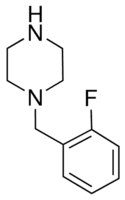
1-(2-Fluorobenzyl)piperazine
C11H15FN2
Chemical Synthesis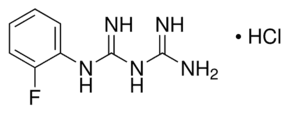
1-(2-Fluorophenyl)biguanide hydrochloride
Chemical Synthesis
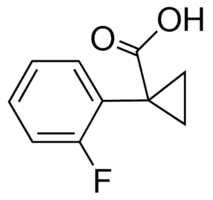
1-(2-Fluorophenyl)cyclopropanecarboxylic acid
C10H9FO2
Chemical Synthesis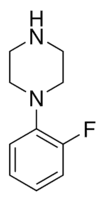
1-(2-Fluorophenyl)piperazine
C10H13FN2
Chemical Synthesis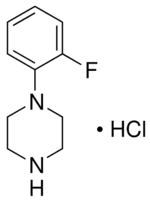
1-(2-Fluorophenyl)piperazine monohydrochloride
C10H13FN2 · HCl
Chemical Synthesis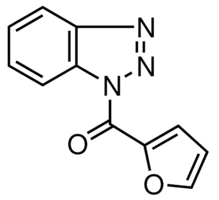
1-(2-Furoyl)-1H-benzotriazole
C11H7N3O2
Chemical Synthesis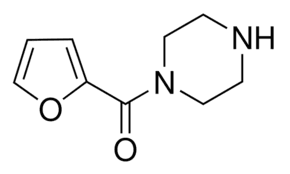
1-(2-Furoyl)piperazine
C9H12N2O2
Chemical Synthesis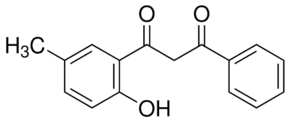
1-(2-Hydroxy-5-methylphenyl)-3-phenyl-1,3-propanedione
Chemical Synthesis
▶ Explore more

Bis(cyclopentadienyl)cobalt(III) hexafluorophosphate
C10H10CoF6P
Catalysis & Inorganic
1-(4-Chlorophenyl)biguanide hydrochloride
ClC6H4NHC(NH)NHC(NH)NH2 · HCl
Chemical Synthesis
Bis(cyclopentadienyl)dimethylzirconium(IV)
Catalysis & Inorganic

1-(4-Chlorophenyl)ethanol
ClC6H4CH(CH3)OH
Chemical Synthesis