5-[4-(1,2,4,5-Tetrazin-3-yl)benzylamino]-5-oxopentanoic acid
5-\[4-(1,2,4,5-Tetrazin-3-yl)benzylamino\-5-oxopentanoic acid (CAS: 1225146-53-1) is a carboxylic acid functionalised tetrazine derivative. With a molecular weight of 301.30 g/mol and empirical formula C14H15N5O3, it is primarily utilised in chemical biology and synthesis. Its structure enables participation in inverse electron demand Diels-Alder cycloaddition reactions with strained alkenes, making it valuable for bioconjugation and bioorthogonal applications.
- IUPAC
- 5-Oxo-5-[[[4-(1,2,4,5-tetrazin-3-yl)phenyl]methyl]amino]pentanoic acid,Benzylamino tetrazine acid,Bz-Tz-acid
- Synonyms
- 5-Tetrazin-3-yl)benzylamino]-5-oxopentanoic acidBenzylamino tetrazine acidBz-Tz-acid
![5-[4-(1,2,4,5-Tetrazin-3-yl)benzylamino]-5-oxopentanoic acid (C14H15N5O3) — chemical structure, CAS 1225146-53-1; Chemistry, fine chemical supplied by Tech Serve Solutions](/_next/image?url=https%3A%2F%2Fpub-f4d920c906024441a773a96f7098e551.r2.dev%2Fimages%2Fproducts%2F1225146-53-1.png&w=3840&q=75)
Bioconjugation and Labelling
This tetrazine derivative is acid-functionalised, allowing for covalent linkage through inverse electron demand Diels-Alder cycloaddition reactions with strained alkenes like trans-cyclooctene. This reactivity is key for applications in bioconjugation and bioorthogonal chemistry.
Chemical Synthesis
As a versatile reagent in chemical synthesis, it facilitates the creation of stable covalent linkages. Its tetrazine moiety is particularly useful in applications requiring high specificity and efficiency in cycloaddition reactions.
Bioorthogonal Chemistry
The compound is employed in bioorthogonal reactions, where it reacts with strained alkenes (e.g., norbornene, cyclopropene) to form stable adducts. This property is essential for labelling and imaging in biological systems without interfering with native biochemical processes.
| Molecular weight | 301.30 |
|---|---|
| Empirical formula | C14H15N5O3 |
| Assay | 97% |
| Storage temperature | −20°C |
| Application | Acid functionalized tetrazine for inverse electron demand Diels-Alder cycloaddition reactions. The tetrazine will react with strained alkenes such as transcyclooctene, norbornene and cyclopropene to yield a stable covalent linkage. Tetrazines have proven useful in bioorthogonal reactions for many biological imaging and bioconjugation applications. |
| Melting point | 163-170 °C (decomposition) |

Hazard statements
- H302Harmful if swallowed
- H315Causes skin irritation
- H319Causes serious eye irritation
- H335May cause respiratory irritation
Precautionary statements
- P261Avoid breathing dust, fume, gas or vapours
- P305IF IN EYES
| Water hazard class (WGK, DE) | 3 |
|---|---|
| Hazard codes (EU) | Xn |
| Risk statements (R) | 22-36-37-38 |
| Safety statements (S) | 26 |
Hazard information is provided for guidance. Always consult the product Safety Data Sheet (SDS), available on request, before handling.
Documentation
Every batch ships with a Certificate of Analysis covering assay, identity and purity; the grade is confirmed against your enquiry. Safety Data Sheets and technical data sheets are available on request.
Supply & logistics
Samples for technical evaluation; bulk MOQ by grade and packaging. In-stock material ships in 7–10 working days, worldwide, with full export documentation.
What is 5-[4-(1,2,4,5-Tetrazin-3-yl)benzylamino]-5-oxopentanoic acid used for?
+
It is used for inverse electron demand Diels-Alder cycloaddition reactions with strained alkenes, enabling applications in bioconjugation, bioorthogonal chemistry, chemical biology, and chemical synthesis.
What is the CAS number and formula for this compound?
+
The CAS number is 1225146-53-1 and the empirical formula is C14H15N5O3.
What grade and purity does Tech Serve Solutions supply?
+
Tech Serve Solutions supplies this chemical with an assay of 97%. This product is not represented as USP, BP, EP, or any other pharmacopoeia grade.
What are the safety considerations for handling this chemical?
+
This compound is classified as a Warning. It is harmful if swallowed (H302), causes skin irritation (H315), causes serious eye irritation (H319), and may cause respiratory irritation (H335). Handle with appropriate personal protective equipment in a well-ventilated area. Refer to the Safety Data Sheet for full details.
How is this chemical packed, shipped, and exported?
+
This chemical is typically stored at -20°C. As a global supplier, Tech Serve Solutions adheres to all regulations for packing, shipping, and exporting fine chemicals.
How can I request a sample or a quote for this product?
+
Please contact our sales team via the website or by calling us directly to request a sample or a quotation for 5-[4-(1,2,4,5-Tetrazin-3-yl)benzylamino]-5-oxopentanoic acid.
▶ Related products
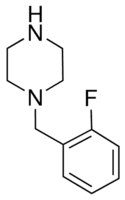
1-(2-Fluorobenzyl)piperazine
C11H15FN2
Chemical Synthesis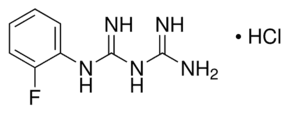
1-(2-Fluorophenyl)biguanide hydrochloride
Chemical Synthesis
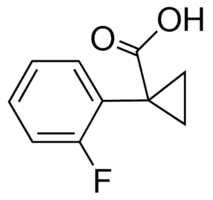
1-(2-Fluorophenyl)cyclopropanecarboxylic acid
C10H9FO2
Chemical Synthesis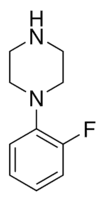
1-(2-Fluorophenyl)piperazine
C10H13FN2
Chemical Synthesis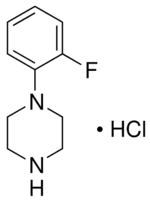
1-(2-Fluorophenyl)piperazine monohydrochloride
C10H13FN2 · HCl
Chemical Synthesis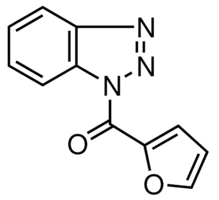
1-(2-Furoyl)-1H-benzotriazole
C11H7N3O2
Chemical Synthesis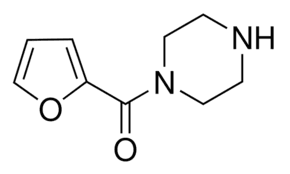
1-(2-Furoyl)piperazine
C9H12N2O2
Chemical Synthesis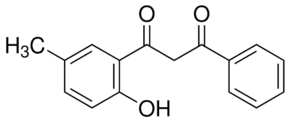
1-(2-Hydroxy-5-methylphenyl)-3-phenyl-1,3-propanedione
Chemical Synthesis