
4-(Trifluoromethyl)pyridinyl-2-boronic acid MIDA ester
4-(Trifluoromethyl)pyridinyl-2-boronic acid MIDA ester (CAS: 1227700-48-2; Formula: C11H10BF3N2O4) is a valuable organometallic reagent widely employed in organic synthesis. As a stable MIDA boronate derivative, it offers enhanced handling and storage properties compared to free boronic acids. Its primary application lies in Suzuki-Miyaura cross-coupling reactions, facilitating the efficient formation of carbon-carbon bonds and the construction of complex molecular architectures.
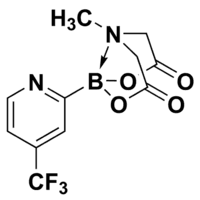
Suzuki-Miyaura Cross-Coupling
This MIDA ester serves as a key coupling partner in palladium-catalysed Suzuki-Miyaura reactions. It enables the introduction of the 4-(trifluoromethyl)pyridinyl moiety into various organic molecules, crucial for drug discovery and materials science.
Heteroaryl Synthesis
It is instrumental in the synthesis of heteroaryl compounds, specifically those containing the trifluoromethyl-substituted pyridine ring. This functionality is prevalent in many pharmaceuticals and agrochemicals.
Medicinal Chemistry
The trifluoromethylpyridine motif is frequently found in biologically active compounds. This reagent provides a reliable method for incorporating this pharmacophore into potential drug candidates during lead optimisation.
Organic Synthesis Reagent
As a versatile building block, it finds application in diverse synthetic strategies requiring the formation of C-C bonds with specific heteroaryl functionalities. Its stability offers advantages in multi-step syntheses.
| Molecular weight | 302.01 |
|---|---|
| Empirical formula | C11H10BF3N2O4 |
Documentation
Every batch ships with a Certificate of Analysis covering assay, identity and purity; the grade is confirmed against your enquiry. Safety Data Sheets and technical data sheets are available on request.
Supply & logistics
Samples for technical evaluation; bulk MOQ by grade and packaging. In-stock material ships in 7–10 working days, worldwide, with full export documentation.
What is 4-(Trifluoromethyl)pyridinyl-2-boronic acid MIDA ester used for?
+
4-(Trifluoromethyl)pyridinyl-2-boronic acid MIDA ester is primarily used as a reagent in Suzuki-Miyaura cross-coupling reactions for the synthesis of complex organic molecules containing the 4-(trifluoromethyl)pyridinyl moiety.
What is the CAS number and chemical formula for this product?
+
The CAS number is 1227700-48-2 and the chemical formula is C11H10BF3N2O4.
What grade and purity does Tech Serve Solutions supply?
+
Tech Serve Solutions supplies this compound as a research-grade chemical. The specific purity is available on the Certificate of Analysis. TSS does not represent this product as USP, BP, or EP grade.
What are the safety and handling considerations for this chemical?
+
This compound should be handled with appropriate personal protective equipment, including gloves and eye protection, in a well-ventilated area. Refer to the Safety Data Sheet (SDS) for detailed hazard information and handling procedures.
How is this chemical typically packed and shipped?
+
This chemical is carefully packed in appropriate containers suitable for its properties and transported in compliance with relevant shipping regulations for domestic and international export.
How can I request a sample or quote for this product?
+
To request a sample or a quotation, please contact our sales department via the website or email, specifying the product name and CAS number.
▶ Related products
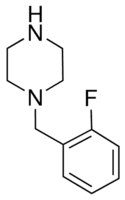
1-(2-Fluorobenzyl)piperazine
C11H15FN2
Chemical Synthesis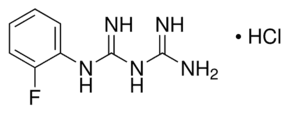
1-(2-Fluorophenyl)biguanide hydrochloride
Chemical Synthesis
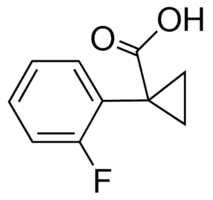
1-(2-Fluorophenyl)cyclopropanecarboxylic acid
C10H9FO2
Chemical Synthesis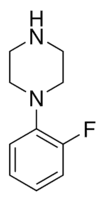
1-(2-Fluorophenyl)piperazine
C10H13FN2
Chemical Synthesis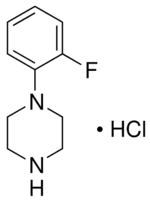
1-(2-Fluorophenyl)piperazine monohydrochloride
C10H13FN2 · HCl
Chemical Synthesis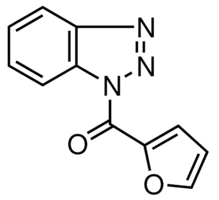
1-(2-Furoyl)-1H-benzotriazole
C11H7N3O2
Chemical Synthesis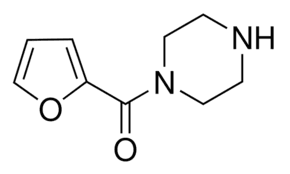
1-(2-Furoyl)piperazine
C9H12N2O2
Chemical Synthesis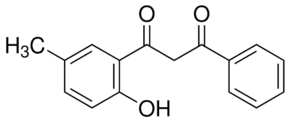
1-(2-Hydroxy-5-methylphenyl)-3-phenyl-1,3-propanedione
Chemical Synthesis
▶ Explore more

Bis(cyclopentadienyl)cobalt(III) hexafluorophosphate
C10H10CoF6P
Catalysis & Inorganic
1-(4-Chlorophenyl)biguanide hydrochloride
ClC6H4NHC(NH)NHC(NH)NH2 · HCl
Chemical Synthesis
Bis(cyclopentadienyl)dimethylzirconium(IV)
Catalysis & Inorganic

1-(4-Chlorophenyl)ethanol
ClC6H4CH(CH3)OH
Chemical Synthesis