
4-(Diphenylamino)phenylboronic acid
4-(Diphenylamino)phenylboronic acid (CAS: 201802-67-7, Formula: C18H16BNO2) is an organoboron compound with a molecular weight of 289.14 g/mol. It serves as a valuable reagent in organic synthesis, particularly for Suzuki coupling reactions. This compound is also instrumental in the preparation of advanced materials, including photoluminescent and hole-transporting substances for electroluminescent devices and sensitizers for solar cells.
- IUPAC
- 4-(N,N-Diphenylamino)-1-phenylboronic acid,4-(N,N-Diphenylamino)phenylboronic acid,4-(N-Diphenylamino)phenylboronic acid,4-(Diphenylamino)benzeneboronic acid,Triphenylamine-4-boronic acid
- Synonyms
- 4-(N,N-Diphenylamino)-1-phenylboronic acid4-(N,N-Diphenylamino)phenylboronic acid4-(N-Diphenylamino)phenylboronic acid4-(Diphenylamino)benzeneboronic acidTriphenylamine-4-boronic acid

Suzuki Coupling Reactions
This boronic acid is a key reactant in palladium-catalyzed Suzuki coupling reactions, enabling the formation of carbon-carbon bonds for the synthesis of complex organic molecules.
Organic Light-Emitting Diodes (OLEDs)
It is utilized in the preparation of blue light-emitting and hole-transporting materials, contributing to the development of efficient electroluminescent devices and single-layer white polymer OLEDs.
Photoluminescence Studies
The compound is employed in research involving strong multiphoton-excited blue photoluminescence and lasing from specific organic structures, such as ladder-type oligo(p-phenylene)s.
Dye-Sensitized Solar Cells (DSSCs)
It acts as an efficient sensitizer in the development of materials for dye-sensitized solar cells, contributing to advancements in renewable energy technologies.
| Molecular weight | 289.14 |
|---|---|
| Empirical formula | C18H16BNO2 |
| Application | Reagent used for• Strong multiphoton-excited blue photoluminescence and lasing from ladder-type oligo(p-phenylene)s1 • Suzuki coupling reactions2 • Ligand-free Suzuki reaction3Reagent used in Preparation of • Push-pull arylvinyldiazine chromophores4• Benzothiadiazole-based fluorophores contg. triphenylamine functionality5• Blue light-emitting and hole-transporting materials for electroluminescent devices6• p-quaterphenyls laterally substituted with dimesitylboryl group for use as solid-state blue emitters7 • Efficient sensitizers for dye-sensitized solar cells8,9 • Prange electroluminescent materials for single-layer white polymer OLEDs10 • Eeep-blue organic light emitting devices (OLEDs)11 •&nb |
| Melting point | 110-115 °C(lit.) |
| Protective equipment | Eyeshields, Gloves, type N95 (US), type P1 (EN143) respirator filter |
|---|---|
| Water hazard class (WGK, DE) | 3 |
Hazard information is provided for guidance. Always consult the product Safety Data Sheet (SDS), available on request, before handling.
Documentation
Every batch ships with a Certificate of Analysis covering assay, identity and purity; the grade is confirmed against your enquiry. Safety Data Sheets and technical data sheets are available on request.
Supply & logistics
Samples for technical evaluation; bulk MOQ by grade and packaging. In-stock material ships in 7–10 working days, worldwide, with full export documentation.
What is 4-(Diphenylamino)phenylboronic acid used for?
+
4-(Diphenylamino)phenylboronic acid is used as a reagent in Suzuki coupling reactions and in the preparation of materials for electroluminescent devices, photoluminescence studies, and dye-sensitized solar cells.
What is the CAS number and formula for 4-(Diphenylamino)phenylboronic acid?
+
The CAS number is 201802-67-7, and the empirical formula is C18H16BNO2.
What grade and purity does Tech Serve Solutions supply?
+
Tech Serve Solutions supplies this compound for research and chemical synthesis purposes. The specific assay and grade available may vary; please consult our product specifications or contact us for details. It is not supplied as USP, BP, EP, or for pharmaceutical, nutraceutical, or food use.
How should 4-(Diphenylamino)phenylboronic acid be handled?
+
Handling requires appropriate personal protective equipment, including eyeshields and gloves. A type N95 (US) or type P1 (EN143) respirator filter is recommended. Consult the Safety Data Sheet (SDS) for comprehensive handling and hazard information.
Is 4-(Diphenylamino)phenylboronic acid a controlled substance?
+
Based on the provided data, there is no indication that 4-(Diphenylamino)phenylboronic acid is a controlled substance.
How is 4-(Diphenylamino)phenylboronic acid shipped and exported?
+
Tech Serve Solutions is a specialist global supplier and exporter of fine chemicals. We ensure compliant packaging and documentation for domestic and international shipments.
How can I request a sample or quote for 4-(Diphenylamino)phenylboronic acid?
+
Please visit the product page on our website or contact our sales team directly to request a sample or obtain a quotation.
▶ Related products
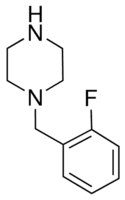
1-(2-Fluorobenzyl)piperazine
C11H15FN2
Chemical Synthesis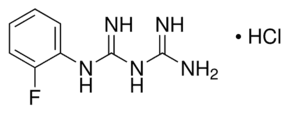
1-(2-Fluorophenyl)biguanide hydrochloride
Chemical Synthesis
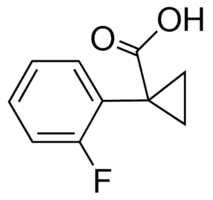
1-(2-Fluorophenyl)cyclopropanecarboxylic acid
C10H9FO2
Chemical Synthesis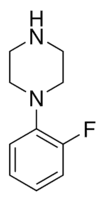
1-(2-Fluorophenyl)piperazine
C10H13FN2
Chemical Synthesis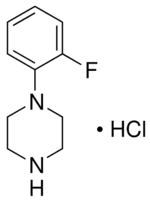
1-(2-Fluorophenyl)piperazine monohydrochloride
C10H13FN2 · HCl
Chemical Synthesis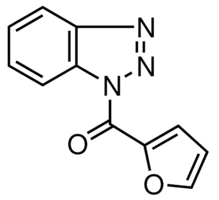
1-(2-Furoyl)-1H-benzotriazole
C11H7N3O2
Chemical Synthesis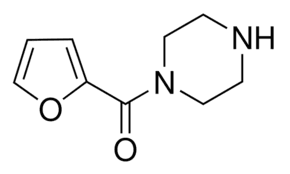
1-(2-Furoyl)piperazine
C9H12N2O2
Chemical Synthesis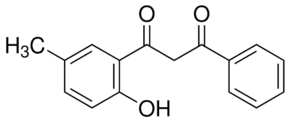
1-(2-Hydroxy-5-methylphenyl)-3-phenyl-1,3-propanedione
Chemical Synthesis
▶ Explore more

Bis(cyclopentadienyl)cobalt(III) hexafluorophosphate
C10H10CoF6P
Catalysis & Inorganic
1-(4-Chlorophenyl)biguanide hydrochloride
ClC6H4NHC(NH)NHC(NH)NH2 · HCl
Chemical Synthesis
Bis(cyclopentadienyl)dimethylzirconium(IV)
Catalysis & Inorganic

1-(4-Chlorophenyl)ethanol
ClC6H4CH(CH3)OH
Chemical Synthesis