
4,4′-Cyclohexylidenebis[N,N-bis(4-methylphenyl)benzenamine]
4,4′-Cyclohexylidenebis[N,N-bis(4-methylphenyl)benzenamine] (CAS: 58473-78-2) is a high-performance organic semiconductor with a molecular weight of 626.87 g/mol. It is primarily recognised for its efficacy as a hole transport layer (HTL) material in advanced electronic devices. This compound plays a crucial role in facilitating efficient charge carrier movement, contributing to the performance and longevity of organic light-emitting diodes (OLEDs) and related technologies.
- IUPAC
- TAPC
- Synonyms
- 58473-78-2
![4,4′-Cyclohexylidenebis[N,N-bis(4-methylphenyl)benzenamine] (C46H46N2) — chemical structure, CAS 58473-78-2; Materials Science, fine chemical supplied by Tech Serve Solutions](/_next/image?url=https%3A%2F%2Fpub-f4d920c906024441a773a96f7098e551.r2.dev%2Fimages%2Fproducts%2F58473-78-2.png&w=3840&q=75)
Hole Transport Layer (HTL) Material
This material functions as a crucial component in organic electronic devices, facilitating the efficient transport of positive charge carriers (holes) from the anode to the emissive layer. Its properties are key to optimising device performance in OLEDs.
OLED and PLED Device Fabrication
As a hole transport material, it is integral to the construction of Organic Light-Emitting Diodes (OLEDs) and Polymer Light-Emitting Diodes (PLEDs). It contributes to achieving desired colour outputs and operational characteristics.
Organic and Printed Electronics
The compound finds application within the broader field of organic and printed electronics, where tailored charge transport properties are required for novel device architectures and manufacturing processes.
Materials Science Research
Its defined electronic properties, including HOMO and LUMO energy levels, make it a valuable material for research in semiconductor physics and materials science, particularly concerning charge injection and transport phenomena.
| Molecular weight | 626.87 |
|---|---|
| Empirical formula | C46H46N2 |
| Assay | 97% |
| Application | This material is a popular Hole Transport Layer material for OLED devices. |
| Melting point | 180-185 °C |
| Orbital Energy | HOMO 5.5 eV LUMO 2 eV |
|---|
Documentation
Every batch ships with a Certificate of Analysis covering assay, identity and purity; the grade is confirmed against your enquiry. Safety Data Sheets and technical data sheets are available on request.
Supply & logistics
Samples for technical evaluation; bulk MOQ by grade and packaging. In-stock material ships in 7–10 working days, worldwide, with full export documentation.
What is 4,4′-Cyclohexylidenebis[N,N-bis(4-methylphenyl)benzenamine] used for?
+
It is primarily used as a Hole Transport Layer (HTL) material in organic electronic devices, particularly for OLEDs and PLEDs, and in organic and printed electronics research.
What is the CAS number and molecular formula for this compound?
+
The CAS number is 58473-78-2 and the empirical formula (Hill notation) is C46H46N2.
What grade and purity does Tech Serve Solutions supply?
+
Tech Serve Solutions supplies this material with an assay of 97%. This is a technical/research grade; TSS does not represent it as USP, BP, or EP grade.
What are the safety considerations when handling this chemical?
+
Specific safety data must be consulted via the Safety Data Sheet (SDS) prior to handling. Users should adhere to all recommended personal protective equipment (PPE) and laboratory safety protocols.
Is this chemical available for export?
+
Yes, Tech Serve Solutions specialises in the global supply and export of fine chemicals, pharmaceutical intermediates, and laboratory reagents.
How can I request a sample or quote for this product?
+
Please contact our sales team directly through the website or by phone to request a sample or obtain a quotation for this product.
▶ Related products
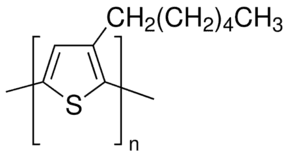
Poly(3-hexylthiophene-2,5-diyl)
Organic & Printed Electronics
![[6,6]-Phenyl C71 butyric acid methyl ester, mixture of isomers — chemical structure, CAS 609771-63-3; Organic & Printed Electronics, fine chemical supplied by Tech Serve Solutions](/_next/image?url=https%3A%2F%2Fpub-f4d920c906024441a773a96f7098e551.r2.dev%2Fimages%2Fproducts%2F609771-63-3.png&w=3840&q=75)
[6,6]-Phenyl C71 butyric acid methyl ester, mixture of isomers
Organic & Printed Electronics
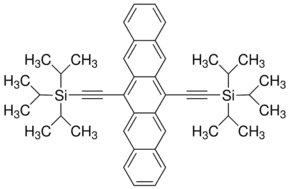
6,13-Bis(triisopropylsilylethynyl)pentacene
Organic & Printed Electronics
![[6,6]-Phenyl C61 butyric acid methyl ester — chemical structure, CAS 160848-22-6; Organic & Printed Electronics, fine chemical supplied by Tech Serve Solutions](/_next/image?url=https%3A%2F%2Fpub-f4d920c906024441a773a96f7098e551.r2.dev%2Fimages%2Fproducts%2F160848-22-6.png&w=3840&q=75)
[6,6]-Phenyl C61 butyric acid methyl ester
Organic & Printed Electronics
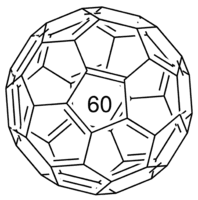
Fullerene-C60
C60
Organic & Printed Electronics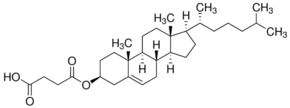
Cholesteryl hemisuccinate
C31H50O4
Organic & Printed Electronics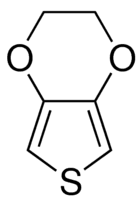
3,4-Ethylenedioxythiophene
Organic & Printed Electronics
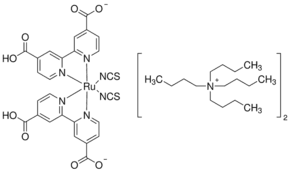
Di-tetrabutylammonium cis-bis(isothiocyanato)bis(2,2′-bipyridyl-4,4′-dicarboxylato)ruthenium(II)
Organic & Printed Electronics
▶ Explore more

Bis(cyclopentadienyl)cobalt(III) hexafluorophosphate
C10H10CoF6P
Catalysis & Inorganic
1-(4-Chlorophenyl)biguanide hydrochloride
ClC6H4NHC(NH)NHC(NH)NH2 · HCl
Chemical Synthesis
Bis(cyclopentadienyl)dimethylzirconium(IV)
Catalysis & Inorganic

1-(4-Chlorophenyl)ethanol
ClC6H4CH(CH3)OH
Chemical Synthesis