
4,4′-Carbonylbis[2-(ethoxycarbonyl)benzoic acid], 4,4′-methylenedianiline salt 1:1
4,4′-Carbonylbis[2-(ethoxycarbonyl)benzoic acid], 4,4′-methylenedianiline salt 1:1 (CAS: 65701-06-6) is a chemical compound with the formula CO(C₆H₃(CO₂)(CO₂C₂H₅))₂ · CH₂(C₆H₄NH₃)₂. It is primarily utilized in materials science and polymer science, particularly in the development of amide aromatic and engineering polymers. This salt is supplied by Tech Serve Solutions for research and industrial applications.
- Synonyms
- 4,4′-methylenedianiline salt 1:165701-06-6CO(C6H3(CO2)(CO2C2H5))2 . CH2(C6H4NH3)2
![4,4′-Carbonylbis[2-(ethoxycarbonyl)benzoic acid], 4,4′-methylenedianiline salt 1:1 (CO(C6H3(CO2)(CO2C2H5))2 . CH2(C6H4NH3)2) — chemical structure, CAS 65701-06-6; Materials Science, fine chemical supplied by Tech Serve Solutions](/_next/image?url=https%3A%2F%2Fpub-f4d920c906024441a773a96f7098e551.r2.dev%2Fimages%2Fproducts%2F65701-06-6.png&w=3840&q=75)
Amide Aromatic Resins
This compound serves as a precursor or additive in the synthesis of amide aromatic resins, contributing to their unique thermal and mechanical properties.
Engineering Polymers
It finds application in the formulation of engineering polymers, enhancing characteristics such as heat resistance and structural integrity for demanding applications.
Materials Science Research
Utilised in materials science, this chemical is valuable for developing novel materials with tailored properties for advanced technological uses.
Polymer Science Development
It aids in the investigation and development of new polymer architectures and functionalities within the field of polymer science.
| Linear formula | CO(C6H3(CO2)(CO2C2H5))2 . CH2(C6H4NH3)2 |
|---|---|
| Storage temperature | −20°C |


Hazard statements
- H312Harmful in contact with skin
- H315Causes skin irritation
- H317May cause an allergic skin reaction
- H319Causes serious eye irritation
- H335May cause respiratory irritation
- H341Suspected of causing genetic defects
- H350May cause cancer
- H360D
- H370Causes damage to organs
- H373May cause damage to organs through prolonged exposure
- H412Harmful to aquatic life with long-lasting effects
Precautionary statements
- P201Obtain special instructions before use
- P260Do not breathe dust, fume, gas, mist, vapours or spray
- P273Avoid release to the environment
- P280Wear protective gloves, clothing and eye/face protection
- P305IF IN EYES
- P308IF exposed or concerned
| Flash point | 91 °C / 195.8 °F |
|---|---|
| Transport (UN / ADR) | UN 1866C 3 / PGIII |
| Water hazard class (WGK, DE) | 3 |
| Hazard codes (EU) | T |
| Risk statements (R) | 45-61-36/37/38-39/23/24/25-43-48/20/21/22-52/53-68 |
| Safety statements (S) | 53-26-36/37-45-61 |
Hazard information is provided for guidance. Always consult the product Safety Data Sheet (SDS), available on request, before handling.
Documentation
Every batch ships with a Certificate of Analysis covering assay, identity and purity; the grade is confirmed against your enquiry. Safety Data Sheets and technical data sheets are available on request.
Supply & logistics
Samples for technical evaluation; bulk MOQ by grade and packaging. In-stock material ships in 7–10 working days, worldwide, with full export documentation.
What is 4,4′-Carbonylbis[2-(ethoxycarbonyl)benzoic acid], 4,4′-methylenedianiline salt 1:1 used for?
+
This compound is used in the development of amide aromatic resins, engineering polymers, and in broader materials science and polymer science research.
What are the CAS number and formula for this compound?
+
The CAS number is 65701-06-6, and the formula is CO(C₆H₃(CO₂)(CO₂C₂H₅))₂ · CH₂(C₆H₄NH₃)₂.
What grade and purity does Tech Serve Solutions supply?
+
Tech Serve Solutions supplies this chemical for research and industrial purposes. Purity and specific grades are available upon request; it is not supplied as USP, BP, or EP grade.
What are the main hazards associated with this chemical?
+
This compound presents significant hazards, including harmful if swallowed, causes skin irritation, may cause an allergic skin reaction, causes serious eye irritation, may cause respiratory irritation, suspected of causing genetic defects, may cause cancer, causes damage to organs, and may cause long lasting harmful effects to aquatic life. Always handle with appropriate personal protective equipment and follow safety guidelines.
How is this chemical typically packed and shipped?
+
This chemical is carefully packed and exported by Tech Serve Solutions in compliance with international shipping regulations for hazardous materials, with a flash point of 91°C.
How can I request a sample or quote?
+
To request a sample or a quote, please contact the Tech Serve Solutions sales team through our website or by phone, providing the product name and CAS number.
▶ Related products
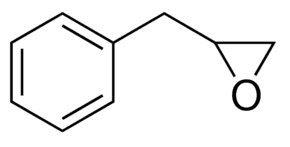
(2,3-Epoxypropyl)benzene
Polymer Science
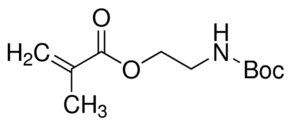
(2-Boc-amino)ethyl methacrylate
C11H19NO4
Polymer Science
(3,5,5-Trimethylcyclohex-2-enylidene)malononitrile
Polymer Science
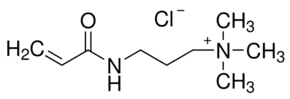
(3-Acrylamidopropyl)trimethylammonium chloride solution
Polymer Science
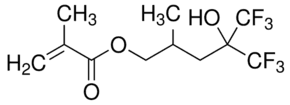
1,1,1-Trifluoro-2-(trifluoromethyl)-2-hydroxy-4-methyl-5-pentyl methacrylate
Polymer Science
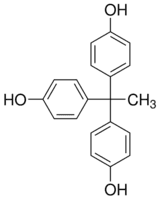
1,1,1-Tris(4-hydroxyphenyl)ethane
Polymer Science

1,1-Cyclohexanediacetic acid
Polymer Science

1,12-Diisocyanatododecane
Polymer Science
▶ Explore more

Bis(cyclopentadienyl)cobalt(III) hexafluorophosphate
C10H10CoF6P
Catalysis & Inorganic
1-(4-Chlorophenyl)biguanide hydrochloride
ClC6H4NHC(NH)NHC(NH)NH2 · HCl
Chemical Synthesis
Bis(cyclopentadienyl)dimethylzirconium(IV)
Catalysis & Inorganic

1-(4-Chlorophenyl)ethanol
ClC6H4CH(CH3)OH
Chemical Synthesis