
4,4′-Carbonylbis[(2-ethoxycarbonyl)benzoic acid], 1,3-phenylenediamine salt
4,4′-Carbonylbis[(2-ethoxycarbonyl)benzoic acid], 1,3-phenylenediamine salt (CAS 65701-07-7) is a chemical compound with the linear formula CO(C<sub>6</sub>H<sub>3</sub>(CO<sub>2</sub>)(CO<sub>2</sub>C<sub>2</sub>H<sub>5</sub>))<sub>2</sub> . C<sub>6</sub>H<sub>4</sub>(NH<sub>3</sub>)<sub>2</sub>. It functions as a heat-reactive aromatic resin solution. Upon thermal curing, it transforms into a cross-linked polyimide, indicating its utility in advanced materials and polymer science applications requiring high performance and thermal stability.
- Synonyms
- 3-phenylenediamine salt,65701-07-7, CO(C6H3(CO2)(CO2C2H5))2 . C6H4(NH3)2
![4,4′-Carbonylbis[(2-ethoxycarbonyl)benzoic acid], 1,3-phenylenediamine salt (C27H26N2O9) — chemical structure, CAS 65701-07-7; Materials Science, fine chemical supplied by Tech Serve Solutions](/_next/image?url=https%3A%2F%2Fpub-f4d920c906024441a773a96f7098e551.r2.dev%2Fimages%2Fproducts%2F65701-07-7.png&w=3840&q=75)
Aromatic Resin Precursor
Serves as a heat-reactive aromatic resin solution. It is designed to be thermally cured into a robust, cross-linked polyimide structure, suitable for demanding applications.
Engineering Polymers
The cured product, a polyimide, offers excellent thermal stability and mechanical properties, making it valuable in the formulation of engineering polymers for high-performance components.
Materials Science Research
This compound is relevant in materials science for the development of novel polymers and composites. Its ability to form cross-linked polyimides opens avenues for advanced material design.
Polymer Synthesis
Utilised in polymer science, this salt acts as a precursor for producing high-performance polyimide resins through controlled thermal curing processes.
| Linear formula | CO(C6H3(CO2)(CO2C2H5))2 . C6H4(NH3)2 |
|---|---|
| Storage temperature | −20°C |
| Application | Heat reactive aromatic resin solution which can be thermally cured to a cross-linked polyimide. |


Hazard statements
- H226Flammable liquid and vapour
- H319Causes serious eye irritation
- H332Harmful if inhaled
- H335May cause respiratory irritation
Precautionary statements
- P261Avoid breathing dust, fume, gas or vapours
- P305IF IN EYES
| Flash point | 48 °C / 118.4 °F |
|---|---|
| Transport (UN / ADR) | UN 1866C 3 / PGIII |
| Water hazard class (WGK, DE) | 3 |
| Hazard codes (EU) | Xn |
| Risk statements (R) | 10-20-36/37-66 |
| Safety statements (S) | 26 |
| Supplemental hazards | Repeated exposure may cause skin dryness or cracking. |
Hazard information is provided for guidance. Always consult the product Safety Data Sheet (SDS), available on request, before handling.
Documentation
Every batch ships with a Certificate of Analysis covering assay, identity and purity; the grade is confirmed against your enquiry. Safety Data Sheets and technical data sheets are available on request.
Supply & logistics
Samples for technical evaluation; bulk MOQ by grade and packaging. In-stock material ships in 7–10 working days, worldwide, with full export documentation.
What is 4,4′-Carbonylbis[(2-ethoxycarbonyl)benzoic acid], 1,3-phenylenediamine salt used for?
+
This compound is used as a heat-reactive aromatic resin solution that can be thermally cured to a cross-linked polyimide, finding applications in engineering polymers and materials science.
What are the CAS number and chemical formula for this product?
+
The CAS number is 65701-07-7, and the linear formula is CO(C<sub>6</sub>H<sub>3</sub>(CO<sub>2</sub>)(CO<sub>2</sub>C<sub>2</sub>H<sub>5</sub>))<sub>2</sub> . C<sub>6</sub>H<sub>4</sub>(NH<sub>3</sub>)<sub>2</sub>.
What grade and purity does Tech Serve Solutions supply?
+
Tech Serve Solutions supplies this chemical for research and development purposes. The specific assay and purity are available on the product's Certificate of Analysis. We do not represent this product as USP, BP, or EP grade.
How should 4,4′-Carbonylbis[(2-ethoxycarbonyl)benzoic acid], 1,3-phenylenediamine salt be handled safely?
+
This product is a Warning substance with hazard statements H226 (Flammable liquid and vapour), H319 (Causes serious eye irritation), H332 (Harmful if inhaled), and H335 (May cause respiratory irritation). Handle in a well-ventilated area, avoid breathing vapours, and use appropriate personal protective equipment. It has a flash point of 48 °C (118.4 °F). Ensure compliance with precautionary statements P261, P305, P351, and P338.
How is this chemical packed and exported by TSS?
+
Tech Serve Solutions packs and exports chemicals in compliance with international shipping regulations. Specific packaging details are confirmed upon order placement, adhering to safety and transport requirements for UN 1866C 3 / PGIII classification.
How can I request a quote or sample?
+
To request a quote or sample, please contact the Tech Serve Solutions sales team via our website or directly by phone, providing the product name and CAS number (65701-07-7).
▶ Related products
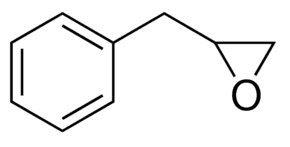
(2,3-Epoxypropyl)benzene
Polymer Science
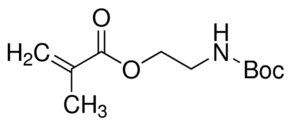
(2-Boc-amino)ethyl methacrylate
C11H19NO4
Polymer Science
(3,5,5-Trimethylcyclohex-2-enylidene)malononitrile
Polymer Science
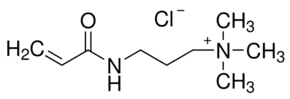
(3-Acrylamidopropyl)trimethylammonium chloride solution
Polymer Science
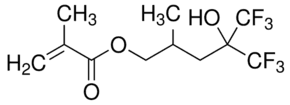
1,1,1-Trifluoro-2-(trifluoromethyl)-2-hydroxy-4-methyl-5-pentyl methacrylate
Polymer Science
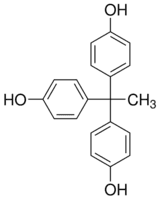
1,1,1-Tris(4-hydroxyphenyl)ethane
Polymer Science

1,1-Cyclohexanediacetic acid
Polymer Science

1,12-Diisocyanatododecane
Polymer Science
▶ Explore more

Bis(cyclopentadienyl)cobalt(III) hexafluorophosphate
C10H10CoF6P
Catalysis & Inorganic
1-(4-Chlorophenyl)biguanide hydrochloride
ClC6H4NHC(NH)NHC(NH)NH2 · HCl
Chemical Synthesis
Bis(cyclopentadienyl)dimethylzirconium(IV)
Catalysis & Inorganic

1-(4-Chlorophenyl)ethanol
ClC6H4CH(CH3)OH
Chemical Synthesis