4-(3-Phenylpropyl)pyridine
4-(3-Phenylpropyl)pyridine (CAS: 2057-49-0; Formula: C14H15N; MW: 197.28) is a pyridine derivative offered by TSS for various chemical synthesis applications. Its specific structure makes it valuable in electrochemical research, particularly in studies involving microdroplet immobilisation and anion transfer at electrode interfaces. This building block is essential for researchers exploring novel electrochemical systems and interface phenomena.

Electrochemical Processes
4-(3-Phenylpropyl)pyridine has been employed in electrochemical studies, notably for immobilising microdroplets at graphite electrodes and within mesoporous ceramic materials.
Anion Transfer Investigations
This compound facilitates research into electrochemically driven mono-, di-, and tri-carboxylate anion transfer at interfaces, utilising triple phase boundary systems at graphite electrodes.
Chemical Synthesis Building Block
As a heterocyclic building block, 4-(3-Phenylpropyl)pyridine is used in the synthesis of more complex molecules within organic chemistry and materials science.
| Molecular weight | 197.28 |
|---|---|
| Empirical formula | C14H15N |
| Assay | 97% |
| Boiling point | 322 °C(lit.) |
| Density | 1.03 g/mL at 25 °C(lit.) |
| Refractive index | n20/D 1.563(lit.) |
| Solubility | H2O: insoluble |
| Application | 4-(3-Phenylpropyl) pyridine(PPP) was used in electrochemical processes for a novel system of microdroplets of PPP immobilised at graphite and in mesoporous ceramic electrodes1. PPP has been used to investigate electrochemically driven mono-, di-, and tri-carboxylate anion transfer at the 4-(3-phenylpropyl)pyridine/aqueous electrolyte interface for a triple phase boundary system at graphite electrodes2. |

Hazard statements
- H315Causes skin irritation
- H319Causes serious eye irritation
- H335May cause respiratory irritation
Precautionary statements
- P261Avoid breathing dust, fume, gas or vapours
- P305IF IN EYES
| Protective equipment | Eyeshields, full-face respirator (US), Gloves, multi-purpose combination respirator cartridge (US), type ABEK (EN14387) respirator filter |
|---|---|
| Flash point | 113 °C / 235.4 °F |
| Water hazard class (WGK, DE) | 3 |
| Hazard codes (EU) | Xi |
| Risk statements (R) | 36/37/38 |
| Safety statements (S) | 26-36 |
Hazard information is provided for guidance. Always consult the product Safety Data Sheet (SDS), available on request, before handling.
Documentation
Every batch ships with a Certificate of Analysis covering assay, identity and purity; the grade is confirmed against your enquiry. Safety Data Sheets and technical data sheets are available on request.
Supply & logistics
Samples for technical evaluation; bulk MOQ by grade and packaging. In-stock material ships in 7–10 working days, worldwide, with full export documentation.
What is 4-(3-Phenylpropyl)pyridine used for?
+
4-(3-Phenylpropyl)pyridine is primarily used as a building block in chemical synthesis and has specific applications in electrochemical research, including studies on microdroplet immobilisation and anion transfer at electrode interfaces.
What are the CAS number and formula for 4-(3-Phenylpropyl)pyridine?
+
The CAS number for 4-(3-Phenylpropyl)pyridine is 2057-49-0, and its empirical formula is C14H15N.
What grade and purity does Tech Serve Solutions supply?
+
Tech Serve Solutions supplies 4-(3-Phenylpropyl)pyridine with a minimum assay of 97%. TSS does not represent this product as USP, BP, EP, or other pharmacopoeia grades.
What are the safety considerations when handling 4-(3-Phenylpropyl)pyridine?
+
4-(3-Phenylpropyl)pyridine is classified with Warning signal word and carries hazard statements H315 (Causes skin irritation), H319 (Causes serious eye irritation), and H335 (May cause respiratory irritation). Appropriate personal protective equipment including eyeshields, gloves, and suitable respiratory protection should be used.
Does Tech Serve Solutions export 4-(3-Phenylpropyl)pyridine?
+
Yes, Tech Serve Solutions is a specialist global supplier and exporter of fine chemicals, including 4-(3-Phenylpropyl)pyridine.
How can I request a sample or quote for 4-(3-Phenylpropyl)pyridine?
+
To request a sample or quote for 4-(3-Phenylpropyl)pyridine, please contact the TSS sales department through our website or by telephone.
▶ Related products
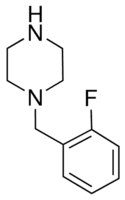
1-(2-Fluorobenzyl)piperazine
C11H15FN2
Chemical Synthesis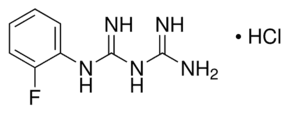
1-(2-Fluorophenyl)biguanide hydrochloride
Chemical Synthesis
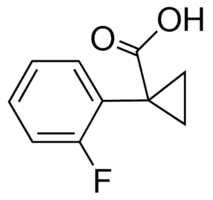
1-(2-Fluorophenyl)cyclopropanecarboxylic acid
C10H9FO2
Chemical Synthesis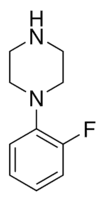
1-(2-Fluorophenyl)piperazine
C10H13FN2
Chemical Synthesis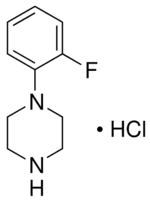
1-(2-Fluorophenyl)piperazine monohydrochloride
C10H13FN2 · HCl
Chemical Synthesis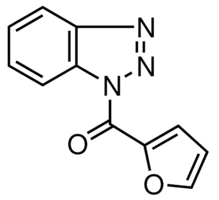
1-(2-Furoyl)-1H-benzotriazole
C11H7N3O2
Chemical Synthesis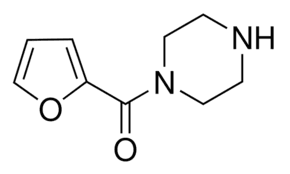
1-(2-Furoyl)piperazine
C9H12N2O2
Chemical Synthesis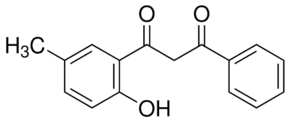
1-(2-Hydroxy-5-methylphenyl)-3-phenyl-1,3-propanedione
Chemical Synthesis