
2-Phenylindole
2-Phenylindole (CAS 948-65-2, C14H11N) is a heterocyclic organic compound with a molecular weight of 193.24 g/mol. This white to off-white solid serves as a valuable building block in chemical synthesis. Its applications span the development of novel pharmaceutical agents, including potential anticancer and anti-inflammatory drugs, as well as in the creation of advanced materials for organic light-emitting diodes (OLEDs).
- IUPAC
- NSC 15776,Stabilizer I

Pharmaceutical Intermediate
Used as a reactant in the synthesis of potential therapeutic agents, such as anti-inflammatory compounds, anticancer immunomodulators, and cyclooxygenase inhibitors. It is also investigated for cancer and malaria therapy.
Materials Science
Applicable in the development of organic light-emitting diodes (OLEDs). The indole scaffold can be functionalised to achieve desired photophysical properties for electronic applications.
Chemical Synthesis Reagent
Serves as a reactant in various organic transformations, including iodine-catalyzed Markovnikov additions and difluorohydroxylation reactions, facilitating the synthesis of complex molecular structures.
Fluorescent Probes
Its structural motif lends itself to the design and synthesis of fluorescent probes for various analytical and biological imaging applications.
| Molecular weight | 193.24 |
|---|---|
| Empirical formula | C14H11N |
| Assay | 95% |
| Boiling point | 250 °C/10 mmHg(lit.) |
| Application | Reactant for preparation of: • Oxopyrrolidine analogs via iodine-catalyzed Markovnikov addition1• Tryptophan dioxygenase inhibitors pyridyl-ethenyl-indoles as potential anticancer immunomodulators2• Organic light emitting diodes (OLEDs)3• Anti inflammatory agents4• Potential cyclooxygenase-1 (COX-1)/cyclooxygenase-2 (COX-2) inhibitors5• Agents for cancer and malaria therapy6• Antifungal and antibacterial agents7• Fluorescent probes8Reactant in:• Difluorohydroxylation reactions†• Mannich-type reactions† |
| Melting point | 188-190 °C(lit.) |


Hazard statements
- H315Causes skin irritation
- H318Causes serious eye damage
- H335May cause respiratory irritation
- H413May cause long-lasting harmful effects to aquatic life
Precautionary statements
- P261Avoid breathing dust, fume, gas or vapours
- P280Wear protective gloves, clothing and eye/face protection
- P305IF IN EYES
| Protective equipment | dust mask type N95 (US), Eyeshields, Gloves |
|---|---|
| Water hazard class (WGK, DE) | 3 |
| Hazard codes (EU) | Xi |
| Risk statements (R) | 37/38-41 |
| Safety statements (S) | 26-39 |
Hazard information is provided for guidance. Always consult the product Safety Data Sheet (SDS), available on request, before handling.
Documentation
Every batch ships with a Certificate of Analysis covering assay, identity and purity; the grade is confirmed against your enquiry. Safety Data Sheets and technical data sheets are available on request.
Supply & logistics
Samples for technical evaluation; bulk MOQ by grade and packaging. In-stock material ships in 7–10 working days, worldwide, with full export documentation.
What is 2-Phenylindole used for?
+
2-Phenylindole is used as a reactant in the synthesis of pharmaceuticals, including anti-inflammatory agents, anticancer immunomodulators, and COX inhibitors. It is also utilised in materials science for OLEDs and as a building block in general chemical synthesis, including difluorohydroxylation and Mannich-type reactions. Furthermore, it is employed in the development of fluorescent probes and agents for cancer and malaria therapy, as well as antifungal and antibacterial agents.
What are the CAS number and molecular formula for 2-Phenylindole?
+
The CAS number for 2-Phenylindole is 948-65-2, and its molecular formula is C14H11N.
What grade and purity does Tech Serve Solutions supply?
+
Tech Serve Solutions supplies 2-Phenylindole with an assay of 95%. This product is supplied for research and development purposes and is not represented as USP, BP, EP, or any other pharmacopoeial grade.
How should 2-Phenylindole be handled safely?
+
2-Phenylindole is classified as a Danger substance. It causes skin irritation (H315), serious eye damage (H318), and may cause respiratory irritation (H335). It may also cause long lasting harmful effects to aquatic life (H413). Ensure adequate ventilation, wear a dust mask type N95 (US), safety eyeshields, and gloves. Avoid breathing dust.
How is 2-Phenylindole packed, shipped, and exported?
+
2-Phenylindole is carefully packed to ensure product integrity during transit. We adhere to all relevant international shipping regulations for chemical exports, offering reliable global distribution services.
How can I request a quote or sample of 2-Phenylindole?
+
To request a quote or a sample of 2-Phenylindole, please contact our sales team through the provided channels on our website. Specify the product name and CAS number (948-65-2) in your inquiry.
▶ Related products
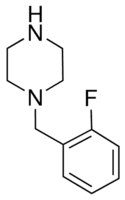
1-(2-Fluorobenzyl)piperazine
C11H15FN2
Chemical Synthesis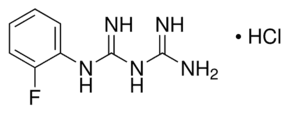
1-(2-Fluorophenyl)biguanide hydrochloride
Chemical Synthesis
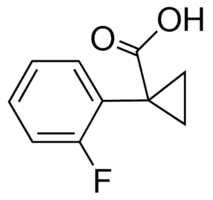
1-(2-Fluorophenyl)cyclopropanecarboxylic acid
C10H9FO2
Chemical Synthesis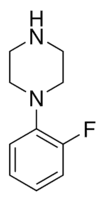
1-(2-Fluorophenyl)piperazine
C10H13FN2
Chemical Synthesis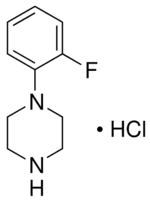
1-(2-Fluorophenyl)piperazine monohydrochloride
C10H13FN2 · HCl
Chemical Synthesis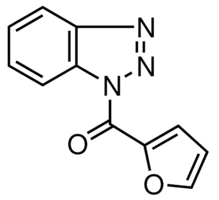
1-(2-Furoyl)-1H-benzotriazole
C11H7N3O2
Chemical Synthesis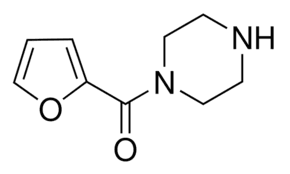
1-(2-Furoyl)piperazine
C9H12N2O2
Chemical Synthesis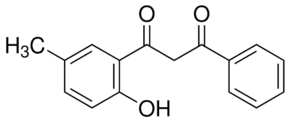
1-(2-Hydroxy-5-methylphenyl)-3-phenyl-1,3-propanedione
Chemical Synthesis
▶ Explore more

Bis(cyclopentadienyl)cobalt(III) hexafluorophosphate
C10H10CoF6P
Catalysis & Inorganic
1-(4-Chlorophenyl)biguanide hydrochloride
ClC6H4NHC(NH)NHC(NH)NH2 · HCl
Chemical Synthesis
Bis(cyclopentadienyl)dimethylzirconium(IV)
Catalysis & Inorganic

1-(4-Chlorophenyl)ethanol
ClC6H4CH(CH3)OH
Chemical Synthesis