
2-Hydroxycyclohexanone dimer
2-Hydroxycyclohexanone dimer (CAS: 30282-14-5), with the linear formula [HOC₆H₉(=O)]₂, possesses a molecular weight of 228.28. This organic compound functions as a versatile building block in chemical synthesis. It is notably employed as a reactant in the creation of ynones and ynoates via tin tetrachloride-mediated fragmentation, as well as in tandem oxidation coupling reactions with diamines and asymmetric allylic alkylation of enolates. Its applications extend to formate reduction for polypropionate systems.
- IUPAC
- Adipoin,NSC 117392
- Synonyms
- AdipoinNSC 117392
![2-Hydroxycyclohexanone dimer ([HOC6H9(=O)]2) — chemical structure, CAS 30282-14-5; Chemistry, fine chemical supplied by Tech Serve Solutions](/_next/image?url=https%3A%2F%2Fpub-f4d920c906024441a773a96f7098e551.r2.dev%2Fimages%2Fproducts%2F30282-14-5.png&w=3840&q=75)
Synthesis of Ynotes and Ynoates
2-Hydroxycyclohexanone dimer serves as a key reactant in the synthesis of substrated for tin tetrachloride-mediated fragmentation, enabling the production of ynones and ynoates. This process is crucial for accessing specific acetylenic carbonyl compounds.
Tandem Oxidation Coupling Reactions
The compound is utilised in tandem oxidation coupling reactions with diamines. This application facilitates the formation of complex molecular structures through a cascade reaction mechanism.
Asymmetric Allylic Alkylation
It participates in asymmetric allylic alkylation of enolates, a stereoselective reaction important for the synthesis of chiral molecules with high enantiomeric purity.
Formate Reduction for Polypropionate Systems
2-Hydroxycyclohexanone dimer is employed in formate reduction of allylic carbonates, a method that is vital for constructing polypropionate systems, commonly found in natural products.
| Molecular weight | 228.28 |
|---|---|
| Linear formula | [HOC6H9(=O)]2 |
| Boiling point | 83-86 °C/13 mmHg(lit.) |
| Storage temperature | 2-8°C |
| Application | Reactant involved in:• Synthesis of substrated for tin tetrachloride mediated fragmentation to produce ynones and ynoates1• Tandem oxidation coupling reactions with diamines2• Asymmetric allylic alkylation of enolates3• Formate reduction of allylic carbonates for polypropionate systems4 |
| Melting point | 100-107 °C(lit.) |


Hazard statements
- H228Flammable solid
- H315Causes skin irritation
- H319Causes serious eye irritation
- H335May cause respiratory irritation
Precautionary statements
- P210Keep away from heat, sparks and open flames. No smoking
- P261Avoid breathing dust, fume, gas or vapours
- P305IF IN EYES
| Protective equipment | Eyeshields, full-face particle respirator type N100 (US), Gloves, respirator cartridge type N100 (US), type P1 (EN143) respirator filter, type P3 (EN 143) respirator cartridges |
|---|---|
| Flash point | 79 °C / 174.2 °F |
| Transport (UN / ADR) | UN 1325 4.1 / PGIII |
| Water hazard class (WGK, DE) | 3 |
| Hazard codes (EU) | F,Xi |
| Risk statements (R) | 11-36/37/38 |
| Safety statements (S) | 16-26-36 |
Hazard information is provided for guidance. Always consult the product Safety Data Sheet (SDS), available on request, before handling.
Documentation
Every batch ships with a Certificate of Analysis covering assay, identity and purity; the grade is confirmed against your enquiry. Safety Data Sheets and technical data sheets are available on request.
Supply & logistics
Samples for technical evaluation; bulk MOQ by grade and packaging. In-stock material ships in 7–10 working days, worldwide, with full export documentation.
What is 2-Hydroxycyclohexanone dimer used for?
+
2-Hydroxycyclohexanone dimer is used as a reactant in chemical synthesis, including the preparation of ynones and ynoates, tandem oxidation coupling reactions with diamines, asymmetric allylic alkylation of enolates, and formate reduction for polypropionate systems.
What are the CAS number and formula for 2-Hydroxycyclohexanone dimer?
+
The CAS number is 30282-14-5, and the linear formula is [HOC₆H₉(=O)]₂.
What grade and purity does Tech Serve Solutions supply?
+
Tech Serve Solutions supplies technical or research-grade material. We do not represent this product as USP, BP, or EP grade unless explicitly stated in the product specifications.
How should 2-Hydroxycyclohexanone dimer be handled?
+
Handling requires caution due to flammability (H228) and potential irritation to skin (H315), eyes (H319), and respiratory tract (H335). Appropriate personal protective equipment, including eyeshields, suitable gloves, and respiratory protection (e.g., N100 respirator), should be used in a well-ventilated area. Keep away from heat, hot surfaces, sparks, open flames, and other ignition sources. Store at 2-8°C.
Is 2-Hydroxycyclohexanone dimer a controlled substance?
+
The provided data does not indicate that 2-Hydroxycyclohexanone dimer is a controlled substance.
How is 2-Hydroxycyclohexanone dimer packed, shipped, and exported?
+
Tech Serve Solutions is a global supplier and exporter of fine chemicals. Specific packing details depend on the quantity ordered, but shipments adhere to all relevant transport regulations.
How can I request a sample or quote for 2-Hydroxycyclohexanone dimer?
+
To request a sample or quote, please contact the Tech Serve Solutions sales team through our website or by phone. Please reference the product name and CAS number (30282-14-5).
▶ Related products
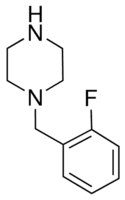
1-(2-Fluorobenzyl)piperazine
C11H15FN2
Chemical Synthesis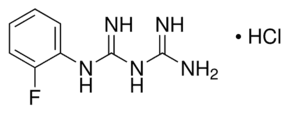
1-(2-Fluorophenyl)biguanide hydrochloride
Chemical Synthesis
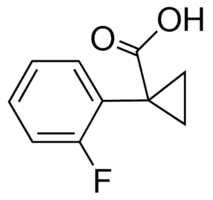
1-(2-Fluorophenyl)cyclopropanecarboxylic acid
C10H9FO2
Chemical Synthesis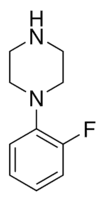
1-(2-Fluorophenyl)piperazine
C10H13FN2
Chemical Synthesis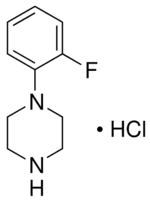
1-(2-Fluorophenyl)piperazine monohydrochloride
C10H13FN2 · HCl
Chemical Synthesis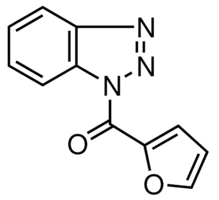
1-(2-Furoyl)-1H-benzotriazole
C11H7N3O2
Chemical Synthesis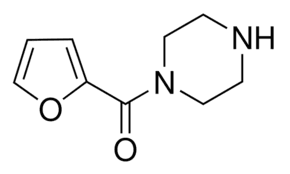
1-(2-Furoyl)piperazine
C9H12N2O2
Chemical Synthesis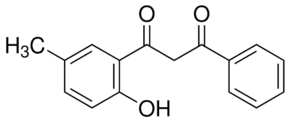
1-(2-Hydroxy-5-methylphenyl)-3-phenyl-1,3-propanedione
Chemical Synthesis
▶ Explore more

Bis(cyclopentadienyl)cobalt(III) hexafluorophosphate
C10H10CoF6P
Catalysis & Inorganic
1-(4-Chlorophenyl)biguanide hydrochloride
ClC6H4NHC(NH)NHC(NH)NH2 · HCl
Chemical Synthesis
Bis(cyclopentadienyl)dimethylzirconium(IV)
Catalysis & Inorganic

1-(4-Chlorophenyl)ethanol
ClC6H4CH(CH3)OH
Chemical Synthesis