
2-Chloro-4-aminotoluene
2-Chloro-4-aminotoluene (CAS: 95-74-9; Formula: ClC6H3(CH3)NH2; MW: 141.60) is a key organic building block and intermediate, primarily utilised in chemical synthesis. This aromatic amine features a chlorine atom and a methyl group attached to the toluene ring, alongside an amine functional group. Its defined structure makes it valuable for constructing more complex molecules in various research and industrial applications.
- IUPAC
- 3-Chloro-4-methylaniline,3-Chloro-p-toluidine,4-Amino-2-chlorotoluene

Synthesis of 2-Chloro-4-cyanotoluene
2-Chloro-4-aminotoluene serves as a direct precursor in the Sandmeyer reaction to produce 2-chloro-4-cyanotoluene using cuprous cyanide as a reagent. This transformation is a standard method for introducing a cyano group onto an aromatic ring.
Organic Synthesis Intermediate
As a functionalised aromatic compound, 2-Chloro-4-aminotoluene is employed as a versatile building block in the synthesis of various organic molecules. Its reactive amine group and substituted aromatic ring allow for diverse chemical modifications and derivatizations.
Research and Development
The compound finds application in chemical research laboratories for the development of new synthetic routes and novel chemical entities. Its availability as a fine chemical supports exploratory chemistry and process optimisation studies.
| Molecular weight | 141.60 |
|---|---|
| Linear formula | ClC6H3(CH3)NH2 |
| Assay | 98% |
| Boiling point | 237-238 °C(lit.) |
| Density | 1.167 g/mL at 25 °C |
| Refractive index | n20/D 1.584(lit.) |
| Storage temperature | 2-8°C |
| Melting point | 24-25 °C(lit.) |
| Application | 2-Chloro-4-aminotoluene has been used in the preparation of 2-chloro-4-cyanotoluene by Sandmeyer reaction with cuprous cyanide1. |


Hazard statements
- H301Toxic if swallowed
- H311Toxic in contact with skin
- H315Causes skin irritation
- H317May cause an allergic skin reaction
- H319Causes serious eye irritation
- H410Very toxic to aquatic life with long-lasting effects
Precautionary statements
- P273Avoid release to the environment
- P280Wear protective gloves, clothing and eye/face protection
- P301IF SWALLOWED
- P305IF IN EYES
- P312Call a POISON CENTER if you feel unwell
- P501Dispose of contents and container per local regulations
| Protective equipment | Eyeshields, Faceshields, Gloves, type P2 (EN 143) respirator cartridges |
|---|---|
| Flash point | 100 °C / 212 °F |
| Transport (UN / ADR) | UN 2239 6.1/PG 3 |
| Water hazard class (WGK, DE) | 3 |
| Hazard codes (EU) | T,N |
| Risk statements (R) | 24/25-36/38-43-50/53 |
| Safety statements (S) | 26-36/37-45-60-61 |
Hazard information is provided for guidance. Always consult the product Safety Data Sheet (SDS), available on request, before handling.
Documentation
Every batch ships with a Certificate of Analysis covering assay, identity and purity; the grade is confirmed against your enquiry. Safety Data Sheets and technical data sheets are available on request.
Supply & logistics
Samples for technical evaluation; bulk MOQ by grade and packaging. In-stock material ships in 7–10 working days, worldwide, with full export documentation.
What is 2-Chloro-4-aminotoluene used for?
+
2-Chloro-4-aminotoluene is primarily used as an intermediate in organic synthesis, notably in the preparation of 2-chloro-4-cyanotoluene via the Sandmeyer reaction. It also serves as a building block in research and development for creating more complex chemical structures.
What are the CAS number and chemical formula for 2-Chloro-4-aminotoluene?
+
The CAS number for 2-Chloro-4-aminotoluene is 95-74-9, and its chemical formula is ClC6H3(CH3)NH2.
What grade and purity does Tech Serve Solutions supply?
+
Tech Serve Solutions supplies 2-Chloro-4-aminotoluene with a minimum assay of 98%. This product is supplied for research and industrial use and is not represented as USP, BP, EP, or pharmacopoeia grade.
How should 2-Chloro-4-aminotoluene be handled safely?
+
2-Chloro-4-aminotoluene is a hazardous substance. It is toxic if swallowed, in contact with skin, and causes skin and serious eye irritation. It may also cause an allergic skin reaction. Handling requires appropriate personal protective equipment, including eyeshields, faceshields, gloves, and a P2 respirator. It should be handled in a well-ventilated area, and contact with skin, eyes, and clothing must be avoided. Refer to the Safety Data Sheet for comprehensive handling instructions.
How is 2-Chloro-4-aminotoluene packaged, shipped, and exported?
+
2-Chloro-4-aminotoluene is carefully packaged to ensure safe transit and compliance with international shipping regulations. Tech Serve Solutions is experienced in exporting chemicals globally, adhering to all necessary safety and customs protocols.
How can I request a quote or sample for 2-Chloro-4-aminotoluene?
+
To request a quote or a sample of 2-Chloro-4-aminotoluene, please contact our sales team via the website or by phone. Provide the product name and CAS number (95-74-9) for prompt service.
▶ Related products
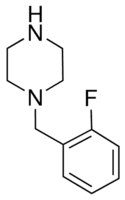
1-(2-Fluorobenzyl)piperazine
C11H15FN2
Chemical Synthesis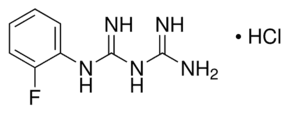
1-(2-Fluorophenyl)biguanide hydrochloride
Chemical Synthesis
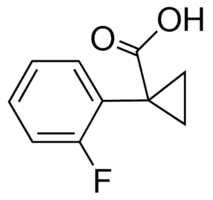
1-(2-Fluorophenyl)cyclopropanecarboxylic acid
C10H9FO2
Chemical Synthesis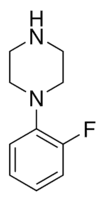
1-(2-Fluorophenyl)piperazine
C10H13FN2
Chemical Synthesis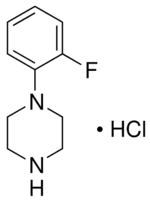
1-(2-Fluorophenyl)piperazine monohydrochloride
C10H13FN2 · HCl
Chemical Synthesis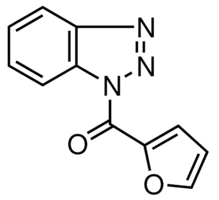
1-(2-Furoyl)-1H-benzotriazole
C11H7N3O2
Chemical Synthesis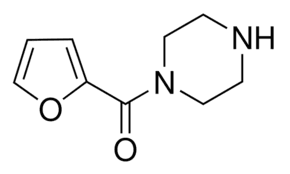
1-(2-Furoyl)piperazine
C9H12N2O2
Chemical Synthesis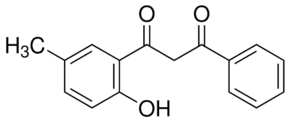
1-(2-Hydroxy-5-methylphenyl)-3-phenyl-1,3-propanedione
Chemical Synthesis
▶ Explore more

Bis(cyclopentadienyl)cobalt(III) hexafluorophosphate
C10H10CoF6P
Catalysis & Inorganic
1-(4-Chlorophenyl)biguanide hydrochloride
ClC6H4NHC(NH)NHC(NH)NH2 · HCl
Chemical Synthesis
Bis(cyclopentadienyl)dimethylzirconium(IV)
Catalysis & Inorganic

1-(4-Chlorophenyl)ethanol
ClC6H4CH(CH3)OH
Chemical Synthesis