2,6-Dichlorostyrene
2,6-Dichlorostyrene (CAS: 28469-92-3) is a functionalised styrene monomer with the linear formula H₂C=CHC₆H₃Cl₂ and a molecular weight of 173.04 g/mol. This compound is noted for its high refractive index properties. It serves as a valuable building block in materials science, particularly in the development of advanced polymers and materials for photonic and optical applications.
- IUPAC
- 2,6-Dichlorovinylbenzene
- Synonyms
- 2,6-DichlorovinylbenzeneH2C=CHC6H3Cl2

High Refractive Index Polymers
2,6-Dichlorostyrene can be polymerised or copolymerised to create polymers with a high refractive index. These materials are essential for applications in advanced optics, such as lenses and optical films.
Materials Science Research
As a functionalised monomer, it is utilised in research and development for novel materials. Its specific chemical structure allows for the tailoring of polymer properties for specialised applications.
Organic and Printed Electronics
The compound's properties lend themselves to use in the field of organic electronics. It can be incorporated into polymers used in organic light-emitting diodes (OLEDs) and organic photovoltaics.
Photonic and Waveguide Materials
Its high refractive index makes it suitable for creating materials used in photonics, including optical waveguides and components for light manipulation.
| Molecular weight | 173.04 |
|---|---|
| Linear formula | H2C=CHC6H3Cl2 |
| Assay | 99% |
| Boiling point | 88-90 °C/8 mmHg(lit.) |
| Density | 1.267 g/mL at 25 °C(lit.) |
| Refractive index | n20/D 1.574(lit.) |
| Storage temperature | 2-8°C |
| Protective equipment | Eyeshields, full-face respirator (US), Gloves, multi-purpose combination respirator cartridge (US), type ABEK (EN14387) respirator filter |
|---|---|
| Flash point | 71 °C / 159.8 °F |
| Water hazard class (WGK, DE) | 3 |
Hazard information is provided for guidance. Always consult the product Safety Data Sheet (SDS), available on request, before handling.
Documentation
Every batch ships with a Certificate of Analysis covering assay, identity and purity; the grade is confirmed against your enquiry. Safety Data Sheets and technical data sheets are available on request.
Supply & logistics
Samples for technical evaluation; bulk MOQ by grade and packaging. In-stock material ships in 7–10 working days, worldwide, with full export documentation.
What is 2,6-Dichlorostyrene used for?
+
2,6-Dichlorostyrene is primarily used in materials science as a monomer for synthesising high refractive index polymers, and in research for organic electronics, photonic materials, and waveguide applications.
What are the CAS number and formula for 2,6-Dichlorostyrene?
+
The CAS number for 2,6-Dichlorostyrene is 28469-92-3, and its linear formula is H₂C=CHC₆H₃Cl₂.
What grade and purity does Tech Serve Solutions supply?
+
Tech Serve Solutions supplies 2,6-Dichlorostyrene with an assay of 99%. This is a high purity chemical suitable for research and industrial applications. It is not supplied as USP, BP, or EP grade.
What are the safety considerations for handling 2,6-Dichlorostyrene?
+
2,6-Dichlorostyrene is a combustible liquid with a flash point of 71 °C (159.8 °F). Appropriate personal protective equipment, including eyeshields and suitable gloves and respirators, should be used. Store at 2-8 °C.
Is 2,6-Dichlorostyrene a controlled substance?
+
The provided data does not indicate that 2,6-Dichlorostyrene is a controlled substance.
How is 2,6-Dichlorostyrene packed, shipped, and exported?
+
Tech Serve Solutions handles the packing, shipping, and export of 2,6-Dichlorostyrene according to international regulations for fine chemicals, ensuring safe and compliant transit globally.
How can I request a sample or quote for 2,6-Dichlorostyrene?
+
To request a sample or a quote for 2,6-Dichlorostyrene, please contact our sales team through the website or by phone.
▶ Related products
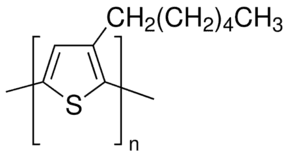
Poly(3-hexylthiophene-2,5-diyl)
Organic & Printed Electronics
![[6,6]-Phenyl C71 butyric acid methyl ester, mixture of isomers — chemical structure, CAS 609771-63-3; Organic & Printed Electronics, fine chemical supplied by Tech Serve Solutions](/_next/image?url=https%3A%2F%2Fpub-f4d920c906024441a773a96f7098e551.r2.dev%2Fimages%2Fproducts%2F609771-63-3.png&w=3840&q=75)
[6,6]-Phenyl C71 butyric acid methyl ester, mixture of isomers
Organic & Printed Electronics
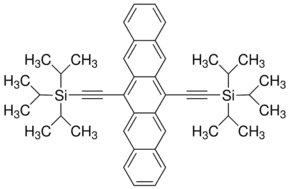
6,13-Bis(triisopropylsilylethynyl)pentacene
Organic & Printed Electronics
![[6,6]-Phenyl C61 butyric acid methyl ester — chemical structure, CAS 160848-22-6; Organic & Printed Electronics, fine chemical supplied by Tech Serve Solutions](/_next/image?url=https%3A%2F%2Fpub-f4d920c906024441a773a96f7098e551.r2.dev%2Fimages%2Fproducts%2F160848-22-6.png&w=3840&q=75)
[6,6]-Phenyl C61 butyric acid methyl ester
Organic & Printed Electronics
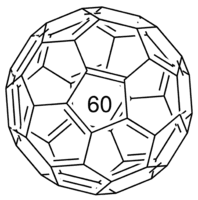
Fullerene-C60
C60
Organic & Printed Electronics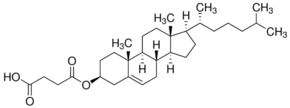
Cholesteryl hemisuccinate
C31H50O4
Organic & Printed Electronics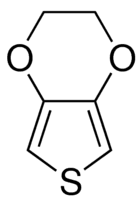
3,4-Ethylenedioxythiophene
Organic & Printed Electronics
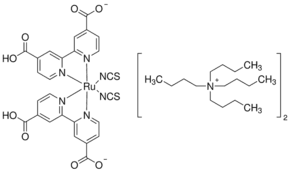
Di-tetrabutylammonium cis-bis(isothiocyanato)bis(2,2′-bipyridyl-4,4′-dicarboxylato)ruthenium(II)
Organic & Printed Electronics