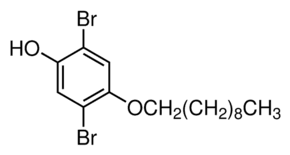
2,5-Dibromo-4-(decyloxy)phenol
2,5-Dibromo-4-(decyloxy)phenol (CAS: 870703-49-4) is an organic compound with a molecular weight of 408.17 g/mol. This brominated phenol derivative, featuring a decyloxy side chain, is primarily utilised in materials science, particularly within the field of organic and printed electronics. It serves as a key monomer in the synthesis of conjugated polymers such as polyphenylenevinylene (PPV) derivatives, contributing to the development of advanced electronic materials.
- Synonyms
- 2,5-Dibromo-4-n-decyloxyphenol4-Decyloxy-2,5-dibromophenol
Organic Electronics Synthesis
Serves as a crucial monomer for the synthesis of conjugated polymers, like substituted polyphenylenevinylenes (PPVs). These polymers are foundational in the development of organic light-emitting diodes (OLEDs), organic photovoltaic cells (OPVs), and organic field-effect transistors (OFETs).
Materials Science Research
A valuable building block in materials science for creating novel functional materials with specific electronic or optical properties. Its dibrominated structure allows for versatile polymerisation and functionalisation pathways.
Synthetic Reagent
Employed as a synthetic tool in organic chemistry, enabling the introduction of a brominated, decyloxy-substituted phenolic moiety into more complex molecular architectures for various research purposes.
| Molecular weight | 408.17 |
|---|---|
| Linear formula | Br2C6H2(OH)O(CH2)9CH3 |
| Assay | 99% |
| Melting point | 62-66 °C(lit.) |

Hazard statements
- H315Causes skin irritation
- H319Causes serious eye irritation
- H335May cause respiratory irritation
Precautionary statements
- P261Avoid breathing dust, fume, gas or vapours
- P305IF IN EYES
| Protective equipment | dust mask type N95 (US), Eyeshields, Gloves |
|---|---|
| Water hazard class (WGK, DE) | 3 |
| Hazard codes (EU) | Xi |
| Risk statements (R) | 36/37/38 |
| Safety statements (S) | 26-36 |
Hazard information is provided for guidance. Always consult the product Safety Data Sheet (SDS), available on request, before handling.
Documentation
Every batch ships with a Certificate of Analysis covering assay, identity and purity; the grade is confirmed against your enquiry. Safety Data Sheets and technical data sheets are available on request.
Supply & logistics
Samples for technical evaluation; bulk MOQ by grade and packaging. In-stock material ships in 7–10 working days, worldwide, with full export documentation.
What is 2,5-Dibromo-4-(decyloxy)phenol primarily used for?
+
2,5-Dibromo-4-(decyloxy)phenol is primarily used as a monomer in the synthesis of conjugated polymers for organic and printed electronics, such as polyphenylenevinylene (PPV) derivatives, and in broader materials science research.
What is the CAS number and formula for 2,5-Dibromo-4-(decyloxy)phenol?
+
The CAS number for 2,5-Dibromo-4-(decyloxy)phenol is 870703-49-4. The linear formula is Br2C6H2(OH)O(CH2)9CH3.
What grade and purity does Tech Serve Solutions supply?
+
Tech Serve Solutions supplies 2,5-Dibromo-4-(decyloxy)phenol with an assay of 99%. TSS does not represent this product as USP, BP, EP, or any other pharmacopoeia grade.
How should 2,5-Dibromo-4-(decyloxy)phenol be handled safely?
+
Based on GHS information, this compound is a Warning substance. It may cause skin irritation (H315), serious eye irritation (H319), and respiratory irritation (H335). Appropriate personal protective equipment includes a dust mask type N95 (US), eyeshields, and gloves. Ensure good ventilation and avoid breathing dust.
Is 2,5-Dibromo-4-(decyloxy)phenol available for export?
+
Yes, Tech Serve Solutions is a global supplier and exporter of fine chemicals, including 2,5-Dibromo-4-(decyloxy)phenol, adhering to all international shipping regulations.
How can I request a sample or obtain a quote for 2,5-Dibromo-4-(decyloxy)phenol?
+
To request a sample or obtain a quotation, please contact the Tech Serve Solutions sales team through our website or by phone, providing the product name and CAS number (870703-49-4).
▶ Related products
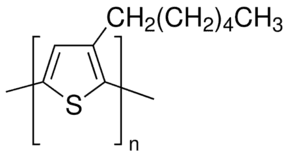
Poly(3-hexylthiophene-2,5-diyl)
Organic & Printed Electronics
![[6,6]-Phenyl C71 butyric acid methyl ester, mixture of isomers — chemical structure, CAS 609771-63-3; Organic & Printed Electronics, fine chemical supplied by Tech Serve Solutions](/_next/image?url=https%3A%2F%2Fpub-f4d920c906024441a773a96f7098e551.r2.dev%2Fimages%2Fproducts%2F609771-63-3.png&w=3840&q=75)
[6,6]-Phenyl C71 butyric acid methyl ester, mixture of isomers
Organic & Printed Electronics
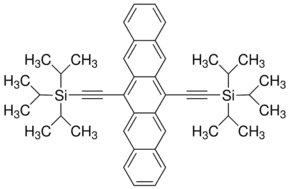
6,13-Bis(triisopropylsilylethynyl)pentacene
Organic & Printed Electronics
![[6,6]-Phenyl C61 butyric acid methyl ester — chemical structure, CAS 160848-22-6; Organic & Printed Electronics, fine chemical supplied by Tech Serve Solutions](/_next/image?url=https%3A%2F%2Fpub-f4d920c906024441a773a96f7098e551.r2.dev%2Fimages%2Fproducts%2F160848-22-6.png&w=3840&q=75)
[6,6]-Phenyl C61 butyric acid methyl ester
Organic & Printed Electronics
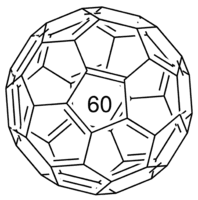
Fullerene-C60
C60
Organic & Printed Electronics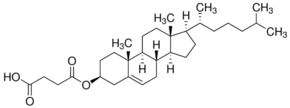
Cholesteryl hemisuccinate
C31H50O4
Organic & Printed Electronics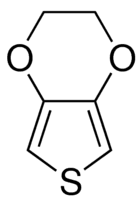
3,4-Ethylenedioxythiophene
Organic & Printed Electronics
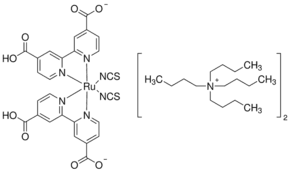
Di-tetrabutylammonium cis-bis(isothiocyanato)bis(2,2′-bipyridyl-4,4′-dicarboxylato)ruthenium(II)
Organic & Printed Electronics