
2,4-Di-tert-butylphenol
2,4-Di-tert-butylphenol (CAS 96-76-4) is a hindered phenol with the molecular formula [(CH3)3C]2C6H3OH and a molecular weight of 206.32 g/mol. This organic compound is characterised by its two bulky tert-butyl groups ortho and para to the hydroxyl group. It serves as a valuable building block in chemical synthesis and has applications in studying alkylation reactions, particularly with catalysts.
- Synonyms
- [(CH3)3C]2C6H3OH2,4-Bis(1,1-dimethylethyl)phenol
![2,4-Di-tert-butylphenol ([(CH3)3C]2C6H3OH) — chemical structure, CAS 96-76-4; Chemistry, fine chemical supplied by Tech Serve Solutions](/_next/image?url=https%3A%2F%2Fpub-f4d920c906024441a773a96f7098e551.r2.dev%2Fimages%2Fproducts%2F96-76-4.png&w=3840&q=75)
Chemical Synthesis Building Block
2,4-Di-tert-butylphenol is utilised as a precursor and intermediate in the synthesis of more complex organic molecules. Its sterically hindered phenolic structure makes it useful in specific organic transformations.
Catalysis Research
This compound has been employed in research to investigate alkylation reactions. For example, its reaction with cinnamyl alcohol in the presence of specific molecular silica catalysts has been studied.
Organic Chemistry Research
As a readily available substituted phenol, it finds use in various academic and industrial research settings for exploring reaction mechanisms and developing new synthetic methodologies.
| Molecular weight | 206.32 |
|---|---|
| Linear formula | [(CH3)3C]2C6H3OH |
| Assay | 99% |
| Boiling point | 265 °C(lit.) |
| Solubility | water: soluble0.033 g/L at 25 °C |
| Vapour pressure | 1 mmHg (84.5 °C) |
| Application | 2,4-Di-tert-butylphenol was used to study its alkylation reaction with cinnamyl alcohol in the presence of Al-substituted disordered hexagonal molecular silica catalysts1. |
| Melting point | 53-56 °C(lit.) |


Hazard statements
- H315Causes skin irritation
- H319Causes serious eye irritation
- H410Very toxic to aquatic life with long-lasting effects
Precautionary statements
- P273Avoid release to the environment
- P305IF IN EYES
- P501Dispose of contents and container per local regulations
| Protective equipment | dust mask type N95 (US), Eyeshields, Gloves |
|---|---|
| Flash point | 115 °C / 239 °F |
| Transport (UN / ADR) | UN 2430 8 / PGIII |
| Water hazard class (WGK, DE) | 2 |
| Hazard codes (EU) | Xi,N |
| Risk statements (R) | 36/38-50/53 |
| Safety statements (S) | 26-60-61 |
Hazard information is provided for guidance. Always consult the product Safety Data Sheet (SDS), available on request, before handling.
| Gene Information | human ... GABRA1(2554) |
|---|
Documentation
Every batch ships with a Certificate of Analysis covering assay, identity and purity; the grade is confirmed against your enquiry. Safety Data Sheets and technical data sheets are available on request.
Supply & logistics
Samples for technical evaluation; bulk MOQ by grade and packaging. In-stock material ships in 7–10 working days, worldwide, with full export documentation.
What is 2,4-Di-tert-butylphenol used for?
+
2,4-Di-tert-butylphenol is used as a chemical synthesis building block and in research to study alkylation reactions, particularly with catalytic systems.
What are the CAS number and formula for 2,4-Di-tert-butylphenol?
+
The CAS number for 2,4-Di-tert-butylphenol is 96-76-4, and its linear formula is [(CH3)3C]2C6H3OH.
What grade and purity does Tech Serve Solutions supply?
+
Tech Serve Solutions supplies 2,4-Di-tert-butylphenol with an assay of 99%. We do not represent this product as USP, BP, or EP grade.
How should 2,4-Di-tert-butylphenol be handled safely?
+
Handling requires a dust mask (type N95 US), eyeshields, and gloves. It is classified as causing skin and serious eye irritation and is toxic to aquatic life with long-lasting effects (H315, H319, H410). Avoid release to the environment. In case of contact with eyes, rinse cautiously with water for several minutes and seek medical advice.
How is 2,4-Di-tert-butylphenol exported by Tech Serve Solutions?
+
2,4-Di-tert-butylphenol is classified under UN 2430, 8, PGIII for transportation. Tech Serve Solutions is a specialist global supplier and exporter of fine chemicals.
How can I request a quote or sample?
+
Please contact our sales team to request a quote or a sample of 2,4-Di-tert-butylphenol.
▶ Related products
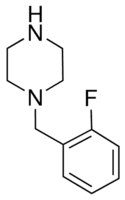
1-(2-Fluorobenzyl)piperazine
C11H15FN2
Chemical Synthesis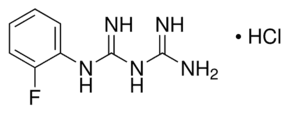
1-(2-Fluorophenyl)biguanide hydrochloride
Chemical Synthesis
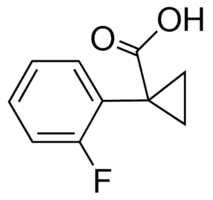
1-(2-Fluorophenyl)cyclopropanecarboxylic acid
C10H9FO2
Chemical Synthesis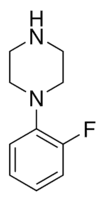
1-(2-Fluorophenyl)piperazine
C10H13FN2
Chemical Synthesis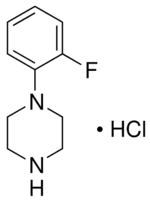
1-(2-Fluorophenyl)piperazine monohydrochloride
C10H13FN2 · HCl
Chemical Synthesis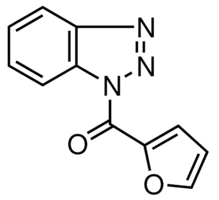
1-(2-Furoyl)-1H-benzotriazole
C11H7N3O2
Chemical Synthesis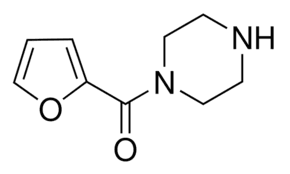
1-(2-Furoyl)piperazine
C9H12N2O2
Chemical Synthesis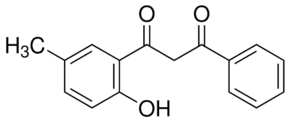
1-(2-Hydroxy-5-methylphenyl)-3-phenyl-1,3-propanedione
Chemical Synthesis
▶ Explore more

Bis(cyclopentadienyl)cobalt(III) hexafluorophosphate
C10H10CoF6P
Catalysis & Inorganic
1-(4-Chlorophenyl)biguanide hydrochloride
ClC6H4NHC(NH)NHC(NH)NH2 · HCl
Chemical Synthesis
Bis(cyclopentadienyl)dimethylzirconium(IV)
Catalysis & Inorganic

1-(4-Chlorophenyl)ethanol
ClC6H4CH(CH3)OH
Chemical Synthesis